Gauntlet Gallery
What is Shepard Fairey’s piece called “Rocka Rolla”?
Artist Statement
ROCKA ROLLA Screen Print 9 x 24 inches Edition of 100
Summary
Rocka Rolla is a 2003 screen print by Shepard Fairey, published by Obey Giant in a first edition of 100. Printed at a tall, narrow 9 x 24 inches, the format suits a vertical poster-style composition drawn from Fairey's music-and-counterculture imagery. The title references the early Judas Priest record, placing the piece within Fairey's rock-and-roll print output of the period. With its small edition of 100 and screen-printed medium, it sits among his music-themed releases that pair graphic poster design with hard-rock and punk subject matter. Source facts confirm the year, medium, dimensions, and edition size only.
Why It Matters
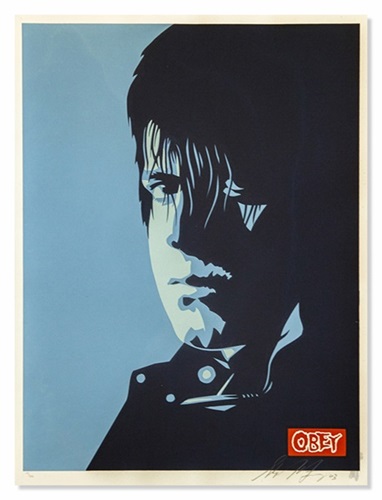
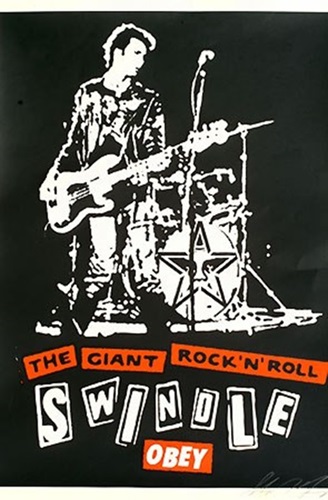
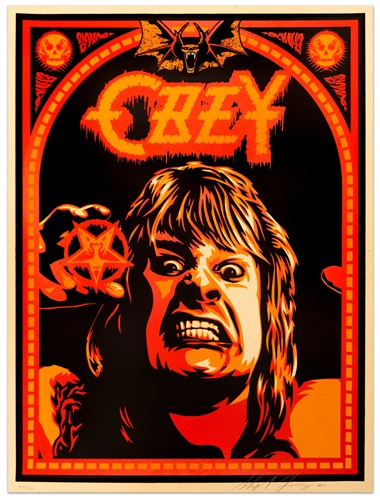
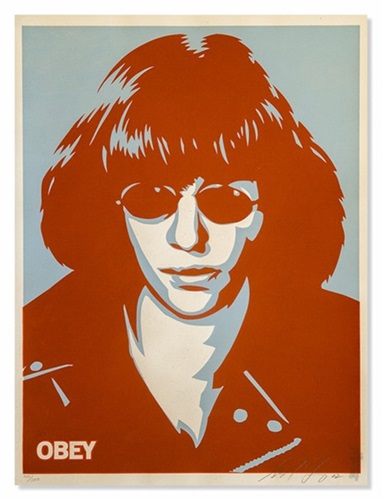
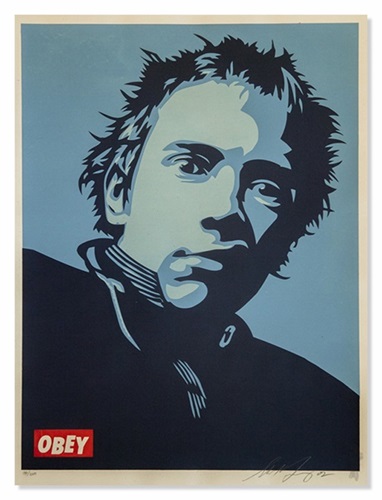
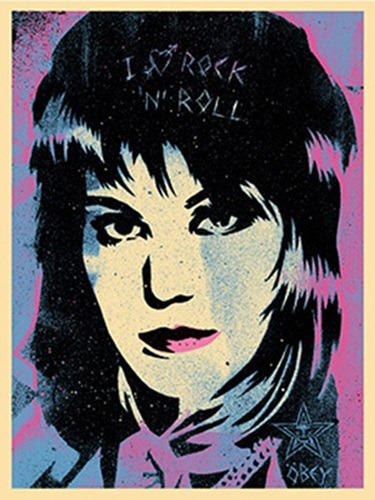
Rocka Rolla belongs to the dense run of music-themed prints Fairey produced in the early 2000s, a period when his Obey Giant studio leaned heavily into rock, punk, and metal iconography. The title's nod to early Judas Priest signals Fairey's habit of mining record-cover and band history for source material, translating it into his signature high-contrast poster language. For collectors, the appeal is twofold: it is a music-culture artifact and a graphic-design object. The first edition of 100 is a notably small run compared to many of his 250-to-300-count music posters, which gives it a tighter scarcity profile within the category. It also connects to a cluster of related rock-and-punk portraits and posters from 2001 through 2003 - Ozzy, Sid Swindle, Danzig, Ramone, Rotten, Joan Jett - that together document Fairey's deep engagement with counterculture music. Owning Rocka Rolla means owning a piece of that thematic web rather than an isolated image. Because the source provides only year, medium, dimensions, and edition size, deeper claims about signing, release context, or value are left to documentation, but the small edition and recognizable music lineage make it a meaningful entry in the music series.
Collector Perspective
This print appeals to collectors who focus on Fairey's music output and to fans of classic hard rock and metal who want a graphic, poster-format piece. The tall 9 x 24 format makes it a striking vertical accent that pairs well with other music prints hung as a set. Within a collection it slots naturally beside other early-2000s rock and punk posters, reinforcing a music-and-counterculture theme. The small edition of 100 gives it added pull for completists chasing the lower-run titles in the series. Buyers drawn to record-culture references and to Fairey's poster-design lineage will find it an accessible, visually direct entry point that still carries series depth.
Historical Context
Rocka Rolla dates to 2003, a stretch when Fairey's Obey Giant was prolifically issuing music-themed screen prints celebrating rock, punk, and metal figures. This output followed the broad spread of his 1990s OBEY sticker and propaganda work and ran parallel to his portraits of Ozzy, Danzig, Ramone, Rotten, and others. The title references early Judas Priest, reflecting Fairey's practice of drawing on record history and band imagery as source material. Issued in a first edition of 100 at 9 x 24 inches, it fits the period's emphasis on poster-format tributes to counterculture music, bridging his street-art roots and his expanding gallery-print practice in the years before his Obama-era breakout.
FAQ
What is the edition size of Rocka Rolla?
Rocka Rolla was released as a first edition of 100. That is a relatively small run within Fairey's music-print output, where many comparable posters were issued in editions of 250 to 300, giving this title a tighter scarcity profile among his rock-themed works of the period.
What are the dimensions and medium?
It is a screen print measuring 9 x 24 inches, published by Obey Giant in 2003. The tall, narrow vertical format suits a poster-style composition and distinguishes it from the more common 18 x 24 portraits in the series.
What does the title refer to?
The title references early Judas Priest, consistent with Fairey's practice of drawing source material from rock and metal record history. The source confirms the print's music-and-counterculture theme but does not provide additional details beyond year, medium, dimensions, and edition.
How does it fit a Fairey collection?
It sits within his early-2000s music series alongside prints like Danzig, Ozzy, and Ramone. Its vertical format makes a strong visual accent, and the small edition appeals to collectors chasing the lower-run titles in the music category.
Related Works
About the Artist

Shepard Fairey (b. 1970, Charleston, South Carolina) is an American street artist, graphic designer, and activist, and a graduate of the Rhode Island School of Design. His 1989 “André the Giant Has a Posse” sticker grew into the global OBEY GIANT campaign — an ongoing experiment in propaganda, obedience, and visual culture. He reached worldwide recognition with the 2008 “Hope” portrait of Barack Obama, now held by the Smithsonian National Portrait Gallery. Across screen prints, stencils, murals, and collage, Fairey channels propaganda aesthetics toward themes of peace, justice, environmentalism, and civil rights. His work is in the collections of the Museum of Modern Art, the Victoria & Albert Museum, and LACMA.