Gauntlet Gallery
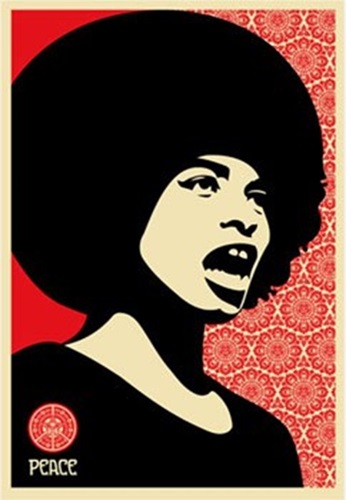
What is Shepard Fairey’s piece called “Angela Rough”?
Artist Statement
ANGELA ROUGH Screen Print 18 x 24 inches Edition of 300
Summary
Angela Rough is a 2003 screen print published by Obey Giant in a first edition of 300, measuring 18 x 24 inches. The portrait depicts activist Angela Davis, with the source noting a secondary theme of nature and floral symbolism, suggesting decorative or botanical elements in the composition. Rendered in Fairey's graphic portrait style, it places a civil-rights and Black liberation figure within his portrait output. The relatively large edition of 300 makes it one of his more accessible portrait titles of the period. Source facts confirm the year, medium, dimensions, and edition size.
Why It Matters
Angela Rough is significant as an early Fairey portrait of Angela Davis, the civil-rights, feminist, and Black liberation activist whose image Fairey would revisit in later works. Made in 2003, it documents his engagement with figures of resistance and social justice well before his Obama-era prominence, applying his graphic portrait language to a politically charged subject. The source flags a secondary theme of nature and floral symbolism, suggesting the composition pairs the portrait with decorative or botanical motifs - a combination Fairey often uses to soften and frame his subjects. The edition of 300 makes it one of the more accessible titles in his portrait catalog, broadening its reach to collectors who value the subject's cultural weight without the barrier of a tiny edition. As a precursor to his later, larger Angela Davis treatments, it has lineage value for collectors tracing how Fairey developed his portraits of activist women over time. The work sits at the intersection of his political and portrait practices, honoring a figure central to twentieth-century activism. With documented production facts, it stands as a meaningful and attainable entry in the portrait series, even as the source keeps its details to year, medium, size, and edition.
Collector Perspective
This print appeals to collectors drawn to activist portraiture and to Fairey's depictions of influential women and civil-rights figures. The Angela Davis subject carries cultural and historical resonance that extends its appeal beyond core Fairey followers. At 18 x 24 inches it is an approachable standard size, and the edition of 300 keeps it attainable for newer collectors. The floral or botanical elements add decorative warmth, making it a versatile piece for display. Within a collection it fits both a portrait grouping and a social-justice theme, and it connects forward to Fairey's later, larger Angela Davis works for those building a subject-based set.
Historical Context
Issued in 2003 by Obey Giant, Angela Rough is an early entry in Fairey's portrayals of Angela Davis, a leading civil-rights, feminist, and Black liberation activist. It belongs to the period when Fairey was applying his graphic portrait style to figures of resistance and social justice, predating his Obama-era breakout. The source notes a secondary nature-and-floral theme, reflecting his habit of combining portraiture with decorative motifs. The relatively large edition of 300 made the work accessible. It anticipates his later, larger-format Angela Davis prints, marking a point where Fairey was steadily expanding his catalog of activist portraits within his broader political and street-art practice.
FAQ
Who does Angela Rough depict?
The portrait depicts Angela Davis, the civil-rights, feminist, and Black liberation activist. The print is an early Fairey treatment of a subject he would revisit in later, larger-format works, placing an influential activist within his portrait output.
What is the edition size?
It was published by Obey Giant in a first edition of 300. That is a relatively large run, making it one of the more accessible titles in Fairey's portrait catalog and an attainable entry point for collectors drawn to the subject.
Why does it carry a floral theme?
The source notes a secondary theme of nature and floral symbolism, suggesting the composition includes decorative or botanical elements. Fairey frequently frames his portraits with ornamental motifs, which adds decorative warmth to the activist subject.
How does it relate to Fairey's later work?
It anticipates his later large-format Angela Davis portrait from 2005, giving it lineage value for collectors tracking how Fairey developed his depictions of activist women over time within his portrait and political practice.
Related Works


About the Artist
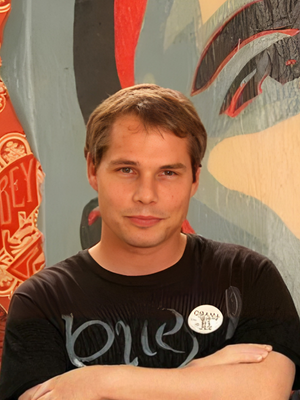
Shepard Fairey (b. 1970, Charleston, South Carolina) is an American street artist, graphic designer, and activist, and a graduate of the Rhode Island School of Design. His 1989 “André the Giant Has a Posse” sticker grew into the global OBEY GIANT campaign — an ongoing experiment in propaganda, obedience, and visual culture. He reached worldwide recognition with the 2008 “Hope” portrait of Barack Obama, now held by the Smithsonian National Portrait Gallery. Across screen prints, stencils, murals, and collage, Fairey channels propaganda aesthetics toward themes of peace, justice, environmentalism, and civil rights. His work is in the collections of the Museum of Modern Art, the Victoria & Albert Museum, and LACMA.