Gauntlet Gallery
What is Shepard Fairey’s piece called “Debbie Harry (First Edition)”?
Artist Statement
DEBBIE HARRY Screen Print 18 x 24 inches Edition of 300 $30
Summary
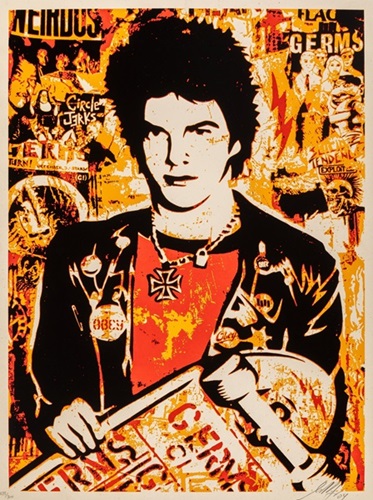
Debbie Harry (First Edition) is a 2005 screen print by Shepard Fairey, published by Obey Giant in an edition of 300 at 18 x 24 inches. The work renders the Blondie singer as a stylized portrait, translating a pop-culture music icon into Fairey's high-contrast, poster-derived idiom. It belongs to his ongoing practice of portraying figures from music and counterculture, and pairs a recognizable subject with the graphic flattening and bold framing typical of his screen-printed editions of the period.
Why It Matters
Debbie Harry sits at the intersection of Fairey's twin obsessions: music subculture and the propaganda-poster portrait. By 2005 Fairey had spent years building a visual vocabulary that turned figures of cultural rebellion into instantly legible icons, and Blondie's frontwoman is a natural fit, a punk-adjacent pop pioneer rendered with the same reverence he gives political and counterculture subjects. The modest 18 x 24 inch format and edition of 300 made this an accessible entry point for collectors building a music-themed Fairey grouping, and the subject's enduring cultural relevance keeps demand steady. For a Fairey database, the print matters as evidence of how he expanded his portrait practice beyond OBEY iconography into a broader pantheon of musicians and cultural figures. It also demonstrates his consistent editioning model in this era: 300-piece screen prints at an entry price point. The work rewards collectors who value the artist's ability to elevate a recognizable celebrity into a graphic emblem without losing the subject's personality, a balance that distinguishes his portraiture from generic celebrity imagery.
Collector Perspective
This print appeals to collectors who focus on Fairey's music and portrait work, and to Blondie or new-wave fans seeking a credible fine-art crossover piece. At 18 x 24 inches it frames easily and pairs naturally with other musician portraits from the same era, making it a strong anchor or companion in a wall grouping. The edition of 300 places it among Fairey's more available mid-2000s screen prints rather than his scarce releases, which keeps it within reach for newer collectors. Display appeal is high: the bold portrait reads cleanly from across a room. It fits well in a music-series collection and complements Fairey's other counterculture portraits.
Historical Context
Debbie Harry dates to 2005, a productive stretch when Fairey was steadily issuing 300-piece screen prints through Obey Giant before the 2008 Obama HOPE image transformed his public profile. In this period he was consolidating a portrait language built on high-contrast photographic translation and poster framing, applying it across musicians, counterculture figures, and political subjects alike. The print exemplifies his pre-fame editioning practice: accessible price, modest edition, music-centered subject matter. It belongs to the lineage of his musician portraits that runs alongside his OBEY iconography, showing how he balanced commercial street-art roots with an expanding gallery of cultural icons during the mid-2000s.
FAQ
What is Debbie Harry (First Edition) and when was it made?
It is a 2005 screen print by Shepard Fairey published by Obey Giant, depicting Blondie singer Debbie Harry in his stylized portrait idiom. It measures 18 x 24 inches and was released in a first edition of 300, originally priced at $30.
How large is the edition?
The first edition was 300 prints. That places it among Fairey's more available mid-2000s screen prints rather than his scarce releases, making it a reasonable entry point for collectors of his music and portrait work.
What are the dimensions and medium?
The print is a screen print measuring 18 x 24 inches. It was published by Obey Giant in 2005 at an original price of $30, consistent with Fairey's accessible editioning model during that period.
How does it fit into Fairey's body of work?
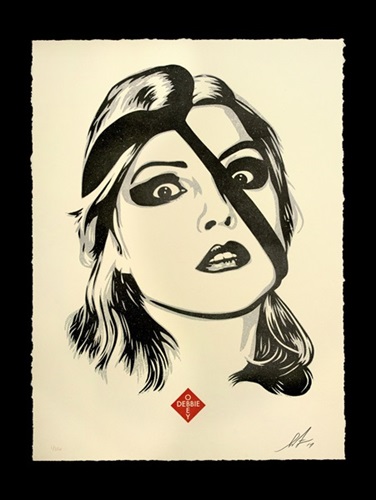
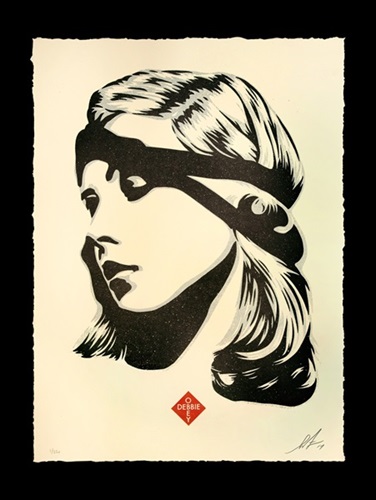
It belongs to his music and counterculture portrait practice, in which he renders cultural figures as bold, poster-style icons. Fairey later revisited the subject with two 2017 Debbie Harry portraits, showing his continued interest in the Blondie frontwoman.
Related Works

About the Artist

Shepard Fairey (b. 1970, Charleston, South Carolina) is an American street artist, graphic designer, and activist, and a graduate of the Rhode Island School of Design. His 1989 “André the Giant Has a Posse” sticker grew into the global OBEY GIANT campaign — an ongoing experiment in propaganda, obedience, and visual culture. He reached worldwide recognition with the 2008 “Hope” portrait of Barack Obama, now held by the Smithsonian National Portrait Gallery. Across screen prints, stencils, murals, and collage, Fairey channels propaganda aesthetics toward themes of peace, justice, environmentalism, and civil rights. His work is in the collections of the Museum of Modern Art, the Victoria & Albert Museum, and LACMA.