Gauntlet Gallery
What is Shepard Fairey’s piece called “Bones Ripper”?
Artist Statement
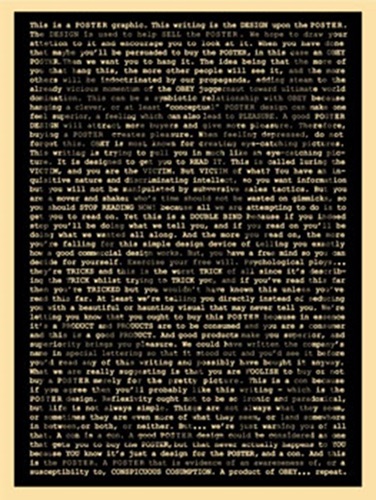
BONES RIPPER Screen Print 18 x 24 inches Edition of 300
Summary
Bones Ripper is a 2005 screen print by Shepard Fairey, published by Obey Giant in an edition of 300 at 18 x 24 inches. The title evokes skeletal and skate-graphic imagery, aligning with the darker, bones-and-skulls visual vocabulary common to skateboard and punk-influenced design that runs through parts of Fairey's work. It belongs to his mid-2000s run of accessible screen prints. The source provides limited descriptive detail beyond title, medium, dimensions, and edition.
Why It Matters
Bones Ripper taps the skeletal, skull-and-bones imagery that has long circulated in skateboard graphics and punk design, two subcultures that shaped Fairey's formative years. The title suggests a piece operating in the edgier register of his visual vocabulary, where graphic menace and counterculture attitude take precedence over portraiture or overt politics. Released in 2005 as a 300-piece screen print at an accessible price, it offered collectors a darker, more graphic Fairey rooted in lifestyle subculture rather than celebrity or ideology. In a database it matters as evidence of the range within Fairey's mid-2000s output, showing he produced not only icon portraits and propaganda appropriations but also subculture-flavored graphic works drawing on skate and punk aesthetics. For collectors who came to Fairey through those scenes, the bones imagery carries specific resonance. Because the source description is sparse, interpretation stays cautious and grounded in the title, but the work clearly sits within his street-and-subculture territory, complementing his other lifestyle-driven editions from the period and rounding out a picture of his stylistic breadth before the 2008 breakthrough.
Collector Perspective
This print appeals to collectors who favor Fairey's darker, skate-and-punk-influenced graphic register over his portraits or political works. The bones-and-skull imagery resonates with those who connect to him through skateboard and punk subculture, giving it specific appeal within a lifestyle-focused collection. At 18 x 24 inches it frames cleanly and fits within a grouping of mid-2000s Obey editions. The edition of 300 keeps it accessible. Display appeal favors collectors drawn to edgier, graphic-heavy imagery, and it pairs naturally with other 2005 first-edition screen prints from the same period.
Historical Context
Bones Ripper dates to 2005, during Fairey's steady output of 300-piece Obey Giant screen prints before his 2008 mainstream breakthrough. Its skeletal imagery aligns with the skate-graphic and punk visual traditions that, alongside graffiti, shaped his early identity and helped carry the OBEY campaign through those scenes. The print reflects the darker, subculture-flavored side of his mid-2000s editioned work, demonstrating his stylistic range during this period. It belongs to his accessible body of work that bridged his street-art origins and emerging fine-art profile.
FAQ
What is Bones Ripper?
It is a 2005 screen print by Shepard Fairey, published by Obey Giant, measuring 18 x 24 inches in a first edition of 300. The title evokes skeletal and skull imagery associated with skateboard and punk-influenced graphic design.
What kind of imagery does it use?
The title points to bones-and-skull graphics common to skate and punk visual culture, two subcultures that shaped Fairey's background. The source provides limited descriptive detail beyond the title, medium, dimensions, and edition, so deeper interpretation stays cautious.
What are the edition and dimensions?
It was issued as a first edition of 300 screen prints at 18 x 24 inches, published by Obey Giant in 2005 at an original price of $30. That edition size places it among his more available mid-2000s releases.
Who is this print for?
It appeals to collectors who favor Fairey's darker, skate-and-punk-influenced graphic work over his portraits or political pieces, and it pairs well with other 2005 first-edition Obey screen prints from the period.
Related Works
About the Artist

Shepard Fairey (b. 1970, Charleston, South Carolina) is an American street artist, graphic designer, and activist, and a graduate of the Rhode Island School of Design. His 1989 “André the Giant Has a Posse” sticker grew into the global OBEY GIANT campaign — an ongoing experiment in propaganda, obedience, and visual culture. He reached worldwide recognition with the 2008 “Hope” portrait of Barack Obama, now held by the Smithsonian National Portrait Gallery. Across screen prints, stencils, murals, and collage, Fairey channels propaganda aesthetics toward themes of peace, justice, environmentalism, and civil rights. His work is in the collections of the Museum of Modern Art, the Victoria & Albert Museum, and LACMA.