Gauntlet Gallery
What is Shepard Fairey’s piece called “Unknown Black Panther”?
Artist Statement
Screen Print 18 x 24 inches Edition of 300
Summary
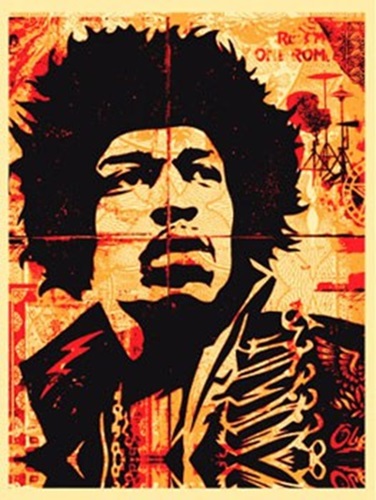
Unknown Black Panther is a 2005 Shepard Fairey screen print published by Obey Giant in a first edition of 300, measuring 18 x 24 inches. The image draws on the iconography of the Black Panther movement, rendering a portrait-style figure in Fairey's high-contrast, stencil-derived graphic language. Issued at an original price of $30, it sits within Fairey's body of work that engages with civil-rights-era and pop-cultural imagery. The print combines bold flat color fields with portrait composition, a hallmark of his street-poster-rooted style. As a standard 18 x 24 inch edition, it reflects the accessible-format works Obey Giant produced during this period.
Why It Matters
Unknown Black Panther speaks to a recurring thread in Shepard Fairey's work: the reuse and reframing of charged political and cultural imagery for a contemporary audience. By titling the figure "Unknown," the print foregrounds the anonymous foot soldiers of a movement rather than a single celebrity face, which gives it a different weight than Fairey's named-portrait prints. For collectors, it represents the mid-2000s Obey Giant output, when Fairey was consolidating the visual vocabulary that would soon carry into far more famous works. The 18 x 24 inch, edition-of-300 format made it broadly accessible at release, and prints from this window are valued as documents of his style before mainstream recognition. The historical resonance of Black Panther imagery, combined with Fairey's propaganda-inspired treatment, makes the piece collectible both as a graphic object and as a commentary on how protest imagery is remembered. Within a collection it bridges his portrait works and his more overtly political series, illustrating how he blurred the line between pop culture and activism. Its enduring appeal rests on that intersection rather than on any single scarcity claim.
Collector Perspective
This print appeals to collectors focused on Shepard Fairey's mid-2000s Obey Giant period and to those drawn to politically charged portraiture. The bold, high-contrast graphic reads well on a wall and pairs naturally with other 18 x 24 inch screen prints from the same era, making it an easy fit for a grid display. Buyers interested in civil-rights and Black Panther iconography, or in the broader story of how Fairey appropriates protest imagery, will find it meaningful. At its accessible original format and edition size, it suits collectors building breadth across his catalog rather than chasing only marquee names. It works as an entry point into his political-portrait works while complementing music and pop-culture prints of the period.
Historical Context
Unknown Black Panther fits into Shepard Fairey's mid-2000s Obey Giant output, a period when he was producing a steady stream of 18 x 24 inch screen-print editions exploring portraiture, music, and political imagery. This work predates the 2008 Obama "Hope" image that brought him mainstream fame, placing it in the run of prints that established his graphic identity. Its engagement with Black Panther iconography aligns with his long-standing interest in revolutionary and protest movements, a theme he revisited across many editions. As a 2005 release sitting alongside other collaborations-and-pop-culture prints of the year, it documents how Fairey was channeling historical activism into the screen-print medium he had built his reputation on through street work and posters.
FAQ
What is the edition size of Unknown Black Panther?
It was published by Obey Giant in 2005 as a first edition of 300 screen prints. This was a standard run size for Fairey's accessible 18 x 24 inch editions of the period, making it relatively available compared with his small large-format runs.
What are the dimensions and medium?
The work is a screen print measuring 18 x 24 inches. It uses the flat, high-contrast graphic treatment characteristic of Shepard Fairey's Obey Giant screen prints from the mid-2000s.
What was the original release price?
The source lists an original price of $30, consistent with the accessible pricing Obey Giant used for its standard 18 x 24 inch screen-print editions at the time of release in 2005.
What does the imagery reference?
The print draws on Black Panther iconography, presenting an unnamed figure rather than a specific celebrity. The "Unknown" title foregrounds the anonymous participants of the movement, in line with Fairey's interest in protest and revolutionary imagery.
Related Works

About the Artist
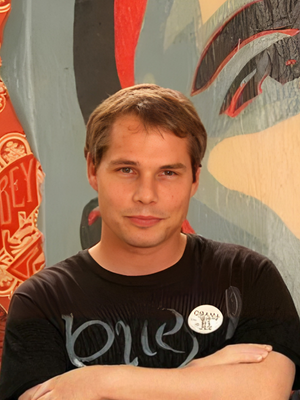
Shepard Fairey (b. 1970, Charleston, South Carolina) is an American street artist, graphic designer, and activist, and a graduate of the Rhode Island School of Design. His 1989 “André the Giant Has a Posse” sticker grew into the global OBEY GIANT campaign — an ongoing experiment in propaganda, obedience, and visual culture. He reached worldwide recognition with the 2008 “Hope” portrait of Barack Obama, now held by the Smithsonian National Portrait Gallery. Across screen prints, stencils, murals, and collage, Fairey channels propaganda aesthetics toward themes of peace, justice, environmentalism, and civil rights. His work is in the collections of the Museum of Modern Art, the Victoria & Albert Museum, and LACMA.