Gauntlet Gallery
What is Shepard Fairey’s piece called “Muhammad Ali (First Edition)”?
Artist Statement
Screen Print 18 x 24 inches Edition of 300 $35
Summary
Muhammad Ali (First Edition) is a 2006 Shepard Fairey screen print, published by Obey Giant in a first edition of 300 at 18 x 24 inches. Released October 30, 2006 at an original price of $35, it presents a portrait of boxing legend and activist Muhammad Ali in Fairey's signature high-contrast, poster-style screen printing. The image translates a photographic source into bold flat tones and graphic linework, framing Ali as an iconic figure within Fairey's catalog of cultural and political heroes.
Why It Matters
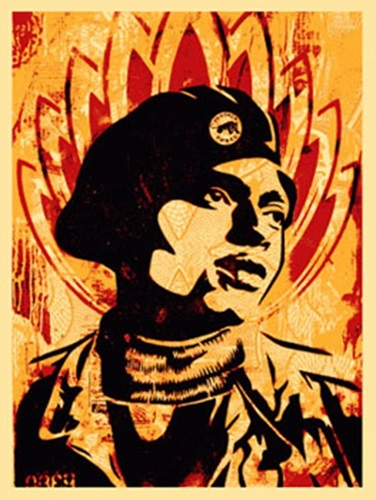
Muhammad Ali was far more than a boxer: he was a defining figure of resistance, refusing military induction during the Vietnam War and becoming a global symbol of conviction and Black pride. Fairey's portrait places Ali squarely in the lineage of activist heroes the artist has memorialized, alongside figures like Malcolm X and the Black Panther subjects in his catalog. By translating an iconic photograph into his flat, propaganda-influenced graphic style, Fairey monumentalizes Ali as a designed icon rather than a documentary likeness, the same approach that powers his most recognizable portraits. A first edition of 300 places it in the accessible mid-2000s collecting tier, but the subject matter gives it durable cross-collector appeal beyond Fairey specialists, drawing interest from collectors of boxing, civil rights, and music-era cultural portraiture. As a 2006 release it predates Fairey's 2008 mainstream breakthrough, and its portrait-of-a-legend subject makes it one of the more broadly resonant works from this period of his output.
Collector Perspective
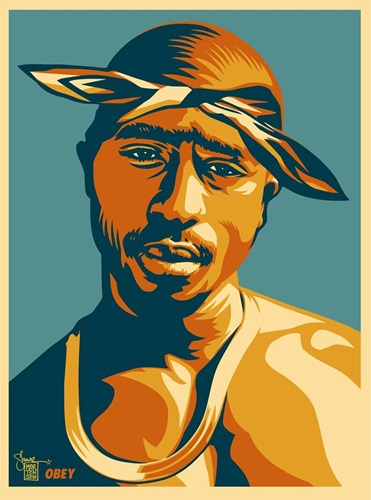
This print attracts a wide audience: dedicated Fairey collectors, but also buyers drawn to Muhammad Ali as a sports and civil-rights icon. That cross-appeal can broaden demand beyond the usual Obey Giant base. The 18 x 24 inch format and bold portrait composition make it a natural focal point on a wall, and it complements other Fairey legacy portraits such as Tupac and the Black Panther works. As a first edition of 300 originally priced at $35, it sits in an accessible collecting tier rather than the trophy range. It fits collections organized around portraiture, civil-rights figures, or cultural legends, and works equally well as a standalone statement piece.
Historical Context
Released October 2006, this Ali portrait belongs to a stretch when Fairey was actively building a gallery of iconic cultural and political figures rendered in his propaganda-inspired graphic idiom. It predates his 2008 Obama 'Hope' image, the work that made his portrait method nationally famous, yet it uses the same translation of a photographic source into flat, monumental graphic form. Ali's stature as a Vietnam-era resister and civil-rights symbol aligns him with the activist heroes Fairey repeatedly honored. The print sits in the Posters and Propaganda era, when affordable signed editions of legendary figures helped expand Obey Giant's collector following.
FAQ
Who is depicted in this print?
It depicts boxing legend and activist Muhammad Ali, rendered in Shepard Fairey's high-contrast, poster-style screen printing that translates a photographic source into bold flat graphic form.
When was it released and at what price?
It was released October 30, 2006 through Obey Giant at a recorded original price of $35, placing it in the accessible mid-2000s editioned tier of Fairey's output.
How large is the edition and the print?
It is a first edition of 300, measuring 18 x 24 inches as a screen print, the standard accessible format for Obey Giant editions of this period.
Why does this print have broad appeal?
Ali's stature as a sports icon and civil-rights symbol gives the print cross-collector appeal beyond Fairey specialists, drawing interest from boxing, civil-rights, and portrait collectors alike.
Related Works
About the Artist

Shepard Fairey (b. 1970, Charleston, South Carolina) is an American street artist, graphic designer, and activist, and a graduate of the Rhode Island School of Design. His 1989 “André the Giant Has a Posse” sticker grew into the global OBEY GIANT campaign — an ongoing experiment in propaganda, obedience, and visual culture. He reached worldwide recognition with the 2008 “Hope” portrait of Barack Obama, now held by the Smithsonian National Portrait Gallery. Across screen prints, stencils, murals, and collage, Fairey channels propaganda aesthetics toward themes of peace, justice, environmentalism, and civil rights. His work is in the collections of the Museum of Modern Art, the Victoria & Albert Museum, and LACMA.