Gauntlet Gallery
What is Shepard Fairey’s piece called “Nico Canvas Print”?
Artist Statement
18 x 24? Screen Print, Signed and Numbered Edition of 450. $65 Photography by Billy Name / Kymara Artistic Management http://www.billyname.com/contact/contact.html www.kymara.com This poster is from a painting I did of Nico from the Velvet Underground. The painting was based on a photo by Billy Name who worked with Warhol in the Factory. For anyone who does not know, Warhol managed the Velvet Underground, got them their record deal, and designed their first record cover with the banana (which could originally be peeled). Warhol also suggested that Nico, a german fashion model and singer, be in the group. I love her vocals on songs like “Femme Fatale” and “I’ll be Your Mirror”, but apparently Lou Reed did not like her much and kicked her out of the group. She kept recording and made solo records until the early 80's. Iggy Pop had some vague sexual encounters with Nico in the late 60's, and John Cale from the Velvet Underground produced the first (Iggy and the)Stooges album. Considering I got into Warhol, VU, and The Stooges separately, it is fascinating how connected they are. Billy Name gets some of the money on this Nico poster. -Shepard Release Date: 6/10/10
Summary
Nico Canvas Print is an 18 x 24 inch screen print published by Obey Giant in 2010, released June 10, in a signed and numbered first edition of 450 at $65. The portrait depicts Nico, the German model and singer associated with the Velvet Underground, and is based on a painting Fairey made from a photograph by Billy Name, Andy Warhol's Factory photographer. Fairey credits Billy Name, notes that Name shares in the print's revenue, and recounts Nico's ties to Warhol, the Velvet Underground, Iggy Pop, and the Stooges in his accompanying statement.
Why It Matters
The Nico Canvas Print situates Fairey within the densely interconnected world of Warhol's Factory, the Velvet Underground, and the proto-punk scene, lineages that deeply inform his sensibility. In his statement, Fairey traces how Warhol managed the Velvet Underground, suggested Nico join the band, and designed their banana album cover, and how figures like Iggy Pop and John Cale link the same milieu, framing the portrait as part of a cultural web he finds fascinating. The print is unusual in being based on a painting Fairey made from a Billy Name photograph, adding a layer of mediation between source photo, painting, and final screen print. Fairey credits Billy Name and notes that Name shares in the print's revenue, consistent with his pattern of photographer collaboration and revenue-sharing. As a portrait of one of Fairey's relatively few female music subjects, it broadens the gender range of his music catalog. For collectors, the print matters as a Velvet Underground and Factory-adjacent tribute, as a documented photographer collaboration, and as a signed, numbered edition of 450 anchored to a specific date and a richly told backstory.
Collector Perspective
This print appeals to Velvet Underground and Warhol-era collectors, fans of Nico and the Factory scene, and music-portrait collectors seeking female subjects. The detailed backstory and the documented revenue share with photographer Billy Name give it provenance and narrative depth that collectors value. The canvas format displays without glass, and the signed, numbered edition of 450 makes it limited but attainable at its $65 release price. It fits collections themed around the Velvet Underground, proto-punk, and Warhol's circle, complementing Fairey's other 2010 music and cultural-figure canvases for those building a music-history wall.
Historical Context
Released June 10, 2010, the Nico Canvas Print belongs to Fairey's 2010 Obey Giant output and reflects his fascination with the Warhol Factory and Velvet Underground milieu. Building the portrait from his own painting of a Billy Name photograph, Fairey foregrounds the layered relationship between photographic source, painting, and print, and credits Billy Name with a share of revenue, in keeping with his collaborative practice. His statement maps the connections among Warhol, the Velvet Underground, Nico, Iggy Pop, and the Stooges, positioning the print as a document of a proto-punk and pop-art lineage that runs through much of his cultural-figure portraiture.
FAQ
Who is the subject and what is the source image?
The print depicts Nico, the German model and singer of the Velvet Underground. Per Fairey's statement, it is from a painting he made of Nico based on a photograph by Billy Name, who worked with Warhol in the Factory.
Does the photographer receive any revenue?
Yes. Fairey states in the release that Billy Name gets some of the money on this Nico poster, consistent with his practice of sharing revenue with photographers.
What are the size, edition, and price?
It is an 18 x 24 inch screen print, signed and numbered in a first edition of 450, published by Obey Giant in 2010 at an original price of $65, released June 10, 2010.
Why did Fairey choose Nico?
Fairey describes loving her vocals on Velvet Underground songs like Femme Fatale and I'll Be Your Mirror, and finds the interconnections among Warhol, the Velvet Underground, and the Stooges fascinating, prompting the portrait.
Related Works

About the Artist
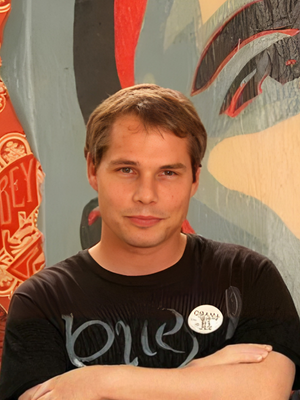
Shepard Fairey (b. 1970, Charleston, South Carolina) is an American street artist, graphic designer, and activist, and a graduate of the Rhode Island School of Design. His 1989 “André the Giant Has a Posse” sticker grew into the global OBEY GIANT campaign — an ongoing experiment in propaganda, obedience, and visual culture. He reached worldwide recognition with the 2008 “Hope” portrait of Barack Obama, now held by the Smithsonian National Portrait Gallery. Across screen prints, stencils, murals, and collage, Fairey channels propaganda aesthetics toward themes of peace, justice, environmentalism, and civil rights. His work is in the collections of the Museum of Modern Art, the Victoria & Albert Museum, and LACMA.