Gauntlet Gallery
What is Shepard Fairey’s piece called “Glass Houses Canvas Print (First Edition)”?
Artist Statement
Screen Print 18 x 24 inches Edition of 450 June 24, 2010 $45 The Glass Houses print seems fairly self-explanatory, but l should explain some of the ideas and motivation behind it. A basic idea is that we, meaning we as a society, are familiar with the cautionary anecdotes about “glass houses” and “houses of cards”, yet despite warning signs we allow dangerous practices to go unchecked. People with money have the power to change many things in the world. Unfortunately money and power are often used to prevent change, no matter how broken the current system may be, especially when their wealth is a direct result of that system. Over the past couple years, the U.S. has seen several chronically toxic systems—healthcare, energy, finance, auto manufacturing—melt down into large-scale catastrophes, causing widespread suffering. The administrators of these systems, from Wall Street to big oil, haven’t been spared from suffering, but instead of letting the perpetrators bear the brunt of their disastrous judgment, our political leaders have done what they usually do: whatever their financial (read: corporate) backers want them to. I don’t want to diminish some of the positive reforms that have been passed by our Congress, because I think that things like making it illegal for health insurers to deny coverage to people with preexisting conditions or mandating an audit of the Federal Reserve are better than nothing. What saddens and angers me is that all these systems have proven themselves unsustainable and in need of massive change, yet the only changes made have been minor and mostly cosmetic. Matt Taibbi’s recent article on the Senate’s attempts at financial reform (http://www.rollingstone.com/politics/news/17390/96712) described a lot of the mechanics behind the political castration of reform efforts. I highly recommend reading the article if you’re interested in all the gory details. One thing in particular stood out to me: when it came down to crunch time in the debate, the financial-services industry sent over 2,000 paid lobbyists to Washington; the only counterpart on the progressive side, Americans for Financial Reform, had 60 unpaid volunteers lobbying on their behalf. The result of the lobbyist blitz was a bill with giant loopholes that will essentially let Wall Street go back to business as usual, free to pull the same stunts that led to the global economic crisis. I have a feeling we can expect similar results when it comes time for an energy and environmental policy bill in the wake of BP’s disaster in the Gulf. You would think it’s easy to find a common-sense solution in the wake of a meltdown, but recent history says otherwise. The health-care and financial reform debates have demonstrated that money still trumps both logic and public sentiment, or at least has a way of watering legislation down to the point of toothlessness. I don’t believe that money is the root of all evil, but I do think that many of the world’s major man-made problems have been the result of ignoring social and ecological currency in favor of economic currency. For the individuals and corporations lobbying Congress, the dollars they spend in Washington constitute a sound economic investment. But in social and ecological terms, maintaining the status quo will only lead to our collective bankruptcy. -Shepard
Summary
Glass Houses Canvas Print is a 2010 screen print by Shepard Fairey, published by Obey Giant in an edition of 450 at 18 x 24 inches, released June 24, 2010 at $45. In an accompanying statement, Fairey frames the image around the proverbs of 'glass houses' and 'houses of cards,' critiquing how concentrated money and power block needed reform across healthcare, energy, finance, and auto manufacturing. He cites lobbying imbalances during financial-reform debates and warns that prioritizing economic currency over social and ecological currency leads to collective bankruptcy. The work pairs Fairey's graphic style with a pointed political and economic message.
Why It Matters
Glass Houses is one of Fairey's most explicitly argued economic-critique prints, accompanied by a lengthy artist statement that names specific 2010 policy fights, from financial reform to anticipated energy legislation after the BP Gulf spill. That documentation makes it a strong record for collectors who value works with a clear, sourced political thesis rather than generic protest imagery. Fairey's text frames the central metaphor, that a society aware of cautionary anecdotes still permits dangerous practices to go unchecked, and ties it to the disproportionate influence of paid lobbyists over volunteer reform advocates. This places the print squarely in his consumerism-and-power and environmental themes, both flagged in the source. At a $45 release price and an edition of 450, it was accessible, foregrounding message over scarcity. Its significance lies in how directly it engages the post-2008 financial-crisis moment and the regulatory debates of that year, giving it documentary weight within Fairey's political catalog. For collectors and researchers, the detailed, fact-anchored statement is the chief differentiator, connecting the visual to a specific critique of corporate influence and stalled reform.
Collector Perspective
This canvas print attracts collectors focused on Fairey's political and economic-justice work, particularly those who value the substantial artist statement that contextualizes the image. Buyers interested in post-financial-crisis commentary and corporate-influence critique will find it a content-rich anchor piece. At 18 x 24 inches it displays as a statement work and pairs with Fairey's other consumerism-and-power and environmental prints. The edition of 450 means availability is reasonable, so collectors tend to weigh condition and the canvas format over rarity. It fits naturally into a thematically curated collection emphasizing systemic critique, lobbying, and reform, and complements environmentally themed Fairey works given the statement's references to energy policy and the Gulf spill.
Historical Context
Glass Houses sits in Fairey's 2010 wave of socially engaged Obey Giant releases, issued amid the aftermath of the 2008 financial crisis and the contemporaneous BP Gulf oil disaster. The accompanying statement situates the work within active 2010 debates over financial and healthcare reform, referencing the lobbying dynamics described in contemporary journalism. Within his arc, the print extends the corporate-critique and power themes he had developed since the early Obey campaign, now articulated through detailed prose rather than slogans alone. It reflects his post-Obama-poster period, when his platform allowed him to attach extended commentary to releases and to position his art as part of ongoing policy conversations around money, environment, and democratic accountability.
FAQ
What does the Glass Houses print address?
Per Fairey's statement, it critiques how concentrated money and power prevent needed reform across systems like healthcare, energy, finance, and auto manufacturing. He invokes the proverbs of 'glass houses' and 'houses of cards' to argue that society ignores warning signs and allows dangerous practices to continue unchecked.
What were the edition details?
The source lists a screen print edition of 450, measuring 18 x 24 inches, published by Obey Giant. It was released on June 24, 2010 at a price of $45.
Does the statement reference specific events?
Yes. Fairey's text references 2010 financial-reform debates, the disparity between paid lobbyists and volunteer reform advocates, and anticipated energy and environmental legislation following BP's Gulf of Mexico disaster, grounding the image in that year's policy context.
What is the central message?
Fairey writes that while money is not the root of all evil, many man-made problems stem from valuing economic currency over social and ecological currency, warning that maintaining the status quo leads to collective bankruptcy.
Related Works

About the Artist
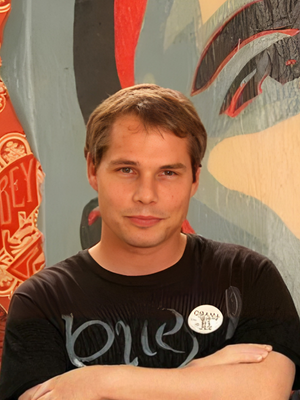
Shepard Fairey (b. 1970, Charleston, South Carolina) is an American street artist, graphic designer, and activist, and a graduate of the Rhode Island School of Design. His 1989 “André the Giant Has a Posse” sticker grew into the global OBEY GIANT campaign — an ongoing experiment in propaganda, obedience, and visual culture. He reached worldwide recognition with the 2008 “Hope” portrait of Barack Obama, now held by the Smithsonian National Portrait Gallery. Across screen prints, stencils, murals, and collage, Fairey channels propaganda aesthetics toward themes of peace, justice, environmentalism, and civil rights. His work is in the collections of the Museum of Modern Art, the Victoria & Albert Museum, and LACMA.