Gauntlet Gallery
What is Shepard Fairey’s piece called “Rollins 81”?
Artist Statement
This Sunday, 2/13/11, the second Rollins print comes out on Henry’s 50th birthday. The print is based on a painting I did from a 1981 Black Flag photo by Glen E. Friedman, with whom I’ve collaborated on several great projects. The print is signed by Glen, Henry, and me. It is an edition of 450. I reiterate what I said about Henry last week: I hold Henry in high regard for his many talents as a singer, writer, radio DJ, TV host, political and social commentator, etc… but above all I love his energy and gusto. Henry has been doing it his way hardcore for 30+ years. -Shepard Here is what Glen has to say: Henry Rollins is an inspiration of intensity. The final frontman of my favorite band of all time, he fit the bill like no one else. I’ve said it before and I’ll say it again, the man is as serious as a heart attack. Reason enough to ask Shepard if he wanted to do this collaboration to create one of his iconic graphics, from an iconic photograph of mine, of an icon of our time. To celebrate his 50th year on the planet, I can think of no better reason. Much respect to “H” for doing what he does to the fullest as always. Happy Birthday Brother. -GEF
Summary
Rollins 81 is a 2011 Shepard Fairey screen print published by Obey Giant, measuring 18 by 24 inches, in an edition of 450 at $80, released February 13, 2011, on Henry Rollins's 50th birthday. The print is based on a painting Fairey made from a 1981 Black Flag photograph by Glen E. Friedman, and it is signed by Glen, Henry, and Shepard. The second of two Rollins prints, it celebrates Rollins's decades-long career, which Fairey describes as "doing it his way hardcore for 30+ years." Friedman's accompanying note calls Rollins "an inspiration of intensity" and the collaboration a tribute to an icon.
Why It Matters
Rollins 81 is a standout in Fairey's music catalog because it is triple-signed, by Shepard Fairey, Henry Rollins, and photographer Glen E. Friedman, an unusually strong provenance feature that collectors prize. Built from Friedman's iconic 1981 Black Flag photograph and Fairey's painted interpretation of it, the print embodies the layered collaboration that defines much of Fairey's music work: a photographer's document transformed into Fairey's graphic idiom and authenticated by everyone involved. Released on Rollins's 50th birthday as the companion to Rollins 50, it completes a deliberate two-print tribute and reaches back to punk history rather than the present-day tour. The smaller edition of 450 and higher $80 release price, relative to the companion's $45/700, signal its status as the more collectible of the pair. For collectors, the combination of three signatures, a historically resonant source image, and the closing of a themed mini-series makes Rollins 81 a particularly desirable music-era piece, anchored in Fairey's long admiration for hardcore punk and his recurring partnership with Friedman.
Collector Perspective
Rollins 81 is among the more sought-after of Fairey's music prints, thanks to its three signatures, Shepard Fairey, Henry Rollins, and Glen E. Friedman, and its basis in Friedman's celebrated 1981 Black Flag photograph. Collectors of punk history, Black Flag, and Fairey's music output will find strong appeal here, and the triple-signed provenance adds collectible weight beyond a standard tour poster. With a smaller edition of 450 and a higher original price than its companion, it reads as the more premium half of the pair. It displays powerfully as a punk-era portrait and pairs naturally with Rollins 50 to complete the set.
Historical Context
Released on February 13, 2011, Rollins 81 reaches back to the early-1980s hardcore scene, drawing on Glen E. Friedman's 1981 Black Flag photograph of Henry Rollins. Fairey painted from that image, then issued the screen print as the second half of a two-print Rollins tribute marking the singer's 50th birthday. The collaboration with Friedman, a frequent Fairey partner, situates the work within his long-running engagement with punk photography and counterculture iconography. Within his arc, Rollins 81 exemplifies how Fairey translates documentary punk imagery into his graphic vocabulary, and its triple signing reflects the collaborative, provenance-conscious practice that characterizes his most collectible music releases.
FAQ
Why is this print significant?
Rollins 81 is signed by three people: Shepard Fairey, Henry Rollins, and photographer Glen E. Friedman. It is based on Fairey's painting from Friedman's 1981 Black Flag photograph of Rollins, giving it notable provenance and historical resonance.
What are the edition and size details?
It is an 18 by 24 inch screen print in an edition of 450, priced at $80, released February 13, 2011, on Henry Rollins's 50th birthday, published by Obey Giant.
How does it relate to Rollins 50?
It is the second of two Rollins prints. Rollins 50 was a current tour poster; Rollins 81 reaches back to a 1981 Black Flag image, has a smaller edition of 450, a higher $80 price, and three signatures.
Who created the source photograph?
The print is based on a 1981 Black Flag photograph by Glen E. Friedman, a frequent Fairey collaborator. Fairey made a painting from the photo, which became the basis for the screen print.
Related Works


About the Artist
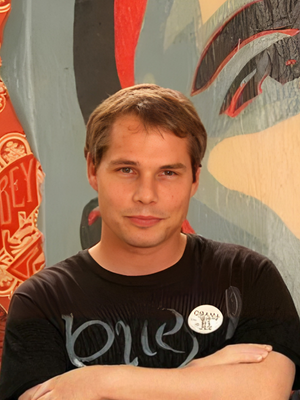
Shepard Fairey (b. 1970, Charleston, South Carolina) is an American street artist, graphic designer, and activist, and a graduate of the Rhode Island School of Design. His 1989 “André the Giant Has a Posse” sticker grew into the global OBEY GIANT campaign — an ongoing experiment in propaganda, obedience, and visual culture. He reached worldwide recognition with the 2008 “Hope” portrait of Barack Obama, now held by the Smithsonian National Portrait Gallery. Across screen prints, stencils, murals, and collage, Fairey channels propaganda aesthetics toward themes of peace, justice, environmentalism, and civil rights. His work is in the collections of the Museum of Modern Art, the Victoria & Albert Museum, and LACMA.