Gauntlet Gallery
What is Shepard Fairey’s piece called “The Future Is Unwritten”?
Artist Statement
This year, the Robert Rauschenberg Foundation launches its "Artist as Activist" print project and has chosen Shepard Fairey to create the inaugural "Artist as Activist" print. Seventy prints from the edition of 100 will be offered for sale exclusively through artnet Auctions. Prices for this signature work by Fairey will start at $1250.00 and escalate in price as the prints sell with the final 15 selling for $2500.00. As described by the artist: "My piece, "The Future Is Unwritten", evolved from several points of inspiration. Visually, the piece takes cues from the idealized styles of Art Nouveau and Art Deco. These art movements just preceded, and crossed into, the Great Depression, an era that saw a tremendous social aid effort under Franklin Delano Roosevelt. The text, "The Future Is Unwritten" is a quote from Joe Strummer of the punk group The Clash, who was a dedicated advocate for the working class. The flower growing from the barbed wire in my art piece is symbolic of the negative being overcome by the positive, a visual metaphor for hope in the unwritten future. The text LIBERTY, SHELTER, and EQUALITY refers to values, if not rights, that most people see as universally important. I see liberty as a right that fosters independence and self-determination, but which must be balanced by social responsibility and compassion for the less fortunate. It is only possible for society to evolve in a positive direction with a healthy balance of honoring both the needs of the individual, and promoting basic human rights and equality of the collective." ~Shepard Fairey, 2011.
Summary
The Future Is Unwritten is a 2011 signed screen print by Shepard Fairey, published by the Robert Rauschenberg Foundation in an edition of 100 measuring 30 x 42 inches. Created as the inaugural print for the foundation's Artist as Activist project, seventy prints were offered through artnet Auctions starting at $1,250 and escalating to $2,500 for the final fifteen. The design draws on Art Nouveau and Art Deco styles and features a flower growing from barbed wire alongside the words LIBERTY, SHELTER, and EQUALITY. The title quotes Joe Strummer of The Clash. Released November 11, 2011.
Why It Matters
The Future Is Unwritten is a notably significant Fairey print, distinguished as the inaugural commission for the Robert Rauschenberg Foundation's Artist as Activist project. Being chosen to launch a major foundation's activist-print initiative reflects Fairey's stature within socially engaged contemporary art. The work is dense with deliberate meaning: Fairey cites Art Nouveau and Art Deco, movements that crossed into the Great Depression and the social-aid era of Franklin Delano Roosevelt, framing the piece within a history of collective social responsibility. The central image of a flower growing from barbed wire serves as a visual metaphor for hope overcoming adversity, while the words LIBERTY, SHELTER, and EQUALITY articulate the universal values he champions. The title, drawn from Joe Strummer of The Clash, ties his punk roots to his humanitarian message. Its distribution through artnet Auctions with an escalating price structure, from $1,250 up to $2,500, and a small edition of 100 mark it as a higher-tier, more collectible release than his typical accessible drops. The print stands as one of Fairey's most explicitly articulated statements on human rights and equality from this period, backed by an institutional partnership that elevates its art-historical weight.
Collector Perspective
This print attracts serious collectors who prioritize Fairey's institutionally backed and conceptually rich works. The Robert Rauschenberg Foundation provenance and its status as the inaugural Artist as Activist print give it added prestige and narrative depth that discerning buyers value highly. Its small edition of 100, large 30 x 42 inch format, and auction-based distribution with escalating prices position it well above his accessible drops, appealing to investment-minded and advanced collectors. Those building a collection around Fairey's human-rights and social-justice themes will find it a centerpiece. The dense symbolism, the FDR-era references, and the Joe Strummer quote also reward collectors who appreciate the layered meaning behind his work.
Historical Context
The Future Is Unwritten occupies a distinctive place in Fairey's catalogue as the inaugural commission for the Robert Rauschenberg Foundation's Artist as Activist print project, an institutional endorsement of his role as a politically engaged artist. By referencing Art Nouveau, Art Deco, and the FDR-era social-aid response to the Great Depression, Fairey explicitly positioned the work within a longer history of collective social responsibility. The Joe Strummer quote connects it to his enduring punk influences. Distributed through artnet Auctions with an escalating price structure, it reflects a higher-tier, gallery-and-auction market presence within his 2011 output, marking a moment of significant institutional recognition in his arc.
FAQ
Why is this print significant?
It was chosen by the Robert Rauschenberg Foundation as the inaugural print for its Artist as Activist project, making it a landmark institutional commission in Fairey's catalogue. It is a signed screen print measuring 30 x 42 inches in an edition of 100, released November 11, 2011.
How was it sold and priced?
Seventy prints from the edition of 100 were offered exclusively through artnet Auctions, with prices starting at $1,250 and escalating as prints sold, with the final fifteen reaching $2,500. This auction-based, escalating structure set it apart from Fairey's typical fixed-price drops.
What does the imagery mean?
Per Fairey, the design draws on Art Nouveau and Art Deco styles and shows a flower growing from barbed wire as a metaphor for the negative being overcome by the positive. The words LIBERTY, SHELTER, and EQUALITY reference universally important values and rights.
Where does the title come from?
The text The Future Is Unwritten is a quote from Joe Strummer of the punk group The Clash, whom Fairey describes as a dedicated advocate for the working class, linking the print to his punk influences and humanitarian themes.
Related Works
About the Artist
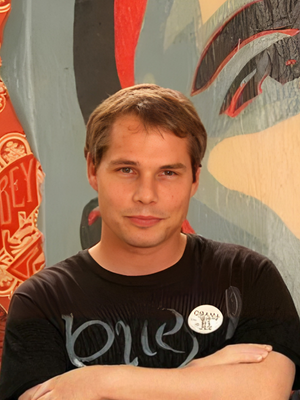
Shepard Fairey (b. 1970, Charleston, South Carolina) is an American street artist, graphic designer, and activist, and a graduate of the Rhode Island School of Design. His 1989 “André the Giant Has a Posse” sticker grew into the global OBEY GIANT campaign — an ongoing experiment in propaganda, obedience, and visual culture. He reached worldwide recognition with the 2008 “Hope” portrait of Barack Obama, now held by the Smithsonian National Portrait Gallery. Across screen prints, stencils, murals, and collage, Fairey channels propaganda aesthetics toward themes of peace, justice, environmentalism, and civil rights. His work is in the collections of the Museum of Modern Art, the Victoria & Albert Museum, and LACMA.