Gauntlet Gallery
What is Shepard Fairey’s piece called “Shoplifters Welcome (Large Format - Red & Black)”?
Artist Statement
26 x 34 1/2 inches, Edition of 50 Signed by Shepard Fairey and Jamie Reid Limit 1 per person/household Subliminal Projects and Paul Stolper are pleased to announce a print edition collaboration between Jamie Reid and Shepard Fairey. The editions were created to commemorate Reid’s Ragged Kingdom exhibition, March 16 to April 14, 2012. Limited Quantity available Jamie has been one of my biggest influences and I’m honored that we worked on some collaborative images for the show. The new images deal with mutual interests of Jamie and I, addressing the timeless problems of corruption and wealth inequality, but tie into the very current themes of Occupy Wall Street and the dead end of fossil fuel consumption. - Shepard Fairey, 2012
Summary
Shoplifters Welcome (Large Format - Red & Black) is a 2012 screen print measuring 26 x 34 1/2 inches in a first edition of 50, signed by Shepard Fairey and Jamie Reid. A collaboration between the two artists, it was created to commemorate Reid's Ragged Kingdom exhibition. The red-and-black image draws on themes of corruption and wealth inequality, tied by Fairey's own statement to Occupy Wall Street and the consequences of fossil-fuel consumption. The work pairs Fairey's graphic language with Reid's punk-collage sensibility, producing a confrontational, text-driven anti-consumerist composition.
Why It Matters
This print is significant as a direct collaboration between Shepard Fairey and Jamie Reid, the British artist behind the Sex Pistols' visual identity and a foundational figure in punk graphic design. By Fairey's own account, Reid was one of his biggest influences, which makes the pairing a meaningful meeting of two generations of subversive image-making. The edition was produced to commemorate Reid's Ragged Kingdom exhibition, anchoring it to a specific cultural event rather than a routine release. Thematically, Fairey frames the work around corruption and wealth inequality, explicitly connecting it to Occupy Wall Street and to critiques of fossil-fuel dependence, giving the piece a clear protest-era charge. At 26 x 34 1/2 inches and limited to 50 signed examples carrying both artists' signatures, it is among the scarcer and more historically loaded of Fairey's 2012 collaborations. For collectors, dual authorship by Fairey and a punk-design icon elevates the print beyond a standard OBEY release, and the red-and-black colorway is one of two large-format variants from the collaboration, adding a completist dimension for those tracking the full set.
Collector Perspective
This is a natural target for collectors of artist collaborations and punk-design history, given the dual signatures of Fairey and Jamie Reid. The edition of 50 and large 34 1/2-inch scale make it a relatively scarce, statement-sized piece suited to buyers who want a centerpiece tied to a documented exhibition and a named cultural moment. Its Occupy-era anti-consumerist message appeals to those building politically themed collections, while the Reid connection draws music-and-counterculture collectors. The red-and-black colorway pairs with the pink-and-orange variant for completists pursuing the full collaboration. Display appeal is high: the bold two-color palette and confrontational typography read strongly when framed.
Historical Context
Created in 2012, this print sits within Fairey's prolific Occupy-era output, when much of his work engaged wealth inequality and corporate power. It marks a notable collaboration with Jamie Reid, whose Sex Pistols artwork shaped punk's visual language and who Fairey cites as a major influence. The edition was made for Reid's Ragged Kingdom exhibition through Subliminal Projects and Paul Stolper, linking Fairey's American street-art lineage to British punk graphics. Within his arc, it represents the period when his practice increasingly intersected with established counterculture figures and topical activism, bridging pop iconography and protest while reinforcing his role as a connector across activist art movements.
FAQ
Who created this print?
It is a collaboration between Shepard Fairey and Jamie Reid, the artist known for the Sex Pistols' visual identity. The edition is signed by both artists and was made to commemorate Reid's Ragged Kingdom exhibition in 2012.
What is the edition size and dimensions?
It is a screen print measuring 26 x 34 1/2 inches in a first edition of 50. This red-and-black version is one of the large-format variants from the collaboration, alongside a pink-and-orange edition.
What themes does it address?
By Fairey's own statement, the work deals with corruption and wealth inequality, tying into the contemporary themes of Occupy Wall Street and the dead end of fossil-fuel consumption.
Was it signed?
Yes. The source notes it is signed by both Shepard Fairey and Jamie Reid, with a limit of one per person or household at release.
Related Works

About the Artist
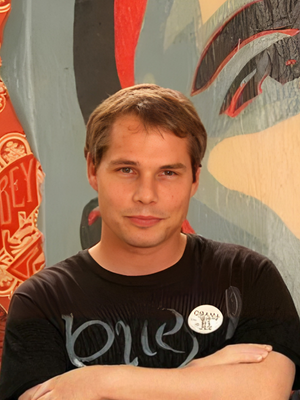
Shepard Fairey (b. 1970, Charleston, South Carolina) is an American street artist, graphic designer, and activist, and a graduate of the Rhode Island School of Design. His 1989 “André the Giant Has a Posse” sticker grew into the global OBEY GIANT campaign — an ongoing experiment in propaganda, obedience, and visual culture. He reached worldwide recognition with the 2008 “Hope” portrait of Barack Obama, now held by the Smithsonian National Portrait Gallery. Across screen prints, stencils, murals, and collage, Fairey channels propaganda aesthetics toward themes of peace, justice, environmentalism, and civil rights. His work is in the collections of the Museum of Modern Art, the Victoria & Albert Museum, and LACMA.