Gauntlet Gallery
What is Shepard Fairey’s piece called “Rollins Capitalism”?
Artist Statement
18 x 24 inch screen print signed by Shepard and Henry. Edition of 1200. Only 200 units to be sold on OG.com $55. Limit 1 per person/household. Henry Rollins has been a hero of mine since I got into Black Flag in 1984. Henry is a role model in his amazing taste and output in music, his political engagement, his monumental work ethic, and his social consciousness. Henry tours a ton and stays very aware of the world. Back before the 2008 recession started, Henry had an an editorial segment on his TV show where he said “the president says the fundamentals of the economy are strong…I say start learning Chinese”. Henry’s new tour is called CAPITALISM and I’m sure he will have a lot of wise, funny, and maybe prophetic things to say. I was given the honor by Henry of illustrating his concept for the tour, him as a beaten-down Uncle Sam. I have a few of the prints available on my site signed by both me and Henry. The rest will be available on Henry’s tour which everyone should see. Pick a print up before the American brand of capitalism crumbles under the weight of its own ego. -Shepard Fairey
Summary
Rollins Capitalism is a 2012 screen print by Shepard Fairey, 18 x 24 inches in an edition of 1200, signed by Fairey and Henry Rollins, with only 200 units sold on Obey Giant at $55. Made to illustrate Rollins's CAPITALISM tour, it depicts Rollins as a beaten-down Uncle Sam. Fairey describes Rollins as a hero since his Black Flag days in 1984, praising his music, political engagement, and social consciousness. The image fuses music tribute with pointed critique of American capitalism, rendered in Fairey's bold graphic style.
Why It Matters
Rollins Capitalism unites two of Shepard Fairey's enduring concerns, music subculture and political critique, in a tribute to punk icon Henry Rollins that doubles as commentary on American capitalism. Created to illustrate Rollins's CAPITALISM tour, the image casts him as a beaten-down Uncle Sam, a pointed visual fusing patriotic iconography with critique of economic decline. Fairey's accompanying statement is unusually personal, naming Rollins a hero since he discovered Black Flag in 1984 and praising his political engagement, work ethic, and social consciousness, which grounds the collaboration in genuine influence rather than mere celebrity. Signed by both Fairey and Rollins, the print carries the weight of a meaningful punk-world endorsement. Its edition of 1200 is large, but only 200 units were sold through Obey Giant, with the remainder distributed on Rollins's tour, an unusual structure that ties scarcity on the artist's own channel to a live music context. For collectors, the piece bridges Fairey's music homages and his political series, appealing to punk-history enthusiasts, Rollins fans, and those tracking his capitalism critique, making it a distinctive crossover within his catalog.
Collector Perspective
This is a crossover piece that draws music-and-counterculture collectors, Henry Rollins and Black Flag fans, and buyers of Fairey's political work alike. The dual signatures of Fairey and Rollins and the personal backstory give it narrative weight, while the Uncle Sam capitalism critique fits politically themed collections. Although the edition is 1200, only 200 were sold through Obey Giant, with the rest distributed on tour, which makes the OG-channel examples comparatively limited and adds provenance interest. The bold red-toned graphic and recognizable Rollins likeness display strongly. It pairs naturally with Fairey's other Rollins prints and his capitalism-critique works.
Historical Context
Released in August 2012, Rollins Capitalism reflects Fairey's deep roots in punk culture, tracing back to his discovery of Black Flag in 1984, and his ongoing critique of American economic power. Made to illustrate Henry Rollins's CAPITALISM tour, it depicts Rollins as a worn Uncle Sam, channeling the recession-era anxieties Fairey references through Rollins's own commentary. As a collaboration signed by both, with most of the 1200-piece edition distributed on tour rather than sold online, it exemplifies how Fairey embedded prints within live music contexts. Within his arc, it sits at the intersection of his music tributes and his political series during the early 2010s.
FAQ
Who is depicted in Rollins Capitalism?
It depicts musician Henry Rollins as a beaten-down Uncle Sam, an image Fairey illustrated for Rollins's CAPITALISM tour. Fairey calls Rollins a hero since he got into Black Flag in 1984, praising his music, political engagement, and social consciousness.
What are the edition details?
It is an 18 x 24 inch screen print signed by both Shepard Fairey and Henry Rollins, in an edition of 1200. Only 200 units were sold on Obey Giant at $55, with a limit of one per person; the rest were available on Rollins's tour.
What is the print's message?
It pairs a music tribute with a critique of American capitalism, casting Rollins as a worn Uncle Sam. Fairey references recession-era economic anxiety, inviting buyers to pick up a print before, in his words, American capitalism crumbles under its own ego.
How does it fit Fairey's work?
It bridges his music homages and political series, reflecting his punk roots and his ongoing critique of economic power, and continues his collaborations with Henry Rollins across multiple prints.
Related Works
About the Artist
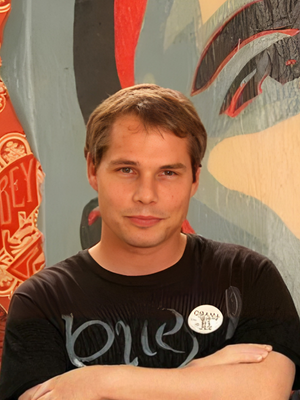
Shepard Fairey (b. 1970, Charleston, South Carolina) is an American street artist, graphic designer, and activist, and a graduate of the Rhode Island School of Design. His 1989 “André the Giant Has a Posse” sticker grew into the global OBEY GIANT campaign — an ongoing experiment in propaganda, obedience, and visual culture. He reached worldwide recognition with the 2008 “Hope” portrait of Barack Obama, now held by the Smithsonian National Portrait Gallery. Across screen prints, stencils, murals, and collage, Fairey channels propaganda aesthetics toward themes of peace, justice, environmentalism, and civil rights. His work is in the collections of the Museum of Modern Art, the Victoria & Albert Museum, and LACMA.