Gauntlet Gallery
What is Shepard Fairey’s piece called “Not Great Men”?
Artist Statement
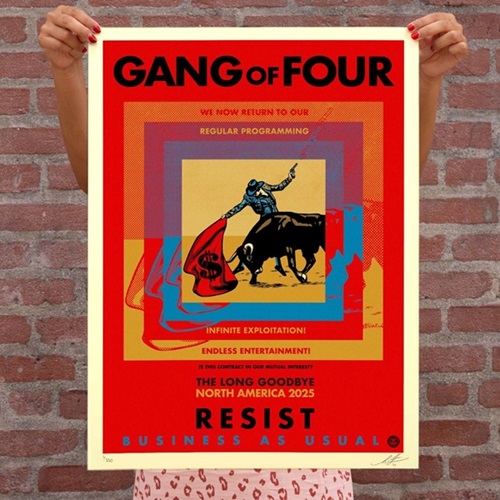
The Not Great Men print was inspired by the Gang of Four song of the same name from their album “Entertainment”.. Gang of Four are a great band musically and lyrically with many of their songs tackling subjects like consumption, capitalism, obsession with power, exploitation, narcissism, and class structure. The song Not Great Men has long struck me as a wise indictment of the contradiction or paradox of leadership and power. It takes assertive, charismatic people with self-confidence to be leaders, but on the dark side, leaders are often power hungry, manipulative, and abusive of their power. Once someone has power it is not only possible for them to shape history for better or worse, but it is also easier for them to manipulate historical portrayal of their role in their favor. I think Gang of Four’s point with Not Great Men is to suggest that power is not inherently great and should be feared as much as revered. The world is often shaped by those who are not great men. On a personal note, I think a larger percentage of women in public leadership roles would bring more diplomacy, fairness, and benevolence. Of course, that is a generalization because one can cite Margaret Thatcher and Imelda Marcos as brutal women. Regardless of gender, the public needs to be less seduced by, and in awe of, power… and leaders need more checks and balances to their power. -Shepard 18 x 24 inch screen print. Signed and numbered edition of 450. $45. Release date: Tuesday August 20, 2013
Summary
Not Great Men is a 2013 Obey Giant screen print, 18 x 24 inches, signed and numbered in a first edition of 450, originally priced at $45. The source explains it was inspired by the Gang of Four song of the same name from their album 'Entertainment'. Fairey reads the song as an indictment of the paradox of leadership and power, suggesting that power is not inherently great and that the world is often shaped by people who are not great men. The print channels this critique of charisma, manipulation, and unchecked authority, and Fairey adds a note advocating more women in public leadership.
Why It Matters
Not Great Men is one of Fairey's more explicitly ideological music-derived prints, fusing his love of post-punk with a pointed critique of power. Drawing its title and theme from the Gang of Four song on 'Entertainment', it lets Fairey foreground subjects the band tackled, consumption, capitalism, obsession with power, exploitation, narcissism, and class structure, that closely mirror his own recurring concerns. The source includes an unusually direct authorial statement: Fairey argues power should be feared as much as revered, that leaders manipulate their own historical portrayal, and that the public needs to be less seduced by power while leaders need more checks and balances. Notably, he also voices support for more women in public leadership, tempering it with the acknowledgment that women like Margaret Thatcher and Imelda Marcos were brutal. This makes the print a clear example of Fairey using music as a springboard for political commentary. For collectors, that documented, layered message gives the work depth beyond its graphic appeal and ties it to both his music and his power-critique threads.
Collector Perspective
This print appeals to collectors who value the political substance of Fairey's work and to post-punk and Gang of Four fans drawn to its musical and lyrical source. The documented authorial statement about power, leadership, and checks and balances gives it strong narrative depth for a thematically organized collection. As a signed and numbered edition of 450 at an accessible original price, it sits in the approachable tier. It works well alongside Fairey's other music-rooted and power-critique prints, anchoring a section that bridges his counterculture influences and his political messaging. Its idea-driven content makes it a conversation piece as much as a wall work.
Historical Context
Released in August 2013, Not Great Men belongs to the strand of Fairey's catalog where music and political critique intersect. By drawing on Gang of Four, a band central to politically charged post-punk, Fairey aligns his own long-standing themes of consumerism, power, and class with theirs. The source's detailed statement situates the print within his ongoing skepticism of authority and his advocacy for accountability and broader representation in leadership. It reflects how, in this period, Fairey used song-inspired prints not merely as fan tributes but as vehicles for explicit social commentary, extending the counterculture lineage that shaped his outlook into pointed contemporary critique.
FAQ
What inspired Not Great Men?
According to the source, the print was inspired by the Gang of Four song of the same name from their album 'Entertainment'. Fairey describes the band as great musically and lyrically, tackling subjects like consumption, capitalism, obsession with power, exploitation, narcissism, and class structure.
What is the print's message?
Fairey reads the song as an indictment of the paradox of leadership: it takes confident, charismatic people to lead, but leaders are often power-hungry and manipulative. He argues power is not inherently great, should be feared as much as revered, and that leaders need more checks and balances.
Does the print touch on gender and leadership?
Yes. In the source, Fairey adds that he believes more women in public leadership would bring more diplomacy, fairness, and benevolence, while acknowledging this is a generalization, citing Margaret Thatcher and Imelda Marcos as brutal counterexamples.
What are the edition details?
Not Great Men is a 2013 screen print, 18 x 24 inches, published by Obey Giant as a signed and numbered first edition of 450. Its original price was $45 and it was released on August 20, 2013.
Related Works
About the Artist
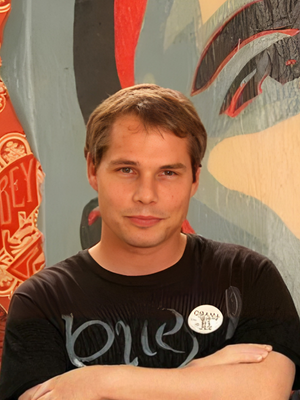
Shepard Fairey (b. 1970, Charleston, South Carolina) is an American street artist, graphic designer, and activist, and a graduate of the Rhode Island School of Design. His 1989 “André the Giant Has a Posse” sticker grew into the global OBEY GIANT campaign — an ongoing experiment in propaganda, obedience, and visual culture. He reached worldwide recognition with the 2008 “Hope” portrait of Barack Obama, now held by the Smithsonian National Portrait Gallery. Across screen prints, stencils, murals, and collage, Fairey channels propaganda aesthetics toward themes of peace, justice, environmentalism, and civil rights. His work is in the collections of the Museum of Modern Art, the Victoria & Albert Museum, and LACMA.