Gauntlet Gallery
What is Shepard Fairey’s piece called “Bob Marley - Slave Driver”?
Artist Statement
The BOB MARLEY Slave Driver print is an 18 inch x 24 inch screen print signed by Shepard Fairey and Dennis Morris. The edition is 500 at a price of $80. ObeyGiant.com Release date is Tuesday Feb.10, 2015 “I bought Bob Marley’s Rastaman Vibrations shortly after I started skateboarding in 1984, purely because the only good skateboard ramp where I lived was called “The Rasta Ramp.” I had mostly been listening to punk rock, but I was excited to discover reggae, which even more boldly embodied many of the same elements of social protest as punk but in a way that was much more palatable to my parents. I think my parents bought me Bob Marley and the Wailers records for every Christmas or birthday until I had accumulated their entire catalog; my very conservative grandmother even bought me a Bob Marley shirt from Jamaica. I leaned more towards punk, but some punk bands, most notably Bad Brains, embraced both punk and reggae. Bob Marley’s music always cheered me up during my high-school years of personal struggle. I’m always inspired by how steadfast and positive Bob was.” (quote from Shepard’s 20th Year Supply & Demand) -Shepard
Summary
Bob Marley - Slave Driver is a 2015 screen print, 24 x 18 inches, signed by Shepard Fairey and Dennis Morris in an edition of 500 at $80, published by Obey Giant. Tied to Marley's song "Slave Driver," the work renders the reggae icon in Fairey's graphic portrait style. The accompanying text recounts Fairey's discovery of Bob Marley's music in 1984 through skateboarding and reggae's affinity with the social protest of punk, framing the print as a tribute to Marley's steadfast, positive spirit.
Why It Matters
This portrait connects two of Fairey's deepest influences, reggae and punk, through one of music's most iconic figures. The source includes a personal account, drawn from Fairey's 20th Year Supply & Demand, of discovering Bob Marley in 1984 via skateboarding and recognizing reggae as embodying the same social-protest spirit as punk, with a nod to Bad Brains bridging both genres. That documented biographical depth makes the print more than a celebrity portrait, it is rooted in Fairey's formative musical and countercultural identity. The dual signature with Dennis Morris, a photographer renowned for his images of Bob Marley, gives the work a strong provenance link to the subject, and the tie to the song "Slave Driver" anchors it to Marley's catalog of protest-oriented music. As an edition of 500 at $80 featuring a universally recognized figure, it carries broad crossover appeal to reggae fans and music collectors while remaining squarely within Fairey's music and counterculture portraiture.
Collector Perspective
This print appeals to a wide audience: Fairey collectors, reggae and Bob Marley fans, and music-portrait buyers generally, given Marley's universal recognition. The dual signature with photographer Dennis Morris, known for his Marley images, adds provenance value for collectors who prize subject-connected collaborators. At $80 with an edition of 500, it is an accessible, broadly desirable music portrait that displays well in a music room. The documented personal story of Fairey's 1984 discovery of Marley enriches its appeal for those who value narrative context. It fits a collection organized around music, counterculture, and Fairey's portrait work.
Historical Context
Released February 6, 2015 (with an ObeyGiant.com release noted for February 10), Bob Marley - Slave Driver sits within Fairey's extensive run of music-icon screen prints. The collaboration with Dennis Morris, a photographer closely tied to Bob Marley's image, strengthens the work's connection to its subject and continues Fairey's pattern of partnering with photographers. The source roots the piece in Fairey's own history, his 1984 entry into reggae through skateboarding and his recognition of its protest kinship with punk, exemplified by Bad Brains. This places the print at the confluence of Fairey's counterculture roots and his ongoing tribute to musicians whose work carries social meaning. It represents a high-recognition entry in his music and counterculture portraiture from the mid-2010s.
FAQ
Who signed the Bob Marley - Slave Driver print?
Per the source, it is signed by Shepard Fairey and Dennis Morris. Morris is a photographer associated with Bob Marley, and the edition of 500 ties to Marley's song "Slave Driver." The print was published by Obey Giant at $80.
What is the print's size and edition?
The source describes it as an 18 inch x 24 inch screen print in an edition of 500, priced at $80. The ObeyGiant.com release date is noted as Tuesday, February 10, 2015, with the record dated February 6, 2015.
How did Fairey come to Bob Marley's music?
In a quote from his 20th Year Supply & Demand, Fairey recounts buying Marley's Rastaman Vibrations in 1984 after starting skateboarding, noting reggae embodied the social-protest spirit of punk in a way his parents found more palatable, and citing Bad Brains as a band bridging both genres.
What song is the print based on?
The print is tied to Bob Marley's song "Slave Driver." Per the source, Fairey pairs the reggae icon's image with this protest-oriented track, reflecting his admiration for how steadfast and positive Marley was, as recounted in his own statement.
Related Works
About the Artist
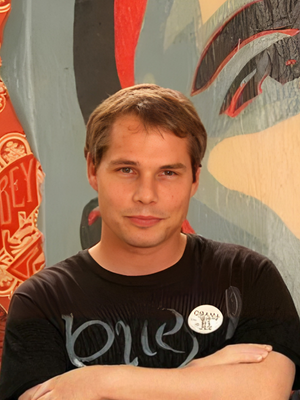
Shepard Fairey (b. 1970, Charleston, South Carolina) is an American street artist, graphic designer, and activist, and a graduate of the Rhode Island School of Design. His 1989 “André the Giant Has a Posse” sticker grew into the global OBEY GIANT campaign — an ongoing experiment in propaganda, obedience, and visual culture. He reached worldwide recognition with the 2008 “Hope” portrait of Barack Obama, now held by the Smithsonian National Portrait Gallery. Across screen prints, stencils, murals, and collage, Fairey channels propaganda aesthetics toward themes of peace, justice, environmentalism, and civil rights. His work is in the collections of the Museum of Modern Art, the Victoria & Albert Museum, and LACMA.