Gauntlet Gallery
What is Shepard Fairey’s piece called “Post No Bills Collage”?
Artist Statement
POST NO BILLS COLLAGE Screen Print 18 x 24 inches Edition of 140
Summary
Post No Bills Collage is a 2000 screen print published by Obey Giant in a first edition of 140, measuring 18 x 24 inches. The source provides only minimal cataloguing detail beyond title, medium, dimensions, and edition. As a collage titled Post No Bills, it appears to align with Fairey's layered, street-derived collage works that reference the wheatpaste and poster culture of the urban environment, rendered in his flat, high-contrast graphic style. Without a fuller description, the specific composition is best read cautiously.
Why It Matters
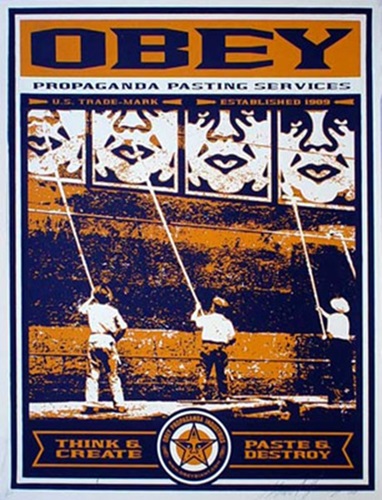
Post No Bills Collage draws on a phrase, 'post no bills,' long stenciled on urban walls to forbid the very wheatpasting and flyposting that built Fairey's practice, making the title a pointed, self-aware nod to street-art culture. The collage format is significant in its own right: Fairey's collage works layer torn-paper textures, posters, and graphic elements to evoke the accreted surfaces of the city, distinguishing them from his cleaner portrait and stencil prints. With limited source description, its importance is best framed cautiously as a representative example of his collage vocabulary rather than a documented landmark. For collectors, the appeal lies in the small first edition of 140 and its fit within a group of his collage works, such as the Big Brother and Obedience Problems collages and the later Mao and Marcos collages. The title's ironic engagement with prohibitions on street posting gives it conceptual resonance tied directly to his origins. As a node in his collage output, it offers an on-brand acquisition, though firm claims about its imagery should await fuller documentation.
Collector Perspective
Post No Bills Collage suits collectors drawn to Fairey's collage works and to the street-art culture his practice emerged from. The 'post no bills' title carries an ironic, insider resonance that appeals to those who value works engaging directly with wheatpaste and flyposting history. With a small first edition of 140, it is a relatively accessible piece, well suited to building a thematic group of his collage prints alongside the Big Brother, Obedience Problems, Mao, and Marcos collages. At 18 x 24 inches it frames easily and reads well in a cluster of layered, texture-rich works. Because the source description is sparse, collectors should verify the specific imagery before relying on it. Its appeal is largely contextual: a representative, affordable example of his collage method.
Historical Context
Post No Bills Collage dates to 2000 and belongs to the Posters and Propaganda phase, when Fairey's Obey Giant studio was producing collage-format screen prints alongside portraits and stencils. The collage method connects directly to his street origins, evoking the layered, poster-covered surfaces of the urban environment that hosted his wheatpaste campaigns. The 'post no bills' title references the warnings that historically prohibited flyposting, an ironic engagement with the very practice that built his reputation. Coming after his late-1980s and 1990s sticker work, the print reflects his continued mining of street culture as both subject and technique. With limited documentation, its precise role is best stated cautiously, but it is consistent with the collage works that recur throughout this era and beyond.
FAQ
What is the edition size of Post No Bills Collage?
It is a first edition of 140, published by Obey Giant in 2000. The edition size, title, medium, and dimensions are all stated in the source record.
What are the dimensions and medium?
It is a screen print measuring 18 x 24 inches, consistent with Fairey's other Obey Giant prints from the same year. These details are drawn directly from the source.
What does the title mean?
'Post no bills' is a warning historically stenciled on city walls to forbid flyposting and wheatpasting, the very street practice that built Fairey's career. The title is an ironic, self-aware reference, though the source does not describe the specific imagery.
How does it relate to his other collages?
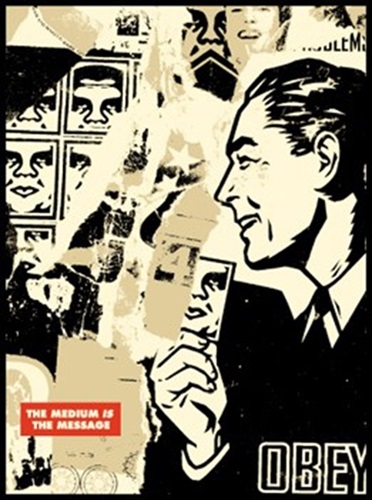
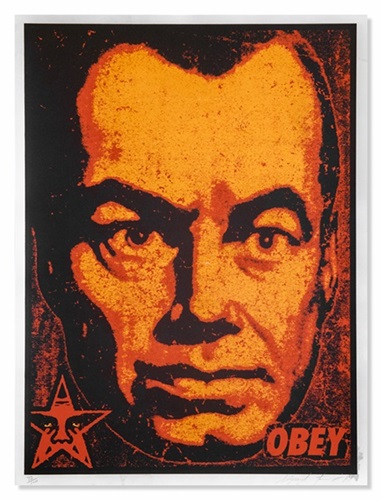
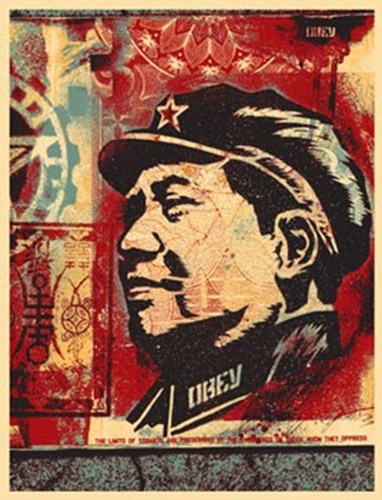
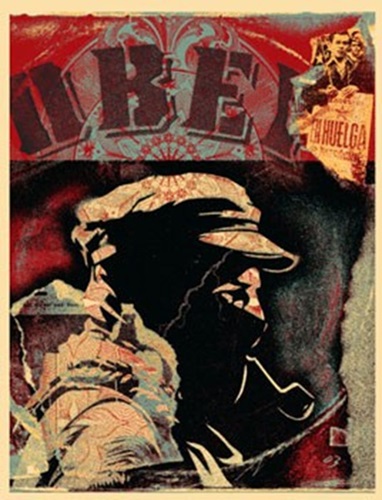
It belongs to a recurring collage strand in Fairey's work, alongside the Big Brother and Obedience Problems collages and the later Mao and Marcos collages, making it a logical fit for a collage-focused grouping.
Related Works
About the Artist

Shepard Fairey (b. 1970, Charleston, South Carolina) is an American street artist, graphic designer, and activist, and a graduate of the Rhode Island School of Design. His 1989 “André the Giant Has a Posse” sticker grew into the global OBEY GIANT campaign — an ongoing experiment in propaganda, obedience, and visual culture. He reached worldwide recognition with the 2008 “Hope” portrait of Barack Obama, now held by the Smithsonian National Portrait Gallery. Across screen prints, stencils, murals, and collage, Fairey channels propaganda aesthetics toward themes of peace, justice, environmentalism, and civil rights. His work is in the collections of the Museum of Modern Art, the Victoria & Albert Museum, and LACMA.