Gauntlet Gallery
What is Shepard Fairey’s piece called “Wrong Path”?
Artist Statement
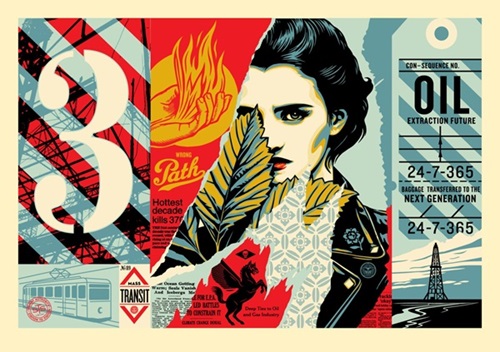
The Wrong Path print is a recognition of the challenges anyone championing environmental responsibility face as well as a comment on the potentially disastrous consequences of the shortsighted policies of Trump's current administration. The president pulled the United States out of the Paris Climate Accord and appointed Scott Pruitt as head of the Environmental Protection Agency when he had a record of opposing environmental regulation and suing the EPA! We need to consider the consequences of transferring the baggage of irresponsible environmental policies to future generations. Proceeds from this print will go to NRDC to help aid their efforts to improve environmental policies. Thanks for caring. – Shepard Wrong Path. 18 x 24 inches. Screen print on cream Speckletone paper. Signed by Shepard Fairey. Numbered edition of 450. $55.
Summary
Wrong Path is a 2017 screen print by Shepard Fairey, published by Obey Giant. It measures 18 x 24 inches, is printed on cream Speckletone paper, signed by Fairey, and issued as a numbered edition of 450. The print addresses environmental responsibility and the consequences of shortsighted policy, referencing the U.S. withdrawal from the Paris Climate Accord and the appointment of Scott Pruitt to the EPA. Fairey frames it as a recognition of the challenges facing those who champion environmental protection. Proceeds from the print were directed to the NRDC to support its environmental efforts.
Why It Matters
Wrong Path is one of Shepard Fairey's most explicitly topical environmental prints, tying its imagery to specific policy moments rather than general ecological sentiment. In his own statement, Fairey names the U.S. exit from the Paris Climate Accord and the appointment of Scott Pruitt, a figure with a record of opposing environmental regulation, to lead the EPA. This specificity gives the print documentary value as a response to a precise political turn, and it sharpens the work beyond abstract climate concern into a pointed critique of policy. Fairey frames the piece around intergenerational responsibility, warning against transferring the burden of irresponsible environmental decisions to future generations, a theme that lends the work moral and forward-looking weight. The charitable dimension reinforces its activist purpose: proceeds were directed to the NRDC to support environmental advocacy, making the print an instrument of the cause it depicts, not merely a commentary on it. For collectors, Wrong Path anchors Fairey's environmental thread within a documented historical context. Signed and editioned at 450, it offers an accessible, recognizable Fairey object whose meaning is inseparable from the climate-policy debates of its moment, and whose proceeds carried that conviction into action.
Collector Perspective
Wrong Path appeals to collectors building a focused environmental collection within Fairey's catalog, and to those who value works tied to a documented charitable cause. The directed NRDC proceeds and explicit climate-policy context give it activist credibility that resonates with mission-minded collectors. Signed and sized at 18 x 24 inches on cream Speckletone paper, it is a displayable, recognizable Fairey object. Its edition of 450 and accessible price suit newer buyers as well as collectors assembling a themed set around environment and climate. It pairs naturally with Fairey's other 2017 environmental prints and with the large-format version of the same image.
Historical Context
Wrong Path belongs to Fairey's substantial 2017 body of environmental prints, produced as climate policy became a flashpoint in U.S. politics. Its references to the Paris Climate Accord withdrawal and the Pruitt EPA appointment root it firmly in that specific moment. Within Fairey's arc, environmental advocacy had grown into a defining pillar of his work, frequently paired with charitable partnerships such as the NRDC tie here. The print reflects his mature practice of releasing topical, signed editions that respond to current events while channeling proceeds toward the causes they address. A later large-format version extended the image, underscoring its standing within his environmental output.
FAQ
What policy events does Wrong Path reference?
In his statement Fairey references the U.S. withdrawal from the Paris Climate Accord and the appointment of Scott Pruitt, who had a record of opposing environmental regulation, as head of the EPA. The print critiques these shortsighted environmental policies and their potential consequences.
Did proceeds support a cause?
Yes. Fairey directed proceeds from the print to the NRDC to aid its efforts to improve environmental policies. This charitable dimension makes the work an instrument of the environmental advocacy it depicts rather than only a commentary.
What is the central message?
Fairey frames the print around environmental responsibility and intergenerational consequences, warning against transferring the burden of irresponsible environmental policies to future generations. It also recognizes the challenges faced by those championing environmental protection.
What are the print's specifications?
Wrong Path is a screen print measuring 18 x 24 inches on cream Speckletone paper, signed by Shepard Fairey and issued as a numbered edition of 450, published by Obey Giant in 2017.
Related Works
About the Artist
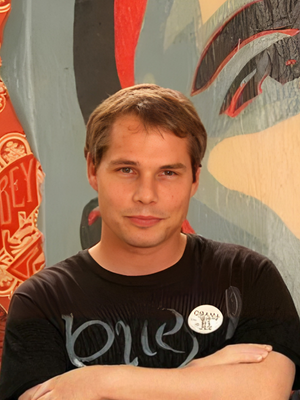
Shepard Fairey (b. 1970, Charleston, South Carolina) is an American street artist, graphic designer, and activist, and a graduate of the Rhode Island School of Design. His 1989 “André the Giant Has a Posse” sticker grew into the global OBEY GIANT campaign — an ongoing experiment in propaganda, obedience, and visual culture. He reached worldwide recognition with the 2008 “Hope” portrait of Barack Obama, now held by the Smithsonian National Portrait Gallery. Across screen prints, stencils, murals, and collage, Fairey channels propaganda aesthetics toward themes of peace, justice, environmentalism, and civil rights. His work is in the collections of the Museum of Modern Art, the Victoria & Albert Museum, and LACMA.