Gauntlet Gallery
What is Shepard Fairey’s piece called “Noise & Lies (Red)”?
Artist Statement
The Noise & Lies print is both a nod to John Lennon's "Gimme Some Truth" and my response to the disregard for facts and truth and the assault on the media waged by Donald Trump and members of his administration. Trump has called the media "an enemy of the American people," a tactic also used to undermine critics and avoid accountability by fascists and dictators including Stalin, Hitler, and Mao. We are in dangerous territory as a nation and society, when lies and chaos from our leaders often go unchecked and the news organizations that do thorough investigation are attacked by the president for reporting the truths they find. You can check out the history of the phrase "an enemy of the people" here and see why language meant to question patriotism and quell dissent is often employed in service of dictatorial aspirations. A portion of proceeds will benefit Media Matters to support the work they do holding media outlets accountable for untruthful and distorted stories. Honest media matters! Thanks for caring! – Shepard Noise & Lies (Red). 18 x 24 inches. Screen print on cream Speckletone paper. Signed by Shepard Fairey. Numbered edition of 325. $50.
Summary
Noise & Lies (Red) is a 2018 Shepard Fairey screen print published by Obey Giant, measuring 18 x 24 inches on cream Speckletone paper. The image responds to attacks on the press and the disregard for facts during the Trump administration, while nodding to John Lennon's 'Gimme Some Truth.' Fairey frames media accountability and honest reporting as essential to democracy, noting that a portion of proceeds would benefit Media Matters. The work was signed by the artist and released as a numbered edition of 325 at an original price of $50. This entry is the Cream variant; a Red colorway also exists.
Why It Matters
Noise & Lies (Red) is a pointed political statement that captures Fairey's response to a specific moment: the assault on press freedom and factual reporting under the Trump administration. The artist explicitly links the print to John Lennon's 'Gimme Some Truth,' grounding his media critique in a counterculture lineage, while drawing a sharp historical parallel between the 'enemy of the people' rhetoric and tactics used by Stalin, Hitler, and Mao. That framing positions the work as both timely protest and a warning about authoritarian language. Fairey notes that a portion of proceeds would benefit Media Matters, tying the piece to active support for media accountability. For collectors, it is a strong example of his political and pro-democracy output, where typography and graphic design carry urgent civic messaging. As a numbered edition of 325, it is a relatively smaller release within his 2018 catalog, and its explicit subject, defense of a free and honest press, gives it lasting relevance as a document of the period's political tensions and Fairey's role as an artist-activist.
Collector Perspective
This print appeals to collectors drawn to Fairey's overtly political and pro-democracy work, particularly those who collect pieces tied to specific historical moments. Its defense of press freedom and the John Lennon reference give it cultural resonance beyond decoration. The bold graphic and typographic treatment makes a strong statement in a home or gallery setting at 18 x 24 inches. Buyers who follow the cause-driven side of Fairey's practice will value the connection to Media Matters and the print's clear civic message. With a comparatively smaller numbered edition of 325, it offers added appeal for collectors who weigh edition size, while remaining an accessible, message-forward acquisition.
Historical Context
Released in January 2018 through Obey Giant, Noise & Lies (Red) belongs to Fairey's intensive period of political art responding directly to the Trump administration, following his We the People images. It reflects his recurring strategy of merging pop-culture and counterculture references, here John Lennon's 'Gimme Some Truth,' with sharp contemporary critique. The print's focus on press freedom and the 'enemy of the people' rhetoric places it within his broader pro-democracy and anti-authoritarian thread of the late 2010s. By pairing the work with support for Media Matters, Fairey continued his long practice of attaching editions to causes, reinforcing his identity as an artist whose printmaking is inseparable from active political engagement.
FAQ
What is Noise & Lies about?
Fairey describes the print as a response to the disregard for facts and the assault on the media waged by Donald Trump and his administration. He notes Trump called the media an 'enemy of the American people,' a phrase he links to tactics used by dictators including Stalin, Hitler, and Mao, framing the work as a defense of honest journalism.
What is the John Lennon connection?
Fairey calls the print a nod to John Lennon's song 'Gimme Some Truth.' The reference ties his contemporary media critique to a counterculture lineage of demanding honesty from those in power, blending pop-culture homage with pointed political commentary.
Did the print support a cause?
According to Fairey, a portion of proceeds would benefit Media Matters, supporting their work holding media outlets accountable for untruthful and distorted stories. This reflects his ongoing practice of linking editions to causes aligned with their message.
What is the edition size and format?
Noise & Lies (Red) was published by Obey Giant in a numbered edition of 325 at an original price of $50. It measures 18 x 24 inches and is a screen print on cream Speckletone paper, signed by Shepard Fairey. This entry is the Cream variant; a Red colorway also exists.
Related Works
About the Artist
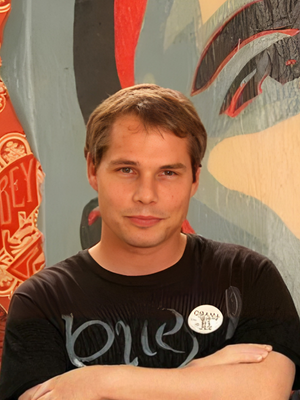
Shepard Fairey (b. 1970, Charleston, South Carolina) is an American street artist, graphic designer, and activist, and a graduate of the Rhode Island School of Design. His 1989 “André the Giant Has a Posse” sticker grew into the global OBEY GIANT campaign — an ongoing experiment in propaganda, obedience, and visual culture. He reached worldwide recognition with the 2008 “Hope” portrait of Barack Obama, now held by the Smithsonian National Portrait Gallery. Across screen prints, stencils, murals, and collage, Fairey channels propaganda aesthetics toward themes of peace, justice, environmentalism, and civil rights. His work is in the collections of the Museum of Modern Art, the Victoria & Albert Museum, and LACMA.