Gauntlet Gallery
What is Shepard Fairey’s piece called “Prevent Police Boredom (First Edition)”?
Artist Statement
This Prevent Police Boredom print is an updated version of my first "art" screen print (a print on paper rather than just on a t-shirt) from 1989. Long before I was arrested for street art, I was being hassled and arrested by the cops for skateboarding. I was inspired by the skateboard culture maxim of "question authority" and Black Flag's song "Police Story" and created this image of a kid holding a skateboard being grabbed by a cop. I thought this would be a great image to update for the #DIY skateboard show at Subliminal Projects because the first versions I made of Prevent Police Boredom for a sticker and a t-shirt included the text "Prevent police boredom… skateboard" in Old English, but my art teacher told me to leave the text off of the print on paper... which I later realized was shitty advice! I now have a poster version of the art which includes that essential text and I made 25 versions with different hand-stenciled backgrounds with my tributes to classic 80's skate and punk iconography. Each of the stenciled versions has unique embellishment. -Shepard Prevent Police Boredom. 18 x 24 inches. Screenprint on white Speckle Tone paper. Signed by Shepard Fairey. Numbered edition of 450. $50.
Summary
Prevent Police Boredom (First Edition) is a 2018 Shepard Fairey screenprint, 18 x 24 inches on white Speckle Tone paper, published by Obey Giant. It is signed and numbered in an edition of 450, released at $50. The image, of a kid holding a skateboard being grabbed by a cop, is an updated version of Fairey's first art screenprint from 1989. He created it for the DIY skateboard show at Subliminal Projects, drawing on skate culture's question-authority ethos and Black Flag's Police Story. The work fuses OBEY iconography with punk and skateboard counterculture in his signature graphic style.
Why It Matters
Prevent Police Boredom is unusually significant for an affordable screenprint because it directly revisits Fairey's origin story. As he explains, the image updates his very first art screenprint from 1989, made back when he was being hassled and arrested for skateboarding rather than street art. That autobiographical thread, anchored in skate culture's question-authority maxim and Black Flag's Police Story, makes the print a deliberate act of self-documentation. For collectors, this is the appeal: rather than a generic political poster, it is a window into the punk and skateboard roots that shaped the OBEY project. Fairey even narrates the backstory of leaving the Old English text off on his art teacher's advice, which he later regretted, giving the piece a candid, behind-the-scenes character. Created for the DIY skateboard show at Subliminal Projects, it ties his commercial-gallery present to his low-fi past. The edition of 450 keeps it accessible, but its real value is documentary and emotional: it connects a contemporary buyer to the formative culture behind one of street art's most recognizable brands, making it a meaningful node in any OBEY-focused or counterculture-themed collection.
Collector Perspective
This print speaks to collectors drawn to Fairey's origins, skate-and-punk culture, and the OBEY backstory rather than to pure aesthetics. Its accessible original price and edition of 450 make it attainable, while the autobiographical narrative gives it depth that rewards display alongside a label or wall text. It fits naturally in an OBEY-iconography grouping and pairs well with other works that reference his early career and counterculture roots. The 18 x 24 format is easy to frame and hang in a home, studio, or skate-influenced space. Buyers who value provenance will appreciate that it is signed and numbered through Obey Giant. It is best understood as a story-rich, collector-friendly piece that anchors the narrative of where Fairey began.
Historical Context
Prevent Police Boredom explicitly bridges Fairey's beginnings and his mature practice. The source ties it to his first art screenprint of 1989, predating his street-art arrests, and roots it in the skateboard culture and hardcore punk that informed the early OBEY project. By updating that image in 2018 for the DIY skateboard show at Subliminal Projects, his own gallery, Fairey reflects on the low-fi origins of his career while operating as an established artist. The work connects to other OBEY-iconography editions that mine his formative period and counterculture influences. Its historical weight comes from being a self-conscious return to source material: it documents the punk-and-skate ethos that seeded his later worldwide visual language, making it a useful anchor for understanding his arc from sticker-and-skateboard culture to global recognition.
FAQ
What is the image based on?
Per Fairey, it updates his first art screenprint from 1989, showing a kid holding a skateboard being grabbed by a cop. It draws on skate culture's question-authority ethos and Black Flag's song Police Story, made long before his street-art arrests.
Why was it created in 2018?
Fairey made this version for the DIY skateboard show at Subliminal Projects. He notes the original sticker and t-shirt versions included Old English text reading 'Prevent police boredom… skateboard,' which he left off the paper print on his art teacher's advice.
What are its specifications?
It is an 18 x 24 inch screenprint on white Speckle Tone paper, signed by Shepard Fairey and numbered in an edition of 450. It was published by Obey Giant in 2018 at an original release price of $50.
How does it relate to OBEY's roots?
The print ties Fairey's contemporary practice back to the punk and skateboard culture that shaped his early work, making it a documentary piece about the counterculture origins of the OBEY project.
Related Works
About the Artist
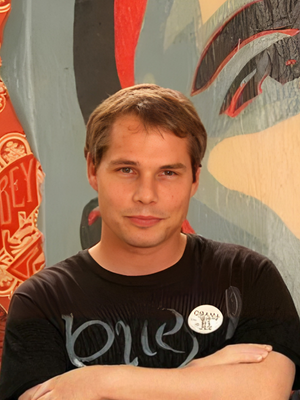
Shepard Fairey (b. 1970, Charleston, South Carolina) is an American street artist, graphic designer, and activist, and a graduate of the Rhode Island School of Design. His 1989 “André the Giant Has a Posse” sticker grew into the global OBEY GIANT campaign — an ongoing experiment in propaganda, obedience, and visual culture. He reached worldwide recognition with the 2008 “Hope” portrait of Barack Obama, now held by the Smithsonian National Portrait Gallery. Across screen prints, stencils, murals, and collage, Fairey channels propaganda aesthetics toward themes of peace, justice, environmentalism, and civil rights. His work is in the collections of the Museum of Modern Art, the Victoria & Albert Museum, and LACMA.