Gauntlet Gallery
What is Shepard Fairey’s piece called “Arab Woman (Large Format)”?
Artist Statement
The next print in the "Facing the Giant: Three Decades of Dissent" print series is "Arab Woman." Here's how co-curator Pedro Alonzo explains the work:? Shepard Fairey created this image of an Arab woman three years after the start of the second Gulf War. The work is a response to the extreme anti-Islamic rhetoric of the time. With this piece, Fairey confronts the notion of collective blame directed against all Arabs. Fairey portrays her as a characteristically strong woman, who looks directly at the viewer, confidently but no menacingly. Her countenance is appealing and relatable, evoking a humanizing effect on a group of people that are often misrepresented as threatening. The artist intends to stimulate humanity and compassion, challenging preconceived notions about Muslims, otherwise perceived as the enemy. The floral design of Turkish origin is intended to subconsciously evoke a unified appreciation of beauty and function as a bridge between the West and the Middle East, a familiar form that brings us all together. Arab Woman. Serigraph on Coventry Rag, 100% Cotton Custom Archival Paper with hand-deckled edges. 30 x 41 inches. Signed by Shepard Fairey. Numbered edition of 89. Comes with a certificate of authenticity. $900.
Summary
Arab Woman is a 2019 large-format screen print by Shepard Fairey, published by Obey Giant in a numbered edition of 89, measuring 30 x 41 inches on Coventry Rag 100% cotton archival paper with hand-deckled edges and signed by the artist. Part of the "Facing the Giant: Three Decades of Dissent" series, it portrays an Arab woman looking directly at the viewer, confident but not menacing. The composition incorporates a floral design of Turkish origin intended to evoke shared appreciation of beauty and act as a bridge between West and Middle East. The work responds to anti-Islamic rhetoric, confronting collective blame and humanizing a misrepresented group.
Why It Matters
Arab Woman is one of Fairey's most direct humanitarian statements, created as a response to extreme anti-Islamic rhetoric and the notion of collective blame directed at all Arabs. By portraying its subject as strong, relatable, and confidently meeting the viewer's gaze, Fairey deliberately counters caricatures that frame Muslims as threatening. Co-curator Pedro Alonzo frames the floral design of Turkish origin as a subconscious bridge between West and Middle East, a familiar decorative form meant to evoke a unified appreciation of beauty. This makes the print a clear example of Fairey using portraiture and ornament toward empathy and human rights rather than confrontation. Released in 2019 as part of the "Facing the Giant: Three Decades of Dissent" series, it sits within a curated survey of Fairey's activist career. The signed, numbered large-format edition of 89 on hand-deckled cotton rag gives the work fine-print presentation. For collectors, it represents Fairey's intersection of strong-woman portraiture, floral symbolism, and social-justice messaging, a combination that distinguishes it from his more overtly propagandistic political prints and aligns it with his work centering dignity and shared humanity.
Collector Perspective
Arab Woman attracts collectors interested in Fairey's portrait and women-centered work as well as those drawn to human-rights and social-justice themes. Its dignified subject and Turkish-origin floral framing give it a decorative richness that displays well as a portrait centerpiece, while its message adds depth for collectors who value art with social commentary. At 30 x 41 inches on hand-deckled cotton rag, it functions as a substantial fine-print object. The numbered edition of 89 places it among Fairey's more limited large-format releases, appealing to those who prioritize lower edition sizes. It fits collections built around Fairey's portraits of women, his floral-symbolism works, or the broader "Facing the Giant" survey series.
Historical Context
Arab Woman belongs to the "Facing the Giant: Three Decades of Dissent" print series, a curated survey of Fairey's activist career co-curated by Pedro Alonzo. Per the source, Fairey created the image three years after the start of the second Gulf War as a response to the anti-Islamic rhetoric of that period. Its 2019 release as a signed, numbered large-format screen print of 89 reflects Fairey's later practice of presenting career-spanning imagery at scale on premium archival paper. The work extends his recurring use of strong female portraiture and ornamental floral motifs toward themes of human rights and cross-cultural understanding, distinguishing it from his more confrontational propaganda-style pieces and situating it within his humanizing, empathy-driven body of work.
FAQ
What series does Arab Woman belong to?
It is part of Fairey's "Facing the Giant: Three Decades of Dissent" print series. Co-curator Pedro Alonzo describes the work as a response to anti-Islamic rhetoric, created three years after the start of the second Gulf War.
What is the meaning of the floral design?
The floral design is of Turkish origin and is intended to subconsciously evoke a unified appreciation of beauty, functioning as a bridge between the West and the Middle East, a familiar form meant to bring viewers together.
What are the edition details?
Arab Woman is a numbered edition of 89, signed by Shepard Fairey and published by Obey Giant in 2019. It comes with a certificate of authenticity and measures 30 x 41 inches as a large-format screen print.
What materials and size is the print?
It is a serigraph on Coventry Rag, 100% cotton custom archival paper with hand-deckled edges, measuring 30 x 41 inches. The original release price was $900.
Related Works
About the Artist
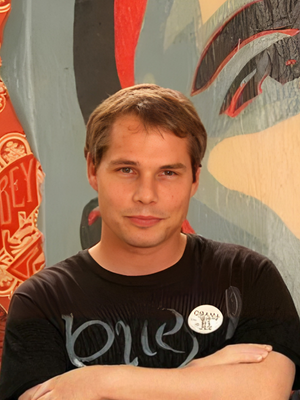
Shepard Fairey (b. 1970, Charleston, South Carolina) is an American street artist, graphic designer, and activist, and a graduate of the Rhode Island School of Design. His 1989 “André the Giant Has a Posse” sticker grew into the global OBEY GIANT campaign — an ongoing experiment in propaganda, obedience, and visual culture. He reached worldwide recognition with the 2008 “Hope” portrait of Barack Obama, now held by the Smithsonian National Portrait Gallery. Across screen prints, stencils, murals, and collage, Fairey channels propaganda aesthetics toward themes of peace, justice, environmentalism, and civil rights. His work is in the collections of the Museum of Modern Art, the Victoria & Albert Museum, and LACMA.