Gauntlet Gallery
What is Shepard Fairey’s piece called “Jesse Nubian (Large Format)”?
Artist Statement
This print is from the Brown Power series, which adopts the visual language of the Black Power movement and uses a softened Pan-African color scheme (red, black, and green) to portray several African-American freedom fighters. With his fist raised in a gesture made famous in the Black Power movement of the 1960s, we are reminded of civil rights activist and minister, the Reverend Jesse Jackson, Sr. and his countless proclamations of "I Am-Somebody," from a poem of that title originally written by Reverend William Holmes Borders, Sr. Jackson recited this poem at numerous rallies, festivals and television appearances as a call and response demonstration of empowerment and shared humanity that was central to his activism. This portrait captures the sentiment of this statement, echoing both in his defiant stance but also remaining a human portrait. By incorporating unknown silhouettes and figures into the series, viewers are expected to examine their acceptance of the aesthetic of power and activism to reveal how symbolism can at times overcome the truth. – Description written by co-curator Pedro Alonzo.? Jesse Nubian. Serigraph on Coventry Rag, 100% Cotton Custom Archival Paper with hand-deckled edges. 30 x 41 inches. Signed by Shepard Fairey. Numbered edition of 89. Comes with a certificate of authenticity. $900.
Summary
Jesse Nubian (Large Format) is a 2019 screen print from Shepard Fairey's Brown Power series, a serigraph on 100% cotton Coventry Rag archival paper with hand-deckled edges, measuring 30 x 41 inches. The large-format portrait depicts a defiant figure with a raised fist, echoing the Black Power salute of the 1960s and the spirit of Reverend Jesse Jackson's "I Am Somebody" call-and-response. Rendered in a softened Pan-African palette of red, black, and green, the work portrays an African-American freedom fighter while inviting viewers to question how the aesthetics of power and activism shape perception. Issued in a signed, numbered edition of 89, it includes a certificate of authenticity.
Why It Matters
Jesse Nubian sits within Fairey's Brown Power series, a body of work that deliberately repurposes the visual language of the Black Power movement to honor African-American freedom fighters and interrogate how symbols of activism are produced and consumed. The print's curatorial framing, written by co-curator Pedro Alonzo, makes its intent explicit: by mixing recognizable references to figures like Reverend Jesse Jackson with anonymous silhouettes, the series asks viewers to examine their own acceptance of the aesthetic of power, and how symbolism can at times overcome truth. That self-aware tension is what sets the work apart from a straightforward heroic portrait. For collectors, the large-format scale, hand-deckled archival paper, and a tight edition of 89 mark it as one of the more substantial civil-rights statements in Fairey's 2019 output. The softened Pan-African red-black-green palette ties it visually to a broader tradition of liberation imagery while keeping it unmistakably Fairey. It rewards collectors who value works that carry both a clear social message and a layer of critical commentary about activism itself, rather than slogans alone.
Collector Perspective
This print appeals to collectors focused on Fairey's civil-rights and portrait work, particularly those drawn to the Brown Power series and its Pan-African palette. The large 30 x 41-inch format makes it a commanding wall piece, and the hand-deckled archival paper signals it as a premium release rather than a casual edition. Buyers who appreciate works carrying both a recognizable activist gesture and a deeper curatorial argument about symbolism will find it especially rewarding. It fits naturally alongside other large-format portraits and social-justice prints in a collection, and the edition of 89 with certificate of authenticity supports its standing as a serious acquisition. Display appeal is high given the bold figure, raised fist, and strong color contrast.
Historical Context
Jesse Nubian was released in 2019 in conjunction with the period around Fairey's "Facing the Giant: Three Decades of Dissent & New Works," placing it in a mature phase of his career when he was revisiting and deepening his activist portraiture. The Brown Power series adopts the visual vocabulary of the 1960s Black Power movement, and this print connects directly to that lineage through its raised-fist gesture and references to Reverend Jesse Jackson's "I Am Somebody" recitations, themselves drawn from a poem by Reverend William Holmes Borders, Sr. Within Fairey's arc, the work reflects his ongoing effort to merge portraiture, civil-rights history, and a critical examination of how protest imagery functions. The curatorial voice of co-curator Pedro Alonzo situates the print as part of a considered, exhibition-tied body of work rather than a one-off.
FAQ
What is Jesse Nubian (Large Format)?
It is a 2019 Shepard Fairey screen print from the Brown Power series, a serigraph on 100% cotton Coventry Rag archival paper with hand-deckled edges, measuring 30 x 41 inches. The large-format portrait shows a figure with a raised fist evoking the Black Power salute, rendered in a softened Pan-African red, black, and green palette.
How large is the edition?
Jesse Nubian (Large Format) was issued as a signed, numbered edition of 89. Each print is signed by Shepard Fairey and comes with a certificate of authenticity, according to the release information.
What does the imagery reference?
The raised fist echoes the 1960s Black Power movement and the spirit of Reverend Jesse Jackson's "I Am Somebody" call-and-response, drawn from a poem by Reverend William Holmes Borders, Sr. The Brown Power series adopts that visual language to portray African-American freedom fighters and question how symbols of power are perceived.
What are its dimensions and medium?
It is a serigraph (screen print) on Coventry Rag 100% cotton custom archival paper with hand-deckled edges, measuring 30 x 41 inches, published by Obey Giant in 2019.
Related Works
About the Artist
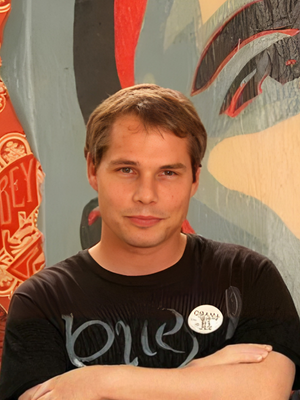
Shepard Fairey (b. 1970, Charleston, South Carolina) is an American street artist, graphic designer, and activist, and a graduate of the Rhode Island School of Design. His 1989 “André the Giant Has a Posse” sticker grew into the global OBEY GIANT campaign — an ongoing experiment in propaganda, obedience, and visual culture. He reached worldwide recognition with the 2008 “Hope” portrait of Barack Obama, now held by the Smithsonian National Portrait Gallery. Across screen prints, stencils, murals, and collage, Fairey channels propaganda aesthetics toward themes of peace, justice, environmentalism, and civil rights. His work is in the collections of the Museum of Modern Art, the Victoria & Albert Museum, and LACMA.