Gauntlet Gallery
What is Shepard Fairey’s piece called “Social Distortion 40”?
Artist Statement
I first heard Social Distortion in 1985, and I was immediately struck by their punk power and rebellious themes delivered with an undeniable melodic appeal. I begged my parents to buy me the first Social Distortion album "Mommy's Little Monster." My parents hated punk, so when they asked me if the music was punk, I lied and said "no, it's New Wave." I listened to the album non-stop and a lot of the themes… freedom, generation gaps, questioning authority, sub-cultural community, etc… really resonated with me. As a frustrated teen, I especially related to the line, "I love the sound when I smash the glass… if I get caught they're gonna kick my ass" from the song "Telling Them." That line always stuck with me and was the first thing that came to mind when Mike Ness asked me to create a poster for Social Distortion's 40th anniversary. I've seen Social Distortion many times over the years, and I've watched first hand as they evolved from a more conventional punk sound to a broader sound and definition of punk that includes nods to early Rolling Stones and Johnny Cash… artists who pushed social boundaries and outlaw themes. I remember hearing the band's song, "Story of my Life" on the radio in 1990, pre-Grunge, and thinking to myself, "what a coup… what a triumph, that these guys infiltrated rock radio." In my opinion, Social Distortion shattered a glass ceiling and did what few bands can do: they found broad appeal without abandoning their punk roots or watering down their sound. Social Distortion remains an amazing live band and has put out great music consistently over 40 years. Thank you, Social Distortion, for the music, the inspiration, and for 40 years of smashing the glass! -Shepard Social Distortion 40. Screenprint on cream Speckle Tone Paper. 18 x 24 inches. Signed by Shepard Fairey. Numbered edition of 600. $50.
Summary
Social Distortion 40 is a 2019 Shepard Fairey screen print on cream Speckle Tone paper, 18 x 24 inches, in a signed, numbered first edition of 600. Created at the request of frontman Mike Ness to mark the punk band's 40th anniversary, the poster celebrates Fairey's long personal connection to Social Distortion, whose music he first heard in 1985. The piece channels the band's blend of punk energy, melodic appeal, and rebellious themes such as freedom, questioning authority, and subcultural community, presented in Fairey's signature graphic poster idiom.
Why It Matters
This print sits squarely in Fairey's deep body of music-related work, where his own roots as a punk fan inform the art rather than a commissioned-job detachment. The accompanying text is unusually personal: Fairey recounts begging his parents for the album "Mommy's Little Monster," lying that it was New Wave, and connecting to lyrics about smashing glass and questioning authority. That candor gives the poster collector resonance beyond a band-merch tribute. It documents a direct collaboration with Mike Ness for the band's 40th anniversary, anchoring it to a specific cultural milestone. For collectors, it represents the intersection of Fairey's two lifelong commitments: street-derived graphic art and the punk counterculture that shaped his worldview. The edition of 600 at an accessible $50 release price made it an entry point into Fairey's music catalog, while the anniversary framing and Ness connection give it staying power within the broader genre of artist-musician poster collaborations Fairey has built over decades.
Collector Perspective
This appeals to two overlapping audiences: Shepard Fairey poster collectors building a music-themed wall, and Social Distortion or broader punk-rock fans who want a credible art object rather than tour merch. The 18 x 24 inch format is easy to frame and display alongside other Fairey music prints, and the cream Speckle Tone paper gives it a warm, gallery-grade presence. Because it commemorates a defined 40th-anniversary moment, it fits naturally into themed groupings of band-collaboration posters. The accessible original price point and edition of 600 make it approachable for newer collectors, while the personal artist statement and Mike Ness connection give seasoned collectors narrative depth to value.
Historical Context
Music and punk culture have run through Fairey's practice since his earliest sticker years, and by 2019 he had produced a long line of band collaborations and tribute prints. Social Distortion 40 belongs to this ongoing music thread, made the same year as other 2019 Obey Giant releases. Fairey frames it through his own listening history, citing first hearing the band in 1985 and noting their evolution from conventional punk toward a broader sound nodding to early Rolling Stones and Johnny Cash. The print marks the band's 40 years and Fairey's collaboration with Mike Ness, situating it within his mature period of music posters that pair personal fandom with his recognizable poster aesthetic.
FAQ
What is Social Distortion 40 and when was it made?
It is a 2019 Shepard Fairey screen print created to mark Social Distortion's 40th anniversary. Printed on cream Speckle Tone paper at 18 x 24 inches, it was published by Obey Giant in a signed, numbered edition of 600 and released at $50.
Why did Fairey make this poster?
Fairey made it after frontman Mike Ness asked him to create a poster for the band's 40th anniversary. Fairey first heard Social Distortion in 1985 and connected deeply to their punk energy and rebellious themes, making the commission a personal tribute to a band he has long admired.
Is the print signed and numbered?
Yes. According to the source, Social Distortion 40 is signed by Shepard Fairey and numbered as part of an edition of 600.
What are the dimensions and medium?
It is a screen print on cream Speckle Tone paper measuring 18 x 24 inches.
Related Works
About the Artist
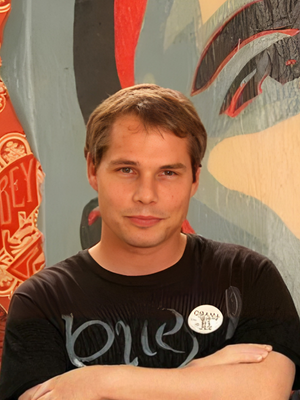
Shepard Fairey (b. 1970, Charleston, South Carolina) is an American street artist, graphic designer, and activist, and a graduate of the Rhode Island School of Design. His 1989 “André the Giant Has a Posse” sticker grew into the global OBEY GIANT campaign — an ongoing experiment in propaganda, obedience, and visual culture. He reached worldwide recognition with the 2008 “Hope” portrait of Barack Obama, now held by the Smithsonian National Portrait Gallery. Across screen prints, stencils, murals, and collage, Fairey channels propaganda aesthetics toward themes of peace, justice, environmentalism, and civil rights. His work is in the collections of the Museum of Modern Art, the Victoria & Albert Museum, and LACMA.