Gauntlet Gallery
What is Shepard Fairey’s piece called “Long Live The People”?
Artist Statement
I've long believed that protests in the streets are an essential tool for meaningful change because the passion, courage, and visceral force of the participants in a mass protest send a powerful message that they are fully committed to their cause! Ed Nachtrieb photographed many incredible moments of the 1989 Tiananmen Square protests in China. I'm honored to collaborate with Ed on a set of two images based on his documentation 30 years ago, especially because pro-democracy and human-rights protesters are still in the streets of Hong Kong!?? ??????????? Long Live the People + Revolution in our Time matching numbered set. Silkscreen on cream Speckle Tone Paper. 18 x 24 inches. Signed by Shepard Fairey. Numbered edition of 500. A limited number of both editions will be available as a set for $130. Long Live the People (sold individually) will be available for $70. Proceeds go to @hongkongfp.
Summary
Long Live The People is a 2020 Shepard Fairey screen print, published by Obey Giant in a signed, numbered first edition of 500 at 18 x 24 inches on cream Speckle Tone paper. Made in collaboration with photographer Ed Nachtrieb, it is based on his documentation of the 1989 Tiananmen Square pro-democracy protests in China. It forms a matching numbered set with Revolution in Our Time, released as ongoing Hong Kong pro-democracy and human-rights protests continued. The image presents mass street protest as a committed, forceful expression of a cause, with proceeds directed to Hong Kong Free Press.
Why It Matters
Long Live The People pairs with Revolution in Our Time to form a two-part statement built from Ed Nachtrieb's photojournalism of the 1989 Tiananmen Square protests. Its significance lies in the way Fairey links a defining moment of modern Chinese history to the live pro-democracy struggle in Hong Kong, giving the print both documentary roots and contemporary urgency. The collaboration with a working photographer distinguishes it from images Fairey invents outright, anchoring the message in real reportage of mass protest. As the companion piece in a matching numbered set, it is most powerful displayed alongside its partner, where the two images reinforce a shared theme of human rights and democratic resistance. The direct support of Hong Kong Free Press through proceeds connects the work to present-day press-freedom advocacy. For collectors, the modest edition of 500, the named photographer collaboration, and the clear cause combine to make this a substantive part of Fairey's civil-rights output. It exemplifies his ongoing method of translating existing protest photography into his bold graphic language while keeping the political content central, a strategy that here gains weight from the deliberate bridge between two movements separated by three decades.
Collector Perspective
This appeals to collectors of Fairey's human-rights and pro-democracy work and to those who appreciate his photographer collaborations grounded in real events. At 18 x 24 inches on cream Speckle Tone paper, it frames cleanly and is designed to hang beside its companion, Revolution in Our Time, as a matching numbered set. Buyers building a politically themed Fairey wall will value the cause link, with proceeds going to Hong Kong Free Press. The signed, numbered edition of 500 makes it accessible while still limited. It suits collections oriented toward Fairey's activist 2020 releases rather than his music or floral lines, and acquiring it together with its set partner gives the strongest display impact and thematic completeness.
Historical Context
Issued in February 2020 through Obey Giant, Long Live The People belongs to Fairey's active stretch of cause-driven limited editions. It is built from Ed Nachtrieb's photographs of the 1989 Tiananmen Square protests, taken thirty years earlier, and was released as pro-democracy demonstrations continued in Hong Kong, connecting past and present movements. As one half of a matching numbered set with Revolution in Our Time, it reflects Fairey's recurring use of photojournalism collaborations and limited editions to fund advocacy, here directing proceeds to Hong Kong Free Press. The work reinforces the civil-rights and democracy theme that recurs throughout his output during this period.
FAQ
What is Long Live The People based on?
It is based on Ed Nachtrieb's photographs of the 1989 Tiananmen Square pro-democracy protests in China. Fairey collaborated with Nachtrieb on two images from that documentation, releasing this print in 2020 amid ongoing Hong Kong protests.
What are the edition details?
It is a silkscreen on cream Speckle Tone paper, 18 x 24 inches, signed by Shepard Fairey and numbered in an edition of 500. It was published by Obey Giant in 2020 and offered individually at $70.
Does it come as a set?
Yes. It forms a matching numbered set with Revolution in Our Time. A limited number of both were available together as a set for $130, and Long Live the People was also sold individually.
Where did proceeds go?
Per the release, proceeds went to Hong Kong Free Press, connecting the print to support for press freedom and pro-democracy advocacy.
Related Works
About the Artist
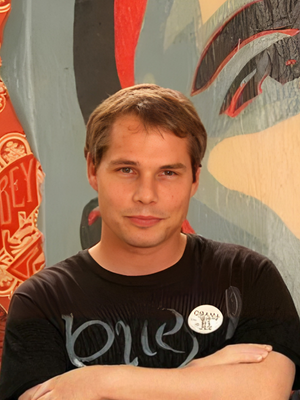
Shepard Fairey (b. 1970, Charleston, South Carolina) is an American street artist, graphic designer, and activist, and a graduate of the Rhode Island School of Design. His 1989 “André the Giant Has a Posse” sticker grew into the global OBEY GIANT campaign — an ongoing experiment in propaganda, obedience, and visual culture. He reached worldwide recognition with the 2008 “Hope” portrait of Barack Obama, now held by the Smithsonian National Portrait Gallery. Across screen prints, stencils, murals, and collage, Fairey channels propaganda aesthetics toward themes of peace, justice, environmentalism, and civil rights. His work is in the collections of the Museum of Modern Art, the Victoria & Albert Museum, and LACMA.