Gauntlet Gallery
What is Shepard Fairey’s piece called “In Honor Of Vincent Jen Chin”?
Artist Statement
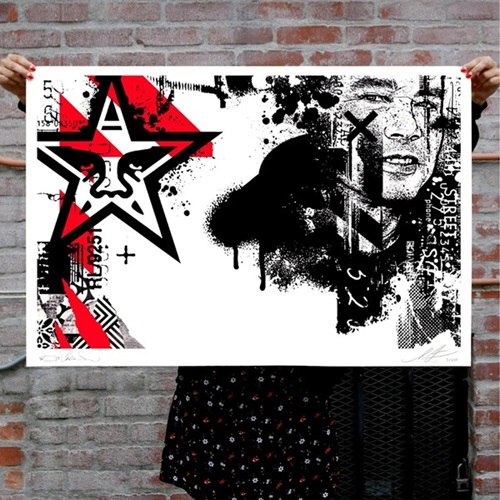
In this politicised pandemic crisis through which the previous leader of the most powerful nation in the world labelled coronavirus as China-Virus and its various forms, the consequences of racist blame has led to manifold increases in hate crimes against Asians. I hope this collaboration between Shepard and myself can raise awareness about the long history of anti-Asian hate and the important legacy of Vincent Chin whose untimely death in 1982 galvanised the people to demand Asian American civil rights. This current crucial moment in history calls for a gathering of momentum where Asian diaspora voices should go loud and proud. To stand together, advocate for change and collectively build bridges of understanding over glass ceilings and walls of hate. -Gordon Cheung I was delighted to collaborate with Gordon Cheung because his art is beautiful but woven with both overt and sublime social commentary. We chose to create a collaborative portrait of Vincent Chin, who was murdered in a hate crime, to call attention to the history and ongoing issue of anti-Asian racism. All proceeds from the print will go directly to Advancing Social Justice for Asians Scholarship Fund. Thanks to Granger Picture Archive for the kind sponsorship of the historical imagery, and Helen Zia of the Vincent Chin Foundation for the support. -Shepard In Honor of Vincent Jen Chin. 18 x 24 inches. Signed by Shepard Fairey and Gordon Cheung. Numbered edition of 350. $70.
Summary
In Honor Of Vincent Jen Chin (2021) is a signed, numbered screen print measuring 18 x 24 inches in a first edition of 350, created in collaboration between Shepard Fairey and artist Gordon Cheung. It is a collaborative portrait of Vincent Chin, whose 1982 murder in a hate crime galvanized the Asian American civil rights movement. Made amid a rise in anti-Asian hate crimes during the pandemic, the print aims to raise awareness of anti-Asian racism. It is signed by both Fairey and Cheung, and per the source all proceeds go to the Advancing Social Justice for Asians Scholarship Fund.
Why It Matters
In Honor Of Vincent Jen Chin is among Fairey's most pointed civil-rights collaborations, uniting his graphic portraiture with the layered social commentary of artist Gordon Cheung. The print memorializes Vincent Chin, whose killing in a hate crime, per the source in 1982, helped galvanize the Asian American civil rights movement, and it was created during a surge in anti-Asian hate crimes when, as the statement notes, a political leader's labeling of the coronavirus fueled racist blame. By making Chin the subject, the work both honors a historical figure and confronts an urgent contemporary issue, linking past and present struggles against anti-Asian racism. The collaboration is meaningful in itself: Fairey praises Cheung's art for weaving overt and subtle social commentary, and the print is signed by both artists. The source states all proceeds go to the Advancing Social Justice for Asians Scholarship Fund, tying the work directly to advocacy. At 18 x 24 inches in an edition of 350, it is a focused, message-driven release. It rewards collectors interested in Fairey's human-rights and civil-rights work and in his substantive artist collaborations.
Collector Perspective
This print appeals to collectors who focus on Fairey's civil-rights and human-rights work and to those who value meaningful artist collaborations, here with Gordon Cheung. The dual signatures of both artists add appeal for collectors who prize collaborative works. The subject, Vincent Chin, gives the piece historical and social weight, and its stated benefit to the Advancing Social Justice for Asians Scholarship Fund aligns it with advocacy collectors. At 18 x 24 inches in an edition of 350, it is a focused, limited release suited to a thematic grouping of justice-oriented prints. It fits buyers building a collection around social-justice causes and those who seek works that combine portraiture with a clear, documented message.
Historical Context
Released in 2021 through Obey Giant, In Honor Of Vincent Jen Chin sits within Fairey's body of civil-rights and human-rights work, here extended to the Asian American experience through collaboration with Gordon Cheung. The print responds directly to the pandemic-era rise in anti-Asian hate crimes while reaching back to the 1982 killing of Vincent Chin, a watershed for Asian American civil rights organizing. By pairing his portraiture with Cheung's commentary and directing proceeds to a justice-oriented scholarship fund, Fairey continues his long practice of using collaborative editions to address specific, timely social issues. Within his arc, it reflects his ongoing engagement with civil rights and his willingness to share authorship with artists whose perspectives deepen the work's message.
FAQ
Who is Vincent Chin and why is he the subject?
Vincent Chin was murdered in a hate crime; per the source his death in 1982 galvanized demands for Asian American civil rights. Fairey and Gordon Cheung created the portrait to call attention to the history and ongoing issue of anti-Asian racism, especially amid pandemic-era hate crimes.
Who collaborated on this print?
The print is a collaboration between Shepard Fairey and artist Gordon Cheung. Fairey praised Cheung's art for weaving both overt and subtle social commentary. The print is signed by both Shepard Fairey and Gordon Cheung.
Does this print support a cause?
Yes. Per the source, all proceeds from the print go directly to the Advancing Social Justice for Asians Scholarship Fund. The work was created to raise awareness about anti-Asian hate and to support related advocacy.
What are the dimensions and edition size?
In Honor Of Vincent Jen Chin is an 18 x 24 inch screen print, signed by both Shepard Fairey and Gordon Cheung and numbered in an edition of 350, published by Obey Giant in 2021.
Related Works
About the Artist
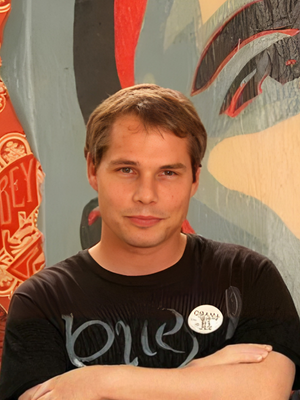
Shepard Fairey (b. 1970, Charleston, South Carolina) is an American street artist, graphic designer, and activist, and a graduate of the Rhode Island School of Design. His 1989 “André the Giant Has a Posse” sticker grew into the global OBEY GIANT campaign — an ongoing experiment in propaganda, obedience, and visual culture. He reached worldwide recognition with the 2008 “Hope” portrait of Barack Obama, now held by the Smithsonian National Portrait Gallery. Across screen prints, stencils, murals, and collage, Fairey channels propaganda aesthetics toward themes of peace, justice, environmentalism, and civil rights. His work is in the collections of the Museum of Modern Art, the Victoria & Albert Museum, and LACMA.