Gauntlet Gallery
What is Shepard Fairey’s piece called “Alice Bag”?
Artist Statement
I was very excited to meet and collaborate with Melanie Nissen because, as co-founder of Slash magazine, she photographed some of the most important figures and moments in the early LA punk scene—a scene that dramatically impacted me as a creative person. Nissen's new book of her punk photos from 1977-1980, Hard+Fast, is beautifully designed and full of amazing images. After some serious deliberation, I decided I'd like to make an illustration of Alice Bag. I first encountered Alice Bag as a teen in Penelope Spheeris' documentary "The Decline of Western Civilization," but The Bags did not put out a lot of music, and it was hard to find. However, in reading books about the LA punk scene like "We Got The Neutron Bomb" and "Lexicon Devil," as well as the Slash magazine book, I realized that Alice was a very important figure in the LA scene who has continued to make great music and is an outspoken champion of LatinX and feminist causes. She's also a very nice person. I'm glad to celebrate Alice for her contributions to culture then and now. If you are unfamiliar with The Bags, I'd recommend picking up "All Bagged Up… The Collected Works 1977-1980." – Shepard Alice Bag. 18 x 24 inches. Screen print on thick cream Speckletone paper. Original Illustration based on photographs by Melanie Nissen. Signed by Melanie Nissen and Shepard Fairey. Numbered edition of 550. $70.
Summary
Alice Bag is a 2022 screen print by Shepard Fairey, published by Obey Giant, measuring 18 x 24 inches on thick cream Speckletone paper in a numbered edition of 550 at $70. The illustration depicts LA punk pioneer Alice Bag, based on photographs by Melanie Nissen, co-founder of Slash magazine, who documented the early Los Angeles punk scene. The print is signed by both Nissen and Fairey. It honors Alice Bag's role in the late-1970s LA punk movement and her continued music and activism on LatinX and feminist causes.
Why It Matters
Alice Bag is a tribute that joins two documentarians of Los Angeles punk: Fairey, whose creative sensibility was shaped by that scene, and photographer Melanie Nissen, co-founder of Slash magazine, whose images from 1977 to 1980 captured its key figures. The print celebrates Alice Bag as a foundational and often under-recognized figure of the early LA punk movement and as an ongoing champion of LatinX and feminist causes, giving the work a dimension of cultural recovery alongside its music-history value. Fairey's accompanying text traces his own discovery of Alice Bag through The Decline of Western Civilization and punk literature, lending the release a personal, archival quality. For collectors, the dual signature from Nissen and Fairey documents a collaboration rooted in primary-source punk photography, and the subject's significance to women in punk and Latina representation broadens its appeal beyond music fans alone. As part of Fairey's run of punk-scene tributes, it strengthens a collection that values counterculture history, women in music, and the documentary photography that underpins many of these prints.
Collector Perspective
This appeals to collectors of Fairey's music and counterculture prints, punk-history enthusiasts, and those interested in women in punk and Latina representation. The dual signature from Melanie Nissen and Shepard Fairey, plus the link to Slash magazine's primary-source photography, will draw buyers who value documented collaboration and provenance. At 18 x 24 inches in an edition of 550, it is accessible for mid-level collectors and displays well alongside other punk tribute prints. It fits a music-focused Fairey grouping, particularly one emphasizing the LA punk scene, and pairs naturally with his other portraits of counterculture figures.
Historical Context
Alice Bag belongs to Fairey's series of music and counterculture tributes, published by Obey Giant in 2022. It draws on photographs by Melanie Nissen, whose Slash magazine work documented the LA punk scene from 1977 to 1980, anchoring the print to that foundational period even as it celebrates a still-active artist. Fairey situates Alice Bag within the early LA punk movement he encountered through documentaries and punk literature, and frames her as an important and continuing cultural and political voice. The release reflects Fairey's broader pattern of honoring the artists and scenes that shaped him, extending his punk-tribute lineage and reinforcing his use of archival photography as a foundation for portrait prints.
FAQ
Who is depicted in this print?
The print depicts Alice Bag, a pioneering figure of the early Los Angeles punk scene and frontperson of The Bags. Fairey notes she remains an active musician and an outspoken champion of LatinX and feminist causes, which he wanted to celebrate through the illustration.
What photographs is the illustration based on?
The illustration is based on photographs by Melanie Nissen, co-founder of Slash magazine, who documented the early LA punk scene from 1977 to 1980. Her work appears in her book Hard+Fast. The print is signed by both Nissen and Fairey.
What are the edition details?
Alice Bag is an 18 x 24 inch screen print on thick cream Speckletone paper, signed by Melanie Nissen and Shepard Fairey, in a numbered edition of 550. It was published by Obey Giant in 2022 and released at $70.
Why did Fairey make this print?
Fairey describes Alice Bag as an important but under-documented figure in the LA punk scene that shaped him as a creative person. After learning more through punk books and the Slash magazine book, he chose to honor her contributions to culture both then and now.
Related Works
About the Artist
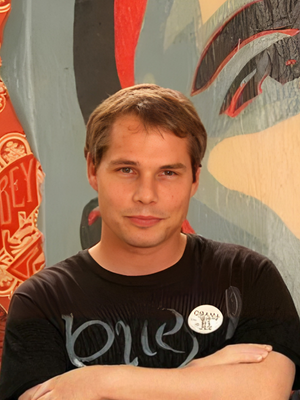
Shepard Fairey (b. 1970, Charleston, South Carolina) is an American street artist, graphic designer, and activist, and a graduate of the Rhode Island School of Design. His 1989 “André the Giant Has a Posse” sticker grew into the global OBEY GIANT campaign — an ongoing experiment in propaganda, obedience, and visual culture. He reached worldwide recognition with the 2008 “Hope” portrait of Barack Obama, now held by the Smithsonian National Portrait Gallery. Across screen prints, stencils, murals, and collage, Fairey channels propaganda aesthetics toward themes of peace, justice, environmentalism, and civil rights. His work is in the collections of the Museum of Modern Art, the Victoria & Albert Museum, and LACMA.