Gauntlet Gallery
What is Shepard Fairey’s piece called “No More Bias”?
Artist Statement
Like countless others, I was devastated to see the brutal beating of Tyre Nichols by five Memphis police officers that led to his death. I've made many pieces of art touching on racial bias, police brutality, and the combination of racial bias and police brutality. The fact that the five officers who beat Tyre to death are also Black demonstrates the complexity of bias in our culture and policing specifically. I made this No More Bias print before Tyre's death but as a comment on similar tragic injustices. The abuse of power in his case is all too familiar and similar to recent cases like Elijah McClain dying from a police ketamine injection administered even after he was handcuffed and restrained. The statistics don't lie… Black motorists and pedestrians are more than twice as likely to be stopped, questioned, and searched than white citizens. Yet searches of whites lead to the discovery of contraband more often than searches of Blacks. This statistic contradicts arguments for "probable cause" in the case of Blacks being stopped and searched. Unarmed Black citizens are five times more likely to be killed by the police than unarmed white citizens. Police culture and police oversight need to be reformed to improve accountability and equity. A portion of proceeds from this print will support the EJI (Equal Justice Initiative) in its efforts to enhance racial justice, economic justice, and the protection of human rights for the most vulnerable members of society. Thanks for caring. –Shepard No More Bias. 24 x 36 inches. Screen print on thick cream Speckletone paper. Signed by Shepard Fairey. Numbered edition of 600. Comes with a Digital Certificate of Authenticity provided by Verisart. $95.
Summary
No More Bias is a 2023 screen print published by Obey Giant, addressing racial bias and police brutality. Printed on thick cream Speckletone paper at 24 x 36 inches, it is signed by Shepard Fairey, numbered in an edition of 600, and comes with a Verisart Digital Certificate of Authenticity. Fairey states he made the image before the death of Tyre Nichols as a comment on similar injustices, citing statistics on disproportionate stops, searches, and police killings of Black citizens and calling for reform of police culture and oversight. A portion of proceeds supports the Equal Justice Initiative (EJI). Released February 2, 2023, at an original price of $95.
Why It Matters
No More Bias is among Fairey's most direct civil-rights statements, made urgent by its release in the immediate aftermath of Tyre Nichols's death even though, as Fairey notes, the image predated that tragedy as a comment on similar injustices including the death of Elijah McClain. The accompanying statement is unusually data-driven for a print: Fairey cites that Black motorists and pedestrians are more than twice as likely to be stopped, questioned, and searched than white citizens, that searches of white citizens more often turn up contraband, and that unarmed Black citizens are five times more likely to be killed by police, using statistics to argue against probable-cause justifications and for police reform. The tie to the Equal Justice Initiative, with a portion of proceeds supporting its racial, economic, and human-rights work, gives the piece a concrete advocacy dimension. The larger 24 x 36 inch format and edition of 600 made it a visible, accessible statement work. It represents the activist core of Fairey's practice, where graphic art is explicitly mobilized around a current justice crisis.
Collector Perspective
This print speaks to collectors who center Fairey's civil-rights and social-justice work and who value art tied to a specific moment and cause. The edition of 600 and $95 original price kept it accessible, and the larger 24 x 36 inch format gives it strong presence as a statement piece. Collectors who support the Equal Justice Initiative or who build politically engaged collections will appreciate the documented charitable tie. Its message-forward content makes it more of a conviction purchase than a decorative one, and it pairs naturally with Fairey's other justice, equality, and human-rights releases. The included Verisart certificate adds provenance documentation valued by contemporary collectors.
Historical Context
No More Bias sits squarely in Fairey's long line of work on racial bias and police brutality, a subject he says he has addressed many times. Released amid the public response to Tyre Nichols's death, it connects to a broader arc of activist prints that respond to civil-rights crises in real time, here reinforced by an unusually statistics-heavy artist statement and a partnership with the Equal Justice Initiative. Produced on cream Speckletone paper with a Verisart certificate of authenticity, it reflects his early-2020s studio practice. Within his career, it exemplifies how he uses editioned screen prints as vehicles for both public commentary and fundraising, channeling proceeds to organizations advancing racial, economic, and human-rights justice.
FAQ
What prompted No More Bias?
Fairey states he made the print before the death of Tyre Nichols, as a comment on similar tragic injustices like the death of Elijah McClain. He was devastated by the beating of Tyre Nichols by five Memphis police officers and uses the work to address racial bias and police brutality.
What statistics does Fairey cite?
He notes that Black motorists and pedestrians are more than twice as likely to be stopped, questioned, and searched than white citizens, that searches of white citizens more often find contraband, and that unarmed Black citizens are five times more likely to be killed by police than unarmed white citizens.
Does the print support a charity?
Yes. According to the source, a portion of proceeds supports the Equal Justice Initiative (EJI) in its efforts to enhance racial justice, economic justice, and the protection of human rights for the most vulnerable members of society.
What are the print specifications?
No More Bias is a screen print on thick cream Speckletone paper measuring 24 x 36 inches. It is signed by Shepard Fairey, numbered in an edition of 600, published by Obey Giant in 2023 at an original price of $95, and comes with a Verisart Digital Certificate of Authenticity.
Related Works
About the Artist
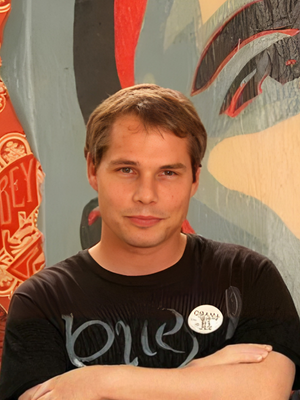
Shepard Fairey (b. 1970, Charleston, South Carolina) is an American street artist, graphic designer, and activist, and a graduate of the Rhode Island School of Design. His 1989 “André the Giant Has a Posse” sticker grew into the global OBEY GIANT campaign — an ongoing experiment in propaganda, obedience, and visual culture. He reached worldwide recognition with the 2008 “Hope” portrait of Barack Obama, now held by the Smithsonian National Portrait Gallery. Across screen prints, stencils, murals, and collage, Fairey channels propaganda aesthetics toward themes of peace, justice, environmentalism, and civil rights. His work is in the collections of the Museum of Modern Art, the Victoria & Albert Museum, and LACMA.