Gauntlet Gallery
What is Shepard Fairey’s piece called “Sub-Standard”?
Artist Statement
This print, "Sub-Standard," is a comment on the relationship between corporate greed, fossil fuels, and the warming of the planet and collapsing ecosystems. Standard operating, pushed by players like Standard Oil and its many offshoots, should be redefined as sub-standard. If we want to maintain the standard of health our planet needs to avoid catastrophe, we can't allow big oil to put profits before the planet and profits before people (as well as many other threatened species). Keep in mind that big oil, which is already very profitable, is subsidized by you, the taxpayer, for up to $50 billion per year. In contrast, renewable energy sources are subsidized for only a quarter of that amount. We need to push for change. A portion of proceeds from this print goes to Greenpeace USA's efforts to fight for a healthy planet.? –Shepard Sub-Standard. 12 x 24 inches. Screen print on thick cream Speckletone paper. Signed by Shepard Fairey. Numbered edition of 550. Comes with a Digital Certificate of Authenticity provided by Verisart. $45.
Summary
Sub-Standard is a 2023 Obey Giant screen print, 12 x 24 inches on thick cream Speckletone paper, in a numbered edition of 550 and signed by Shepard Fairey. It is a commentary on the link between corporate greed, fossil fuels, and a warming planet. The title plays on the term used by Standard Oil and its offshoots, recasting business-as-usual operations as sub-standard for a healthy planet. The source notes a portion of proceeds goes to Greenpeace USA. It was offered at $45 and comes with a Verisart Digital Certificate of Authenticity.
Why It Matters
Sub-Standard is a direct environmental-protest piece that fuses Fairey's signature propaganda aesthetic with a pointed corporate critique. The source builds its message around a wordplay on Standard Oil, arguing that fossil-fuel operations subsidized by taxpayers, which it cites at up to $50 billion per year against a quarter of that for renewables, should be considered sub-standard given their impact on the climate and ecosystems. That explicit framing of subsidies, profit-over-planet, and threatened species makes the print a clear statement work rather than a decorative one. For collectors, its value lies in the charitable tie to Greenpeace USA and its place within Fairey's sustained body of climate art, where text-driven slogans carry the argument. The tall, narrow 12 x 24 inch format gives it a distinctive vertical presence among his environmental prints. It speaks to buyers who collect activist art with a message, and who appreciate Fairey using a familiar corporate name as a lever for critique. The work continues his pattern of pairing accessible price points with causes, reinforcing the social-justice dimension that differentiates his environmental output from purely aesthetic prints.
Collector Perspective
This print suits collectors drawn to environmental activism, corporate-critique messaging, and Fairey's slogan-driven prints. The Greenpeace USA proceeds connection appeals to mission-aligned buyers who want their collecting to support a cause. At 12 x 24 inches it offers a slim vertical format that pairs well in a series hang with other climate works, and its $45 release price made it an accessible entry point. Within a themed collection it anchors the fossil-fuel and big-oil critique alongside related climate prints from the same period. It is a strong fit for collectors building a focused environmental or political grouping rather than those seeking portraiture or large statement pieces.
Historical Context
Sub-Standard sits within Fairey's extended environmental phase, during which he produced a steady stream of climate-focused prints tied to Greenpeace USA. The source positions it as part of his critique of fossil-fuel corporations, using the Standard Oil reference to connect present-day big oil to a historic industrial lineage. This places it in the activist strand of his catalog where typography and propaganda-style design deliver explicit political arguments. The 2023 dating groups it with a cluster of environmental releases from the same year that share materials, charitable structure, and themes, marking a consistent period of cause-driven output focused on energy policy, subsidies, and climate urgency.
FAQ
What does the title Sub-Standard refer to?
The source explains the title is a play on Standard Oil and its offshoots, arguing that standard operating practices pushed by big oil should be redefined as sub-standard because they put profits before the planet and people. It frames fossil-fuel business-as-usual as a threat to a healthy planet.
Does this print support a charity?
Yes. According to the source, a portion of proceeds from this print goes to Greenpeace USA's efforts to fight for a healthy planet. The work is tied to Fairey's broader environmental advocacy.
What are the size and edition details?
Sub-Standard measures 12 x 24 inches and is a screen print on thick cream Speckletone paper. It is a numbered edition of 550, signed by Shepard Fairey, and comes with a Digital Certificate of Authenticity provided by Verisart. It was offered at $45.
What is the message about subsidies?
The source states that big oil, though already very profitable, is subsidized by taxpayers for up to $50 billion per year, while renewable energy receives only about a quarter of that amount. The print calls for pushing toward change in energy policy.
Related Works
About the Artist
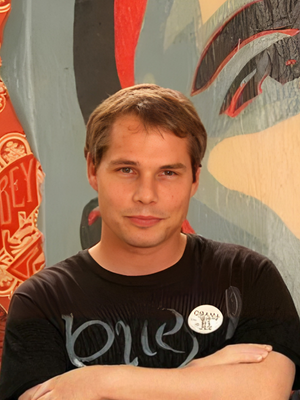
Shepard Fairey (b. 1970, Charleston, South Carolina) is an American street artist, graphic designer, and activist, and a graduate of the Rhode Island School of Design. His 1989 “André the Giant Has a Posse” sticker grew into the global OBEY GIANT campaign — an ongoing experiment in propaganda, obedience, and visual culture. He reached worldwide recognition with the 2008 “Hope” portrait of Barack Obama, now held by the Smithsonian National Portrait Gallery. Across screen prints, stencils, murals, and collage, Fairey channels propaganda aesthetics toward themes of peace, justice, environmentalism, and civil rights. His work is in the collections of the Museum of Modern Art, the Victoria & Albert Museum, and LACMA.