Gauntlet Gallery
What is Shepard Fairey’s piece called “A Cracked Icon (First Edition)”?
Artist Statement
This screen print, “A Cracked Icon,” is a reference to one of my favorite musicians, David Bowie, and his song “Cracked Actor.” I’m fascinated by how we process fragmentation and mutation, often trying to conceive a resolved whole from disparate parts. I was first intrigued by the unlikely juxtapositions of images yielded by ripped posters on the street revealing parts of unrelated images interacting with each other along organic ripped edges. Sometimes, the serendipitous placement of a rip can make two images feel like they are meant to be in conversation. I think that our brains are looking for harmony even within obvious transgression. We are all full of contradictory impulses, and our egos often drive which things we are justifying moment to moment. Bowie was constantly exploring the ideas of ego, fame, identity, and evolution, so I think this image serves as both a pleasing visual and a provocation to consider the tension between harmony and conflict, competition and collaboration. Bowie embraced collaboration adventurously to great success, so hopefully, he’d dig this image and tribute! -Shepard A Cracked Icon. 24 x 36 inches. Screen print on thick cream Speckletone paper. Signed by Shepard Fairey. Numbered edition of 550. Comes with a Digital Certificate of Authenticity provided by Verisart. $95.
Summary
A Cracked Icon is a 2024 Shepard Fairey screen print referencing David Bowie and his song "Cracked Actor." The image draws on Fairey's fascination with fragmentation and the serendipitous juxtapositions created by ripped street posters, where torn edges make unrelated images feel in conversation. Measuring 24 x 36 inches on thick cream Speckletone paper, it is a signed, numbered first edition of 550 from Obey Giant at $95, with a Verisart certificate. Fairey frames the work as both a pleasing visual and a provocation about the tension between harmony and conflict, intended as a tribute to Bowie's adventurous exploration of ego, fame, and identity.
Why It Matters
A Cracked Icon merges two strands of Fairey's practice, his music tributes and his aesthetic of torn, layered street imagery, into a single Bowie homage. The reference to Bowie's "Cracked Actor" gives the title a double meaning, naming both the musician and the fragmented, fractured visual treatment Fairey applies. His description of being drawn to the unlikely juxtapositions revealed by ripped posters connects the work to the collage logic that has long shaped his compositions, where chance tears make disparate images feel intentionally paired. By tying that visual idea to Bowie's lifelong exploration of ego, fame, identity, and evolution, Fairey frames the print as a meditation on contradiction and the brain's search for harmony within transgression. For collectors, the piece is significant as a music-themed work honoring one of rock's most influential figures, rendered in a large 24 x 36 inch format. As a signed, numbered edition of 550 with Verisart certification at $95, it sits in the mid-to-upper accessible tier of his catalog and appeals strongly to collectors who pursue his musician portraits and pop-culture tributes.
Collector Perspective
A Cracked Icon appeals to collectors of Fairey's music and pop-culture tributes, especially fans of David Bowie, and to those who appreciate his ripped-poster collage aesthetic. At 24 x 36 inches it is a substantial wall piece with strong graphic presence, and the fragmented treatment gives it visual interest beyond a straightforward portrait. As a signed, numbered edition of 550 with a Verisart certificate at a $95 release price, it is accessible to mid-level collectors while carrying the added draw of a celebrated musical subject. It fits naturally into a music-themed or pop-culture Fairey grouping and pairs well with his other collaboration and tribute prints. The Bowie connection broadens its appeal beyond core Fairey collectors to music memorabilia enthusiasts.
Historical Context
A Cracked Icon, dated March 2024, sits within Fairey's long tradition of music tributes and reflects his enduring interest in the collage aesthetic of torn street posters, where ripped edges create unexpected juxtapositions. By honoring David Bowie and referencing "Cracked Actor," the print extends his practice of paying homage to influential musicians while exploring themes of ego, fame, and identity. Issued by Obey Giant as a signed, numbered screen print on cream Speckletone paper with Verisart certification, it reflects his standardized contemporary studio production. Its blend of pop-culture tribute and fragmentation aesthetics situates the work within his Music Era output.
FAQ
Who is A Cracked Icon about?
The print is a reference to David Bowie and his song "Cracked Actor." Fairey describes it as a tribute to Bowie, who constantly explored ideas of ego, fame, identity, and evolution, and hopes Bowie would appreciate the image.
What is the meaning behind the fragmented look?
Fairey says he is fascinated by how we process fragmentation, inspired by ripped street posters whose torn edges make unrelated images feel in conversation. He frames the work as a provocation about the tension between harmony and conflict.
What are the edition details?
A Cracked Icon is a signed, numbered edition of 550 published by Obey Giant at $95. It measures 24 x 36 inches, is screen printed on thick cream Speckletone paper, and includes a Verisart Digital Certificate of Authenticity.
What size is the print?
According to the source, A Cracked Icon measures 24 x 36 inches and is a screen print on thick cream Speckletone paper, signed by Shepard Fairey.
Related Works
About the Artist
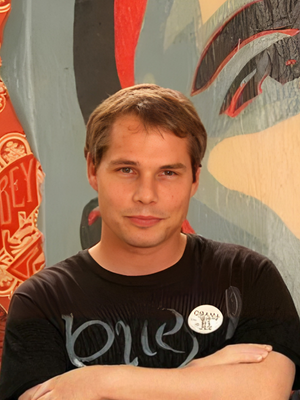
Shepard Fairey (b. 1970, Charleston, South Carolina) is an American street artist, graphic designer, and activist, and a graduate of the Rhode Island School of Design. His 1989 “André the Giant Has a Posse” sticker grew into the global OBEY GIANT campaign — an ongoing experiment in propaganda, obedience, and visual culture. He reached worldwide recognition with the 2008 “Hope” portrait of Barack Obama, now held by the Smithsonian National Portrait Gallery. Across screen prints, stencils, murals, and collage, Fairey channels propaganda aesthetics toward themes of peace, justice, environmentalism, and civil rights. His work is in the collections of the Museum of Modern Art, the Victoria & Albert Museum, and LACMA.