Gauntlet Gallery
What is Shepard Fairey’s piece called “We Got To Change”?
Artist Statement
"We Got To Change" is a powerful mantra of evolution and a phenomenal recently unearthed James Brown song from his classic funk era! I'm excited to collaborate with the James Brown estate and ?Center For Common Ground on robust initiatives to boost Black voter turnout ahead of Election Day this November. The Center for Common Ground, a non-partisan group, focuses on empowering Black voters in the South, where voter suppression remains an issue. This partnership celebrates James Brown's musical genius and his lifelong dedication to education and voting rights. His legacy in music and social change is undeniable, and hip hop wouldn't be the same without his influence. Everyone from the golden age of hip hop samples James Brown! -Shepard JAMES BROWN We Got To Change. 24 x 18 inches. Screen print on thick cream Speckletone paper. Signed by Shepard Fairey. Numbered edition of 550. Comes with a Digital Certificate of Authenticity provided by Verisart. $65.
Summary
We Got To Change is a 2024 screen print published by Obey Giant in a signed, numbered edition of 550, measuring 24 x 18 inches on thick cream Speckletone paper. The image celebrates James Brown and an unearthed song from his classic funk era. Created in collaboration with the James Brown estate and the Center for Common Ground, the print supports initiatives to boost Black voter turnout ahead of the November election. It pairs Brown's musical legacy with his commitment to education and voting rights. Released at $65 with a Verisart digital certificate of authenticity.
Why It Matters
We Got To Change unites two of Fairey's recurring concerns, music and democratic participation, in a single voter-mobilization print. Built around a recently unearthed James Brown funk-era song, it was made in collaboration with the James Brown estate and the non-partisan Center for Common Ground, which focuses on empowering Black voters in the South where voter suppression persists. Fairey explicitly ties the piece to boosting Black voter turnout ahead of the November election, framing it as both a tribute to Brown's musical genius and a continuation of Brown's lifelong dedication to education and voting rights. The artist underscores Brown's foundational influence on hip hop, noting that artists of the golden age sampled him extensively. For collectors, this is a relatively accessible $65 screen print whose value is amplified by its estate collaboration, its civic purpose, and its place in Fairey's long line of election-cycle works. It rewards buyers who want art that documents a specific political moment while honoring a music icon, sitting at the intersection of his music portraits and his democracy-and-voting output. The combination of cultural homage and direct activist intent makes it more than a portrait; it is a campaign artifact tied to a defined cause.
Collector Perspective
This print appeals to collectors who follow Fairey's music portraits and his election-cycle, voting-focused work, as well as fans of James Brown and funk and hip hop history. At $65 in an edition of 550 it is an accessible entry point, well suited to a music-and-activism wall or a grouping of Fairey's democracy-themed pieces. The collaboration with the James Brown estate and the Center for Common Ground adds documentary weight, tying the print to a specific 2024 voter-turnout effort. Its 24 x 18-inch screen print on cream Speckletone paper displays cleanly alongside other portrait and political works in the catalog. Collectors valuing socially engaged art with a clear cause and a recognizable cultural icon will find it a strong, affordable fit.
Historical Context
We Got To Change belongs to Fairey's long practice of producing politically charged work around U.S. elections, here timed to the November 2024 cycle. By collaborating with the James Brown estate and the non-partisan Center for Common Ground, which works to empower Black voters in the South against ongoing voter suppression, Fairey extends his civil-rights and democracy themes into a music-portrait format. The piece foregrounds Brown's dual legacy in music and social change and his influence on hip hop. It continues a body of Fairey work that fuses musician portraiture with activist messaging, using an accessible $65 screen print as a vehicle for voter mobilization rather than pure homage.
FAQ
Who is depicted and what is the subject?
The print celebrates James Brown, built around a recently unearthed song from his classic funk era titled "We Got To Change." It honors Brown's musical genius and his lifelong dedication to education and voting rights, and his influence on hip hop.
What cause does this print support?
It was made in collaboration with the James Brown estate and the Center for Common Ground, a non-partisan group empowering Black voters in the South. The project supported initiatives to boost Black voter turnout ahead of the November 2024 election.
What is the edition size and format?
We Got To Change is a screen print on thick cream Speckletone paper, signed by Shepard Fairey in a numbered edition of 550, measuring 24 x 18 inches. It includes a Verisart digital certificate of authenticity and was released at $65.
Why does it connect James Brown to hip hop?
Per Fairey, James Brown's influence on hip hop is undeniable, with everyone from the golden age of hip hop sampling his music. The print ties his funk-era legacy to his broader role in music and social change.
Related Works
About the Artist
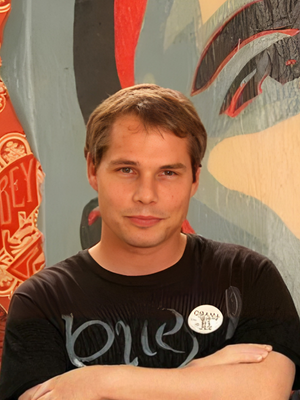
Shepard Fairey (b. 1970, Charleston, South Carolina) is an American street artist, graphic designer, and activist, and a graduate of the Rhode Island School of Design. His 1989 “André the Giant Has a Posse” sticker grew into the global OBEY GIANT campaign — an ongoing experiment in propaganda, obedience, and visual culture. He reached worldwide recognition with the 2008 “Hope” portrait of Barack Obama, now held by the Smithsonian National Portrait Gallery. Across screen prints, stencils, murals, and collage, Fairey channels propaganda aesthetics toward themes of peace, justice, environmentalism, and civil rights. His work is in the collections of the Museum of Modern Art, the Victoria & Albert Museum, and LACMA.