Gauntlet Gallery
What is Shepard Fairey’s piece called “Torn Icon (Letterpress)”?
Artist Statement
This Torn Icon letterpress is based on one of the many Icon Face posters put up on the street that has been ripped and torn by cleaning crews, pedestrians, and the elements. One of the things I've accepted about street art is that it will not last forever, but there is also beauty in the organic decay as the pieces live in the environment. Scarred posters, with their unpredictable textures, often have more character than the pristine ones. A functional benefit of the bold simplicity of the Icon Face is that it is legible and recognizable even when a large percentage of it is obscured or destroyed. I've found a lot of joy in observing the tenacious and exhilarating nature of these embattled Icon mutations. -Shepard LETTERPRESS DETAILS: Torn Icon Letterpress. 10.25 x 13 inches. Letterpress on cream cotton paper with hand-deckled edges. Signed by Shepard Fairey. Numbered edition of 450. Obey publishing chop in lower left corner. Comes with a Digital Certificate of Authenticity provided by Verisart. $65.
Summary
Torn Icon is a 2025 letterpress, 10.25 x 13 inches, printed on cream cotton paper with hand-deckled edges in a signed, numbered edition of 450 published by Obey Giant. The image renders the OBEY Icon Face as it appears after being ripped and torn by cleaning crews, pedestrians, and weather on the street. Fairey frames the worn, scarred poster as evidence of organic decay and street-art impermanence, noting the Icon stays legible even when largely obscured. It carries the Obey publishing chop in the lower left corner and ships with a Verisart digital certificate of authenticity. Priced at $65.
Why It Matters
Torn Icon distills a core tenet of Fairey's practice: street art is ephemeral, and the wear it accumulates is part of its meaning. By rendering a damaged Icon Face in the slow, tactile letterpress medium on hand-deckled cotton paper, Fairey freezes a transient street moment into a permanent, collectible object, a deliberate tension between decay and preservation. The print also functions as a meditation on the durability of his own brand: he points out that the Icon's bold simplicity keeps it recognizable even when most of it is destroyed, a quiet argument for the design's iconic strength. For collectors, it is a relatively accessible ($65) entry into the OBEY iconography lineage that nonetheless engages serious ideas about impermanence and the life of images in public space. The letterpress treatment and modest edition of 450 give it craft appeal beyond a standard screen print, while the subject keeps it squarely within the artist's most identifiable visual vocabulary. It rewards viewers who appreciate both the OBEY symbol and Fairey's philosophy of savoring the ephemeral.
Collector Perspective
This appeals to OBEY iconography collectors and to those who favor Fairey's letterpress editions for their tactile, hand-deckled craft. At $65 with an edition of 450, it is an approachable buy for newer collectors and a logical companion piece for anyone already holding Icon Face works. The weathered, torn rendering gives it more visual character than a clean Icon, making it a conversational display piece that signals familiarity with street-art culture. It fits naturally into an OBEY-focused grouping or a wall of letterpress works, and pairs well with other Icon variants such as the HPM and Op-Art editions. The signature, numbering, Obey chop, and Verisart certificate support its standing as a documented studio release.
Historical Context
Torn Icon belongs to Fairey's ongoing engagement with the OBEY Icon Face, the symbol that descends from his late-1980s sticker campaign and remains the cornerstone of his visual identity. Released in early 2025 and published by Obey Giant, it sits within a recent cluster of Icon-based editions that revisit and remix the face across media. The choice to depict the Icon as torn and decayed reflects a mature, reflective stage in his career, one that openly embraces the impermanence of his street output rather than resisting it. Using letterpress, an older, craft-oriented printing process, to memorialize a fleeting street image underscores the dialogue between the disposable poster and the archival print that runs through much of his contemporary work.
FAQ
What is the edition size of Torn Icon?
Torn Icon is a numbered edition of 450, signed by Shepard Fairey. It was published by Obey Giant in 2025 and includes the Obey publishing chop in the lower left corner, along with a digital Certificate of Authenticity provided by Verisart.
What medium and paper is it printed on?
It is a letterpress print measuring 10.25 x 13 inches, produced on cream cotton paper with hand-deckled edges. The letterpress process and deckled paper give it a tactile, craft-oriented quality distinct from Fairey's standard screen prints.
What is the image based on?
The image is based on one of Fairey's Icon Face street posters that had been ripped and torn by cleaning crews, pedestrians, and the elements. Fairey embraces the organic decay, noting the Icon stays recognizable even when much of it is obscured or destroyed.
How much did it cost at release?
Torn Icon was released at $65, making it one of the more accessible entry points into Fairey's OBEY iconography editions while still being a signed, numbered letterpress on cotton paper.
Related Works
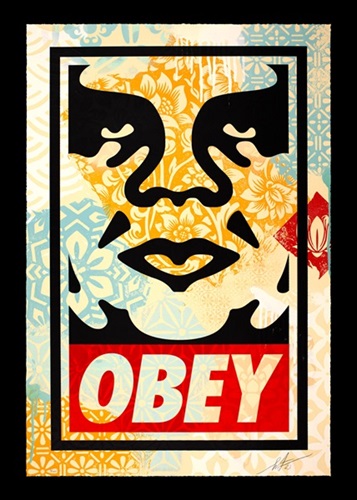
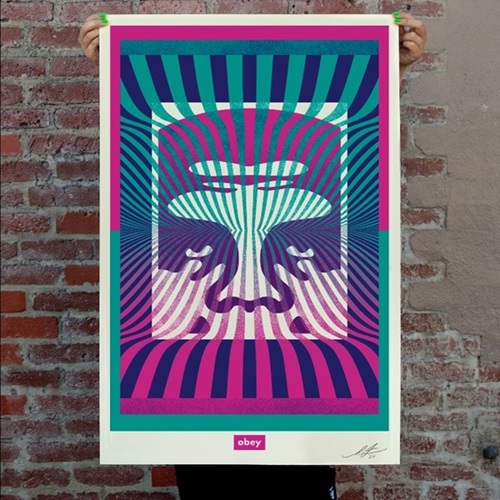
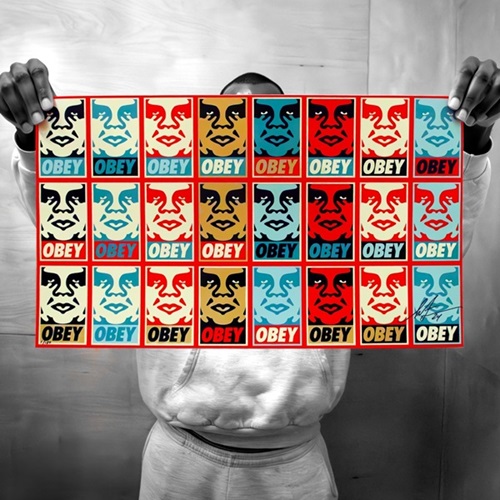
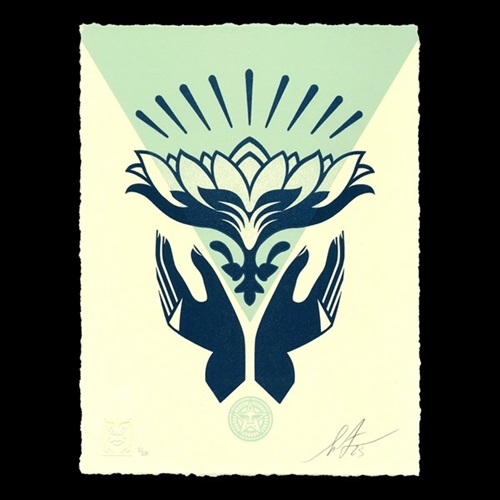
About the Artist

Shepard Fairey (b. 1970, Charleston, South Carolina) is an American street artist, graphic designer, and activist, and a graduate of the Rhode Island School of Design. His 1989 “André the Giant Has a Posse” sticker grew into the global OBEY GIANT campaign — an ongoing experiment in propaganda, obedience, and visual culture. He reached worldwide recognition with the 2008 “Hope” portrait of Barack Obama, now held by the Smithsonian National Portrait Gallery. Across screen prints, stencils, murals, and collage, Fairey channels propaganda aesthetics toward themes of peace, justice, environmentalism, and civil rights. His work is in the collections of the Museum of Modern Art, the Victoria & Albert Museum, and LACMA.