Gauntlet Gallery
What is Shepard Fairey’s piece called “Castro Ruby”?
Summary
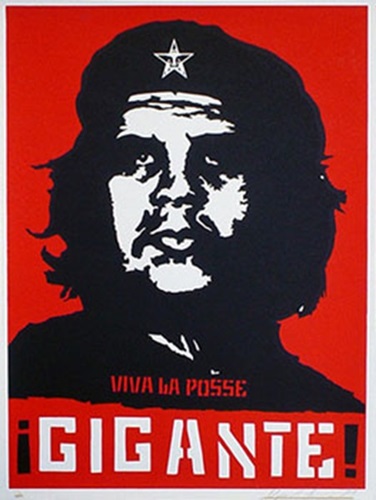
Castro Ruby is a 1998 Shepard Fairey screen print published by Obey Giant in a first edition of 100, measuring 18 x 24 inches. The title indicates a treatment of Cuban leader Fidel Castro, likely in a red-toned variant given the Ruby designation, rendered in Fairey's high-contrast propaganda-poster style consistent with his late-1990s editions. The source record contains no description, so specific imagery and color details are interpreted cautiously here. The print sits within Fairey's 1998 cohort of editioned screen prints that appropriate ideological leaders and charged political figures through the visual language of mass-produced propaganda.
Why It Matters
Castro Ruby belongs to the foundational late-1990s Obey Giant editions in which Fairey appropriated 20th-century ideological leaders and rendered them in the propaganda style historically used to glorify such figures. Fidel Castro fits naturally within this lineup of communist and authoritarian leaders that includes companion 1998 prints of Stalin and Mao, extending Fairey's critique of how political authority is visually manufactured and circulated. The Ruby designation points to a red-toned variant, a palette choice that resonates with the revolutionary and communist associations of the subject, though the source record offers no description to confirm specifics. For collectors, the print is significant as a scarcer, pre-fame example from the early Obey period with a small stated edition of 100, and as part of the leader-portrait thread that runs through Fairey's 1998 output. Because documentation is limited, its importance is best understood through its place in the cohort rather than through specific stated intent, but it contributes meaningfully to a chronological and thematic understanding of how Fairey tested charged political subject matter before his wider recognition.
Collector Perspective
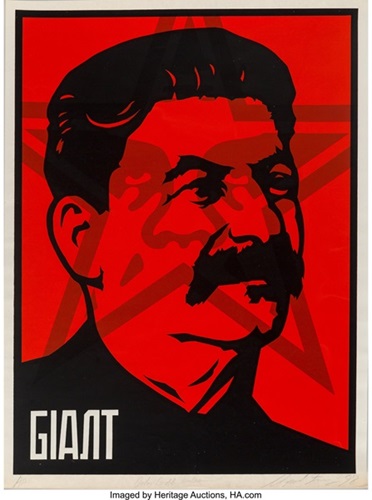
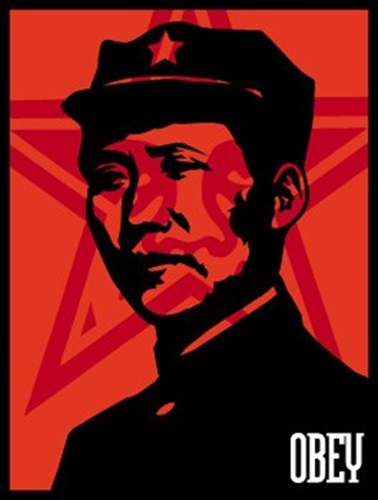
Castro Ruby appeals to collectors assembling a complete early-Obey leader series, where it joins the 1998 Stalin and Mao prints and the wider cohort at a uniform 18 x 24 inch size. The stated first edition of 100 and 1998 date attract buyers focused on scarcity and pre-fame provenance, and the apparent red-toned treatment offers visual distinction within a thematic grouping. Because the source provides no description, collectors should rely on direct inspection for color and imagery specifics rather than on this entry. Its value within a collection lies largely in completeness and continuity with the matched late-1990s leader prints, and it suits collectors drawn to Fairey's appropriation of ideological figures and comfortable with charged political content.
Historical Context
Castro Ruby was produced in 1998 during the consolidation of Fairey's Obey Giant project, which had grown from his 1989 Andre the Giant sticker campaign. In this period he issued 18 x 24 inch screen prints in editions of 100 appropriating ideological leaders and charged political figures. Fidel Castro fits his early interest in the imagery of communist and authoritarian power, alongside same-year prints of Stalin and Mao. The Ruby variant suggests a red-toned edition, though the source record provides no description to confirm. These late-1990s editions predate Fairey's wider recognition and his 2008 Hope poster, placing the print in the foundational Posters and Propaganda phase of his arc, understood here chiefly through its cohort context.
FAQ
Who is the subject of Castro Ruby?
The title indicates a treatment of Cuban leader Fidel Castro, with the Ruby designation suggesting a red-toned variant. It is rendered in Fairey's high-contrast propaganda style, though the source record offers no description to confirm specific imagery.
What are the dimensions and edition size?
The source record lists Castro Ruby at 18 x 24 inches in a first edition of 100, published by Obey Giant in 1998 as a screen print.
Why is information on this print limited?
The source record provides title, year, medium, dimensions, and edition but no description. This entry therefore interprets the work cautiously through its place in Fairey's 1998 leader-portrait cohort rather than asserting specific imagery or intent.
How does it fit with Fairey's other 1998 prints?
It belongs to a 1998 group of 18 x 24 inch editions of 100, alongside leader portraits of Stalin and Mao. Within a collection it contributes completeness to this matched early Obey Giant series of ideological figures.
Related Works

About the Artist

Shepard Fairey (b. 1970, Charleston, South Carolina) is an American street artist, graphic designer, and activist, and a graduate of the Rhode Island School of Design. His 1989 “André the Giant Has a Posse” sticker grew into the global OBEY GIANT campaign — an ongoing experiment in propaganda, obedience, and visual culture. He reached worldwide recognition with the 2008 “Hope” portrait of Barack Obama, now held by the Smithsonian National Portrait Gallery. Across screen prints, stencils, murals, and collage, Fairey channels propaganda aesthetics toward themes of peace, justice, environmentalism, and civil rights. His work is in the collections of the Museum of Modern Art, the Victoria & Albert Museum, and LACMA.