Gauntlet Gallery
What is Shepard Fairey’s piece called “Danger No Smoking”?
Artist Statement
This Danger No Smoking print is inspired by a screen print I made in 1990, which was the very first image I made addressing the environmental and health hazards of gasoline. I took this photograph in Providence, RI at the edge of a desolate graveyard, which probably intensified my interpretation of the peeling paint on the gas pump as a skull. I decided the symbolism provided by natural erosion was powerful enough to make the photo worthy of turning into a print. I always liked this image, and I rediscovered it while looking for images to include in a book surveying my entire history of environmentally themed art. I only made ten prints of the gas pump skull in 1990, so I decided I should make a new version of the image as a painting for my Paris art show, and an edition of prints accessible to more than 8 people (I kept two of the ten 1990 prints). Danger No Smoking: edition of 450. $45. -Shepard
Summary
Danger No Smoking is a 2016 screen print by Shepard Fairey measuring 18 x 24 inches, published by Obey Giant in an edition of 450 at $45. The image is based on a photograph Fairey took in Providence, Rhode Island, at the edge of a graveyard, where peeling paint on a gas pump read to him as a skull. It revisits a 1990 screen print, his first image addressing the environmental and health hazards of gasoline, of which he says he made only ten. He rediscovered the image while compiling a book surveying his environmentally themed art and reissued it as a new print and a painting for his Paris show.
Why It Matters
Danger No Smoking is significant as a return to the very first environmental image in Fairey's career. By his own account, the original 1990 gas-pump-skull screen print marked his earliest statement on the hazards of gasoline, predating much of his recognized iconography. Reissuing it in 2016 connects his mature environmental advocacy directly to its origin point, giving collectors a documented through-line across more than 25 years of practice. The image itself is a potent piece of found symbolism: a decaying gas pump whose peeling paint becomes a skull, an emblem of fossil-fuel mortality intensified by the graveyard setting where Fairey photographed it. Because the 1990 original existed in only ten copies, this 2016 edition of 450 is the first version made broadly accessible, which Fairey explicitly frames as his intent. It belongs to his sustained body of environmental and climate work and gains added weight from its inclusion in a book surveying his entire history of environmentally themed art, making it both a standalone image and a keystone in his ecological narrative.
Collector Perspective
This appeals to collectors focused on Fairey's environmental and climate work, and to those who value images with a deep career backstory. The documented link to his 1990 first environmental print, of which only ten existed, gives this edition particular narrative appeal for collectors who want a piece that anchors Fairey's ecological arc. The skull-and-gas-pump imagery is graphically striking and reads clearly from a distance, making it a strong display piece. The 18 x 24 inch format on cream paper frames easily, and the $45 issue price made it an accessible signed work. It fits naturally into an environmentally themed grouping alongside Fairey's other fossil-fuel and climate prints, and rewards collectors who appreciate the origin-story dimension behind the image.
Historical Context
Released in May 2016 by Obey Giant, Danger No Smoking is rooted in a 1990 screen print Fairey describes as the first image he made addressing the environmental and health hazards of gasoline, predating his widest fame. He photographed the source image at the edge of a desolate graveyard in Providence, Rhode Island, where natural erosion on a gas pump suggested a skull. Having made only ten of the 1990 prints and kept two, he revived the image after rediscovering it while assembling a book surveying his environmentally themed art, producing a new painting for his Paris show and this wider edition. The work thus links the origins of Fairey's environmental practice to his ongoing climate-focused output of the 2010s.
FAQ
What does Danger No Smoking depict?
It is based on a photograph Fairey took in Providence, Rhode Island, at the edge of a desolate graveyard, where peeling paint on a gas pump appeared to him as a skull. He found the symbolism from natural erosion powerful enough to turn into a print, making the image a comment on the hazards of gasoline.
How does this relate to a 1990 print?
Fairey states this image is based on a screen print he made in 1990, which he calls the very first image he made addressing the environmental and health hazards of gasoline. He made only ten prints of that original gas-pump skull and kept two, so this 2016 edition makes the image accessible to far more people.
What is the edition size and price?
Danger No Smoking is a screen print in an edition of 450, with an original issue price of $45. It measures 18 by 24 inches and was published by Obey Giant in 2016. It is signed by Shepard Fairey.
Why did Fairey reissue the image in 2016?
He says he rediscovered the image while looking for works to include in a book surveying his entire history of environmentally themed art. He decided to make a new painting for his Paris art show and an edition of prints accessible to more than the eight people who could have owned the original 1990 run.
Related Works
About the Artist
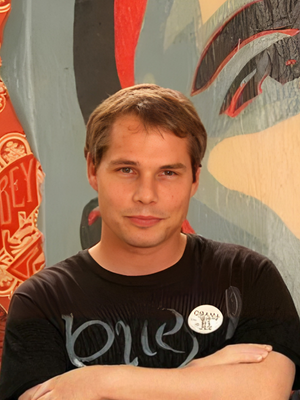
Shepard Fairey (b. 1970, Charleston, South Carolina) is an American street artist, graphic designer, and activist, and a graduate of the Rhode Island School of Design. His 1989 “André the Giant Has a Posse” sticker grew into the global OBEY GIANT campaign — an ongoing experiment in propaganda, obedience, and visual culture. He reached worldwide recognition with the 2008 “Hope” portrait of Barack Obama, now held by the Smithsonian National Portrait Gallery. Across screen prints, stencils, murals, and collage, Fairey channels propaganda aesthetics toward themes of peace, justice, environmentalism, and civil rights. His work is in the collections of the Museum of Modern Art, the Victoria & Albert Museum, and LACMA.