Gauntlet Gallery
What is Shepard Fairey’s piece called “Hong Kong Visual Disobediance”?
Artist Statement
For my Hong Kong "Visual Disobedience" museum show, I created a painting and screen print based on an installation I did on the streets of Hong Kong during my first trip there in 2000. I love the energy of the Hong Kong cityscape with its unique combination of old and new, slick and gritty. The plethora of signs, including vintage neon, make for a lot of eye-candy with a different sensibility than I've seen anywhere else in the world. I saved part of the print edition to sell online for those who couldn't buy the print in Hong Kong. -Shepard Visual Disobedience. 18 inches x 24 inches Screen Print on cream Speckle Tone paper. Signed by Shepard Fairey. Numbered edition of 400. $55.
Summary
Hong Kong Visual Disobedience is a 2016 screen print by Shepard Fairey, published by Obey Giant in a numbered edition of 400. It measures 18 by 24 inches and is printed on cream Speckle Tone paper. The image is based on a street installation Fairey created in Hong Kong during his first trip there in 2000, and was tied to his Hong Kong "Visual Disobedience" museum show, for which he made both a painting and this print. The composition channels the energy of the Hong Kong cityscape, with its blend of old and new and its profusion of signs and vintage neon. Fairey reserved part of the edition for online buyers who could not attend in Hong Kong. Signed by Shepard Fairey at $55.
Why It Matters
This print connects Fairey's global street practice to a specific museum moment, anchoring an image to his 2000 Hong Kong installation and his later "Visual Disobedience" exhibition there. The title itself frames the work within Fairey's recurring argument that public, unsanctioned art is a form of disobedience that reclaims the visual environment from commercial signage. By riffing on the dense, neon-saturated Hong Kong cityscape, the print celebrates a streetscape of layered signs while implicitly critiquing the visual noise of consumer culture, a tension central to Fairey's work. For collectors, it stands out as one of the more internationally rooted entries in his catalog, documenting his engagement with a city outside his usual American and European contexts. Fairey's own note that he saved part of the edition for online buyers who could not purchase in Hong Kong adds provenance and a sense of accessibility. At an edition of 400 and an accessible original price point, it is an approachable signed Fairey for newer collectors, while its museum-show origin and street-installation backstory give it real narrative depth. It is a strong representative of Fairey's public-art ethos in a specific place.
Collector Perspective
This print suits collectors drawn to Fairey's street-art and public-art ethos, and to those who value works with a concrete travel or exhibition story. It is especially appealing to buyers interested in his international projects, as it documents his 2000 Hong Kong installation and his museum show there. The 18-by-24-inch size is easy to frame and integrate into a mixed wall, and the cream Speckle Tone stock gives it a warm, tactile quality. With a signed edition of 400 and a modest original price, it serves as an accessible entry point for newer collectors while still offering the narrative richness of a museum-tied piece. It fits naturally within a collection focused on Fairey's cityscapes, public installations, and global street work.
Historical Context
Fairey built his reputation through street installations and wheatpaste campaigns worldwide, and this print documents one such project from his first trip to Hong Kong in 2000. Released in 2016 to accompany his Hong Kong "Visual Disobedience" museum show, it reflects the mid-career phase in which his once-illicit street practice was increasingly recognized by institutions and exhibited in museums. The "Visual Disobedience" framing restates a core theme of his career: that public art is a deliberate act of reclaiming the visual commons. By revisiting a 2000 installation for a 2016 exhibition, the work bridges his earlier guerrilla activity and his established gallery-and-museum standing. It situates Fairey within a global context, extending his American street vocabulary to the signage-rich environment of Hong Kong.
FAQ
What is this print based on?
Per Fairey's note, it is based on a street installation he created in Hong Kong during his first trip there in 2000. He made both a painting and this screen print for his Hong Kong "Visual Disobedience" museum show, drawing on the energy of the city's signage and vintage neon.
What are the size, paper, and edition?
It measures 18 by 24 inches and is printed on cream Speckle Tone paper. It is a signed, numbered edition of 400, published by Obey Giant in 2016 at an original price of $55.
Why was part of the edition sold online?
Fairey states he saved part of the print edition to sell online for people who could not buy the print in person in Hong Kong, making the museum-show image accessible to collectors who could not attend the exhibition.
What does the title mean?
The 'Visual Disobedience' title ties to Fairey's Hong Kong museum show and reflects his recurring view of public, street-based art as a way to reclaim the visual environment. The image celebrates Hong Kong's dense, neon-rich cityscape with its mix of old and new.
Related Works
About the Artist
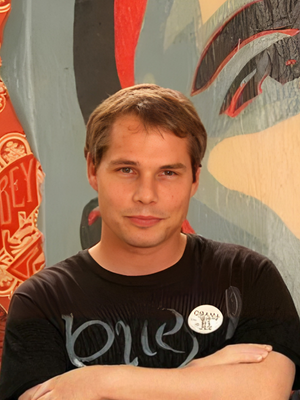
Shepard Fairey (b. 1970, Charleston, South Carolina) is an American street artist, graphic designer, and activist, and a graduate of the Rhode Island School of Design. His 1989 “André the Giant Has a Posse” sticker grew into the global OBEY GIANT campaign — an ongoing experiment in propaganda, obedience, and visual culture. He reached worldwide recognition with the 2008 “Hope” portrait of Barack Obama, now held by the Smithsonian National Portrait Gallery. Across screen prints, stencils, murals, and collage, Fairey channels propaganda aesthetics toward themes of peace, justice, environmentalism, and civil rights. His work is in the collections of the Museum of Modern Art, the Victoria & Albert Museum, and LACMA.