Gauntlet Gallery
What is Shepard Fairey’s piece called “Worker”?
Artist Statement
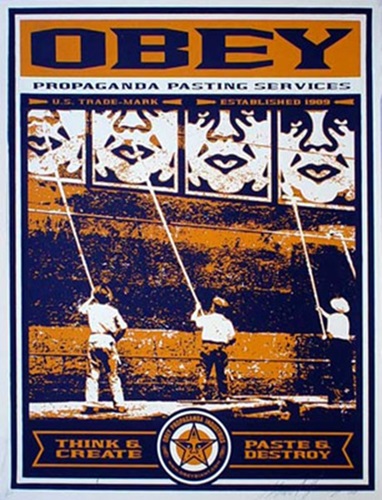
WORKER Screen Print 18 x 24 inches Edition of 140
Summary
Worker is a 2000 screen print published by Obey Giant in a first edition of 140, measuring 18 x 24 inches. The source provides only minimal cataloguing detail beyond title, medium, dimensions, and edition. As a print titled Worker from this period, it appears to align with Fairey's recurring engagement with labor imagery and the visual language of mid-century propaganda, rendered in his flat, high-contrast graphic style. Without a fuller description, the subject is best read cautiously as part of his working-class and propaganda-derived iconography.
Why It Matters
Worker belongs to a recurring strand in Fairey's practice that borrows the heroic-labor imagery of 20th-century propaganda posters, a vocabulary he draws on to comment on power, ideology, and the iconography of the state. The title alone signals that thematic territory, and the print's place among his 2000 Obey Giant releases situates it within the period when he was systematically mining propaganda aesthetics. With limited source description, its significance is best framed cautiously: it is a representative example of his labor-and-propaganda motif rather than a documented landmark work. For collectors, its appeal lies in its small first edition of 140 and its fit within a thematic group of his working-life and propaganda-inspired prints from the same era. The modest listed reference price in the source indicates it was issued as an accessible studio edition. As one node in a consistent body of labor-themed imagery, Worker offers an affordable, on-brand entry into Fairey's appropriation of socialist and industrial poster conventions, though firm claims about its specific imagery should await fuller documentation.
Collector Perspective
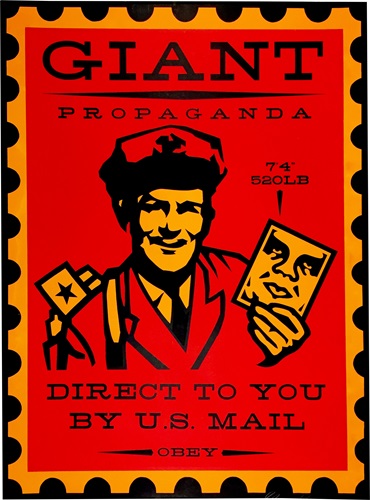
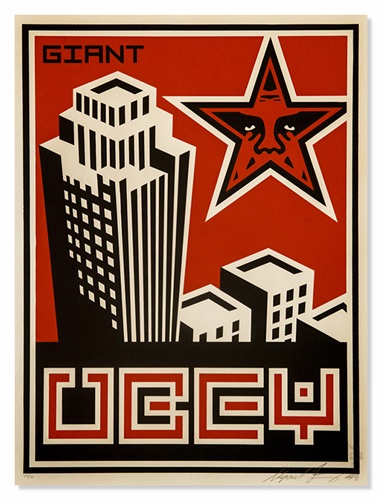
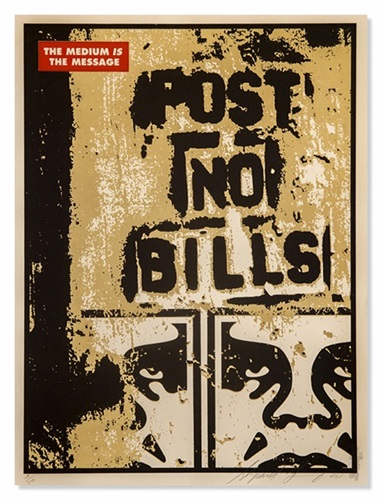
Worker suits collectors building around Fairey's labor and propaganda-inspired imagery, and those who appreciate his appropriation of mid-century poster aesthetics. With a small first edition of 140 and a modest listed reference price, it is an accessible piece for newer collectors or for rounding out a thematic grouping. At 18 x 24 inches it frames easily and pairs naturally with same-year works like Mailman, Skyline, and the Post No Bills Collage. Because the source description is sparse, collectors should treat the specific subject cautiously and verify imagery before relying on it. Its value here is largely contextual: a representative, affordable example of Fairey's working-class motif from the productive 2000 studio period.
Historical Context
Worker dates to 2000 and falls within the Posters and Propaganda phase of Fairey's career, when his Obey Giant studio was issuing a steady run of screen prints that adapted propaganda and industrial poster aesthetics. The labor subject implied by the title connects to a thread he revisited across his output, echoing the heroic-worker imagery of socialist and wartime propaganda that he repurposes for contemporary commentary. Coming after his foundational sticker and wheatpaste campaigns, it reflects the moment when his subject matter was broadening to include social and labor themes alongside the Andre iconography. With limited documentation, its precise place in the arc is best stated cautiously, but it is consistent with the propaganda-derived work that defines this era.
FAQ
What is the edition size of Worker?
Worker is a first edition of 140, published by Obey Giant in 2000. The edition size, along with the title, medium, and dimensions, is stated in the source record.
What are the dimensions and medium?
It is a screen print measuring 18 x 24 inches, consistent with Fairey's other Obey Giant studio prints from the same year. These details come directly from the source.
What is the subject of the print?
The source provides only the title Worker and basic cataloguing data without a descriptive narrative. The title points toward Fairey's labor and propaganda-inspired imagery, but the specific composition is not detailed in the record.
Is this a major or rare work?
With limited documentation, it is best understood as a representative studio print rather than a documented landmark. Its small edition of 140 and modest listed reference price suggest an accessible release; no rarity or market claims are supported by the source.
Related Works
About the Artist

Shepard Fairey (b. 1970, Charleston, South Carolina) is an American street artist, graphic designer, and activist, and a graduate of the Rhode Island School of Design. His 1989 “André the Giant Has a Posse” sticker grew into the global OBEY GIANT campaign — an ongoing experiment in propaganda, obedience, and visual culture. He reached worldwide recognition with the 2008 “Hope” portrait of Barack Obama, now held by the Smithsonian National Portrait Gallery. Across screen prints, stencils, murals, and collage, Fairey channels propaganda aesthetics toward themes of peace, justice, environmentalism, and civil rights. His work is in the collections of the Museum of Modern Art, the Victoria & Albert Museum, and LACMA.