Gauntlet Gallery
What is Shepard Fairey’s piece called “Hello Scuzz”?
Artist Statement
HELLO SCUZZ Screen Print 18 x 24 inches Edition of 140
Summary
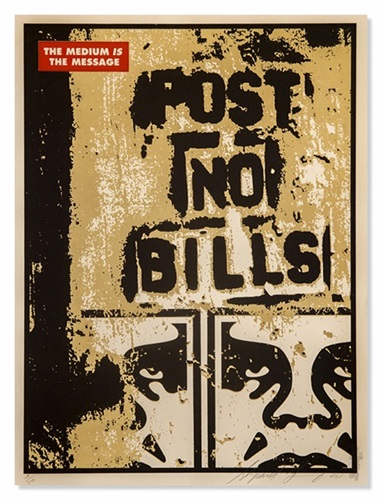
Hello Scuzz is a 2000 Shepard Fairey screen print, published by Obey Giant in a first edition of 140, measuring 18 x 24 inches. It belongs to Fairey's early Obey Giant studio output, executed in his recognizable bold, high-contrast graphic style. As one of a small run of 140 impressions, the work sits among the more limited editions from this period. The print reflects the street-art-to-studio crossover that characterized Fairey's practice at the turn of the millennium, applying his propaganda-influenced visual language to a titled studio image.
Why It Matters
Hello Scuzz dates to 2000, a pivotal moment when Shepard Fairey's Obey Giant project was consolidating from a street-based sticker and paste-up phenomenon into an editioned studio practice. Prints from this window document the bold graphic vocabulary and small-run release model that defined Fairey before his mainstream political breakthrough later in the decade. With a first edition limited to 140 impressions, this is a relatively scarce release within his catalog, which adds weight for collectors who track the chronological development of his work. For a knowledge-graph audience, its importance is largely documentary: it occupies a specific node among the 2000 Obey Giant releases, sitting alongside companion prints of the same year and edition scale. The piece rewards collectors who value provenance, period, and an artist's evolution over headline subject matter. It captures the experimental, design-forward character of Fairey's early-2000s output—work that helped establish the visual identity he would later carry into his most recognized political imagery. As a node in the broader Fairey database, Hello Scuzz helps map the dense cluster of small-edition prints he produced at the turn of the millennium.
Collector Perspective
Hello Scuzz appeals to Fairey collectors focused on his early Obey Giant period rather than his later political posters. The edition of 140 attracts buyers who prize smaller runs and depth within a chronological collection. At 18 x 24 inches it is a frame-friendly size that groups naturally with other 2000-era prints, building a coherent wall of early studio work. Its bold, high-contrast graphic reads strongly at a distance and complements companion pieces from the same release year. The print suits a collector assembling a representative survey of Fairey's pre-Obama practice, where period, technique, and edition scale carry more weight than famous celebrity or campaign imagery.
Historical Context
Hello Scuzz belongs to Shepard Fairey's early Obey Giant studio period around 2000, when his street-rooted practice was maturing into editioned screen prints. This phase followed his late-1980s Andre the Giant sticker campaign and preceded his 2008 Obama "Hope" image. Prints from this year share a graphic, high-contrast aesthetic and small edition sizes, reflecting an experimental stage centered on design and the appropriation of pop-cultural imagery. Hello Scuzz fits within the cluster of 2000 Obey Giant releases that show how Fairey translated outdoor work into collectible studio editions, helping define the visual identity he would later carry into broader political art.
FAQ
When was Hello Scuzz made and who published it?
Hello Scuzz is dated 2000 and was published by Obey Giant, Shepard Fairey's own studio imprint. It belongs to his early-2000s body of editioned screen prints that emerged from his street and stencil practice.
How many were made?
The source records it as a first edition of 140 impressions, a relatively small run for Fairey. Limited editions from this early period are of particular interest to collectors who follow the chronology of his catalog.
What are its size and medium?
It is a screen print measuring 18 x 24 inches, per the source description. This is a common, frame-friendly format across Fairey's editioned works of the period.
Where does it fit in Fairey's career?
It comes from the 2000 Obey Giant releases, a period when Fairey was transitioning from street-based work to collectible studio editions, several years before his 2008 Obama image.
Related Works

About the Artist

Shepard Fairey (b. 1970, Charleston, South Carolina) is an American street artist, graphic designer, and activist, and a graduate of the Rhode Island School of Design. His 1989 “André the Giant Has a Posse” sticker grew into the global OBEY GIANT campaign — an ongoing experiment in propaganda, obedience, and visual culture. He reached worldwide recognition with the 2008 “Hope” portrait of Barack Obama, now held by the Smithsonian National Portrait Gallery. Across screen prints, stencils, murals, and collage, Fairey channels propaganda aesthetics toward themes of peace, justice, environmentalism, and civil rights. His work is in the collections of the Museum of Modern Art, the Victoria & Albert Museum, and LACMA.