Gauntlet Gallery
What is Shepard Fairey’s piece called “Universal Personhood”?
Artist Statement
Vhils & Shepard Fairey Edition of /150 Two-colour screen print on paper Signed and numbered by the artists Hand-finished by Vhils with Quink ink and bleach Keaykolour Original China White 300 g/m2 paper 70 × 50 cm 2018
Summary
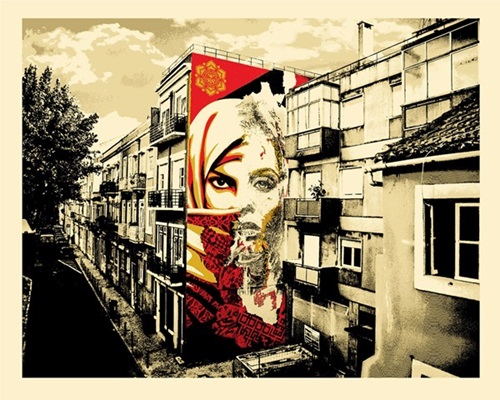
Universal Personhood (Artist Proof) is a 2018 collaboration between Vhils and Shepard Fairey, issued in an edition of 150. It is a two-color screen print on Keaykolour Original China White 300 g/m2 paper, measuring 70 x 50 cm, signed and numbered by the artists. Each print is hand-finished by Vhils using Quink ink and bleach, making every impression individually distinct. Published by Underdogs, the work combines Fairey's portrait-based iconography with Vhils's carving and erosion aesthetic. The Artist Proof designation and hand-finishing give the piece a unique, collaborative character within Fairey's catalog.
Why It Matters
Universal Personhood is a documented collaboration between Shepard Fairey and the Portuguese artist Vhils, published by Underdogs, which immediately distinguishes it from Fairey's solo Obey Giant releases. The two-color screen print is hand-finished by Vhils with Quink ink and bleach, meaning each impression is individually worked and unique, an unusual feature that elevates it above a standard uniform edition. Signed and numbered by both artists on premium Keaykolour China White paper at 70 x 50 cm, it carries the dual authorship and craftsmanship that collaboration-focused collectors prize. The Artist Proof designation marks this as a special subset within the edition of 150, often more coveted than standard numbered impressions. The piece sits within a recognizable Universal Personhood lineage that spans multiple years and formats in Fairey's catalog, giving it series context and collecting depth. The merging of Fairey's graphic portrait language with Vhils's signature erosion and carving aesthetic produces a hybrid visual identity that neither artist achieves alone, making the work significant as a cross-pollination of two distinct contemporary street-art practices. For collectors of Fairey collaborations or of Vhils, this hand-finished proof is a notably distinctive acquisition.
Collector Perspective
This print is ideal for collectors of artist collaborations and for those who follow either Fairey or Vhils. The hand-finishing by Vhils with Quink ink and bleach means each impression is unique, a strong draw for buyers who value individuality within an edition. The Artist Proof designation, dual signatures, premium Keaykolour paper, and Underdogs publication add to its distinctive appeal. At 70 x 50 cm it is a substantial but manageable display size, well suited to a focused collaboration wall or a portrait-leaning grouping. It fits collectors building a Universal Personhood lineage across years and formats, and rewards those who appreciate the fusion of Fairey's graphic portraiture with Vhils's erosion aesthetic. As a cross-artist, hand-worked proof, it carries collecting interest beyond a standard Fairey solo edition.
Historical Context
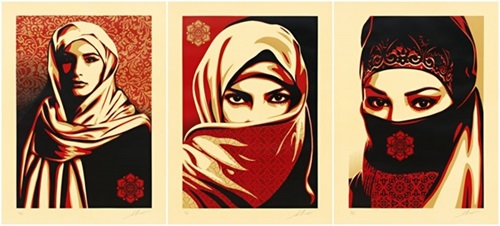
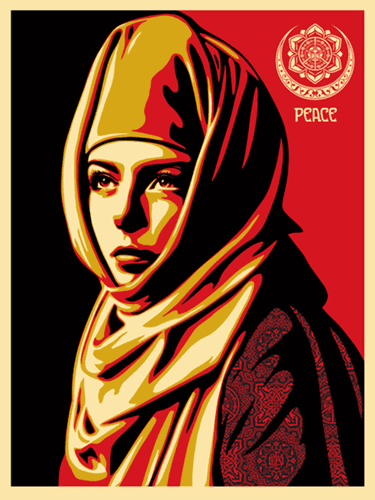
Released in 2018 and published by Underdogs, Universal Personhood (Artist Proof) reflects Fairey's ongoing engagement with collaborative projects alongside other contemporary artists, here the Portuguese artist Vhils, known for his carved and eroded portrait works. The Universal Personhood concept appears across several years in Fairey's catalog, including earlier 2013 and 2015 versions and a 2018 Lisbon edition, indicating a sustained thematic thread. The hand-finishing with Quink ink and bleach connects Fairey's flat graphic screen-printing tradition to Vhils's subtractive, materially destructive technique. The piece sits outside Fairey's core Obey Giant production line, illustrating how his portrait-based iconography travels into collaborative international contexts and merges with other artists' methods during this active period of his career.
FAQ
Who created Universal Personhood?
It is a collaboration between Vhils and Shepard Fairey, signed and numbered by both artists. Published by Underdogs, it merges Fairey's portrait-based graphic style with Vhils's carving and erosion aesthetic into a single hybrid work.
What makes each impression unique?
Each print is hand-finished by Vhils using Quink ink and bleach, so no two impressions are identical. This individual hand-working sets it apart from a standard uniform screen-print edition and adds to its appeal for collaboration collectors.
What are the materials and size?
It is a two-color screen print on Keaykolour Original China White 300 g/m2 paper, measuring 70 x 50 cm. The source notes it is signed and numbered by the artists, with an Artist Proof designation within an edition of 150.
What does Artist Proof mean here?
Artist Proof is a designation for impressions outside or alongside the main numbered run; the source lists Artist Proof and First Edition among the available editions. These proofs are often sought after for their special status within a collaborative edition of 150.
Related Works
About the Artist
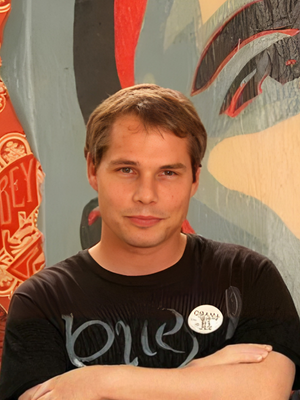
Shepard Fairey (b. 1970, Charleston, South Carolina) is an American street artist, graphic designer, and activist, and a graduate of the Rhode Island School of Design. His 1989 “André the Giant Has a Posse” sticker grew into the global OBEY GIANT campaign — an ongoing experiment in propaganda, obedience, and visual culture. He reached worldwide recognition with the 2008 “Hope” portrait of Barack Obama, now held by the Smithsonian National Portrait Gallery. Across screen prints, stencils, murals, and collage, Fairey channels propaganda aesthetics toward themes of peace, justice, environmentalism, and civil rights. His work is in the collections of the Museum of Modern Art, the Victoria & Albert Museum, and LACMA.