Gauntlet Gallery
What is Shepard Fairey’s piece called “Double Face”?
Summary
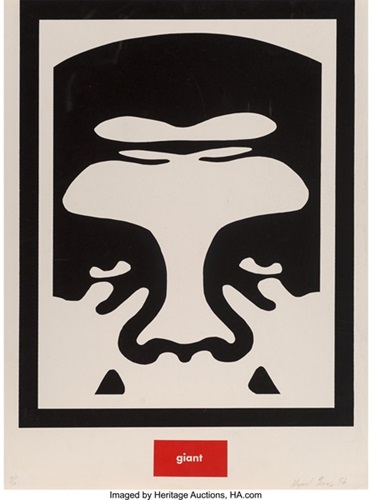
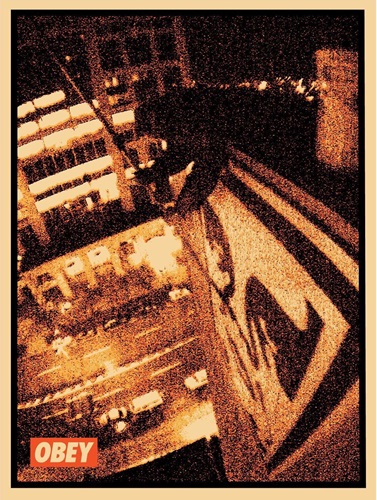
Double Face is a 2000 Shepard Fairey screen print, published by Obey Giant in a first edition of 140, measuring 18 x 24 inches. The source carries no description beyond these facts, but the title and assigned themes point to Fairey's Obey face iconography. As a run of 140 impressions, it sits among the smaller editions of the year. The work belongs to Fairey's early Obey Giant studio output and appears to relate to his face-based imagery, a foundation of the Obey project.
Why It Matters
Double Face dates to 2000, within Shepard Fairey's early Obey Giant studio period, and its title and assigned Obey-iconography theme align it with the face-based imagery at the heart of his project. The Obey face—rooted in the Andre the Giant image—is the foundation of Fairey's visual identity, so works engaging that motif carry documentary weight within his catalog. With a first edition limited to 140 impressions, this is a relatively small run, which adds interest for collectors tracking the chronology of his output. Because the source provides no description, claims here remain cautious: the print's exact composition is not detailed beyond title and theme. Still, as a node in a knowledge graph, Double Face connects to companion face-themed works of the period, including related half-face and multi-face pieces, helping map how Fairey explored variations on his central icon. It rewards collectors who value early Obey-era studio work and the development of the artist's signature face imagery, though its significance should be weighed against the limited source detail available.
Collector Perspective
Double Face appeals to early Obey Giant completists and collectors drawn to Fairey's face-based iconography. The edition of 140 is small, and the 18 x 24-inch format frames easily, grouping well with companion face-themed prints from the period. Because the source offers limited detail, buyers should treat the imagery cautiously and verify specifics before acquisition. The print suits a collector assembling a chronological survey of Fairey's early studio output or a thematic set around his Obey face motif, where period and edition scale matter more than documented subject specifics.
Historical Context
Double Face belongs to Shepard Fairey's early Obey Giant studio period around 2000, when his street-rooted practice was becoming editioned studio work. Its title and assigned Obey-iconography theme connect it to the face-based imagery descended from the Andre the Giant icon that anchors his project. This was several years before his 2008 Obama breakthrough, during a phase of refining his core visual identity. With limited source description available, the print is best understood broadly as part of the 2000 Obey Giant releases and the artist's ongoing exploration of his signature face motif rather than through documented compositional detail.
FAQ
What year is Double Face from and who published it?
Double Face is dated 2000 and was published by Obey Giant, Shepard Fairey's own studio imprint. It belongs to his early-2000s editioned screen prints from the Obey Giant project.
How large is the edition?
The source records a first edition of 140 impressions, a comparatively small run for Fairey. Early limited editions like this are of particular interest to collectors tracking the chronology of his catalog.
What are the dimensions and medium?
It is a screen print measuring 18 x 24 inches, per the source. This is a frame-friendly format common across Fairey's editioned works of the period.
What does the print depict?
The source provides no description beyond the title and themes, which point to Fairey's Obey face iconography. Specific compositional details are not documented, so the imagery should be confirmed before relying on it.
Related Works
About the Artist

Shepard Fairey (b. 1970, Charleston, South Carolina) is an American street artist, graphic designer, and activist, and a graduate of the Rhode Island School of Design. His 1989 “André the Giant Has a Posse” sticker grew into the global OBEY GIANT campaign — an ongoing experiment in propaganda, obedience, and visual culture. He reached worldwide recognition with the 2008 “Hope” portrait of Barack Obama, now held by the Smithsonian National Portrait Gallery. Across screen prints, stencils, murals, and collage, Fairey channels propaganda aesthetics toward themes of peace, justice, environmentalism, and civil rights. His work is in the collections of the Museum of Modern Art, the Victoria & Albert Museum, and LACMA.