Gauntlet Gallery
What is Shepard Fairey’s piece called “It Can't Happen Here”?
Artist Statement
The Statue of Liberty was gifted to the United States by France and unveiled in 1886 to celebrate the two nations' shared commitment to liberty and democracy. The Statue of Liberty features broken shackles by her feet to symbolize freedom and an end to slavery. Positioned near Ellis Island, it also became a powerful symbol of hope and welcome for millions of immigrants arriving in America. Under the current administration, all of those values are being undermined and the will of the people is being ignored by a president who wants to be a dictator or king. In this print the use of the phrase "It Can't Happen Here" is a reference to Sinclair Lewis's 1935 novel of the same name, which follows an American politician's embrace of fascism and ascent to becoming the country's first dictator. Let's take the fascist threat seriously and make sure it actually can't happen here because the way things are going many of the safeguards against fascism and dictatorship are being dismantled. Free speech, the right to assemble, the right to due process under the law are under assault. Liberty is shackled and we need to do everything we can to reverse that. A portion of proceeds from this print will be donated to Brave New Films to support their projects pushing for justice and against fascism. Thanks for caring! -Shepard It Can't Happen Here. 24H x 18W inches. Screen print on 80# cream Speckletone paper. Signed by Shepard Fairey. Numbered edition of 550. Comes with a Digital Certificate of Authenticity provided by Verisart. $65.
Summary
It Can't Happen Here is a 2026 Shepard Fairey screen print published by Obey Giant, 24 inches high by 18 inches wide on 80# cream Speckletone paper. Released January 22, 2026 in a signed, numbered edition of 550, it depicts the Statue of Liberty, whose broken shackles symbolize freedom and the end of slavery and whose placement near Ellis Island made it a symbol of welcome for immigrants. The title references Sinclair Lewis's 1935 novel about an American politician's embrace of fascism. Fairey uses the image to warn that liberty is being shackled and that safeguards against fascism are being dismantled. A portion of proceeds is donated to Brave New Films. It includes a Verisart Certificate of Authenticity.
Why It Matters
It Can't Happen Here is one of Fairey's most pointed contemporary political statements, marrying a foundational American symbol with a literary warning about authoritarian drift. By invoking Sinclair Lewis's 1935 novel and pairing it with the Statue of Liberty's history of broken shackles and immigrant welcome, Fairey builds layered commentary on democracy, free speech, the right to assemble, and due process, all of which the print describes as under assault. This places it squarely in the lineage of his democracy-and-justice work, extending themes he has explored across multiple election cycles. The charitable tie to Brave New Films, which produces media pushing for justice and against fascism, situates the print within Fairey's long practice of channeling editions toward causes. For collectors, the work is significant as a timestamped artifact of a specific political moment, articulated through Fairey's instantly legible graphic language. The edition of 550 follows his standard release scale, and the signed, numbered, Verisart-authenticated format reinforces its standing as a deliberate civic statement rather than a decorative piece.
Collector Perspective
This print appeals to collectors who value Fairey's political and civil-rights work and who want pieces that document the democratic anxieties of the mid-2020s. The Statue of Liberty imagery gives it broad symbolic resonance, while the literary reference and charitable component add depth that engaged collectors appreciate. At 24 by 18 inches on cream Speckletone, it displays as a strong statement piece in homes or activist spaces. The edition of 550 keeps it accessible, and the signed, numbered, Verisart-certified format matches Fairey's current standards. It anchors well within a political-themed Fairey collection, sitting beside his democracy, voting, and justice editions and forming part of a coherent narrative about American liberty under pressure.
Historical Context
It Can't Happen Here belongs to Fairey's contemporary period of sustained political printmaking, in which he has repeatedly turned national symbols into vehicles for warnings about democratic backsliding. Released January 22, 2026, it extends a body of work confronting threats to free speech, assembly, and due process that he had developed across prior election cycles. By citing Sinclair Lewis's 1935 cautionary novel, Fairey links present-day concerns to a longer American debate about fascism, giving the piece historical depth beyond its moment. The Brave New Films donation continues his established pattern of pairing editions with activist organizations. Within his arc, it stands as a direct successor to earlier democracy- and justice-themed prints, reinforcing his role as a visual chronicler of contemporary political crisis.
FAQ
What does the title It Can't Happen Here reference?
The title references Sinclair Lewis's 1935 novel of the same name, which follows an American politician's embrace of fascism and ascent to becoming the country's first dictator. Fairey uses it to urge people to take the fascist threat seriously and ensure it actually cannot happen.
Why does the print show the Statue of Liberty?
Fairey notes the Statue of Liberty was unveiled in 1886, features broken shackles symbolizing freedom and an end to slavery, and near Ellis Island became a symbol of welcome for immigrants. He depicts liberty as shackled to warn that these values are being undermined.
Does this print support a cause?
Yes. Fairey states that a portion of proceeds from this print is donated to Brave New Films to support their projects pushing for justice and against fascism, continuing his practice of tying editions to activist organizations.
What are the edition details?
It Can't Happen Here is a 24-by-18-inch screen print on 80# cream Speckletone paper, signed by Shepard Fairey, in a numbered edition of 550, with a digital Certificate of Authenticity from Verisart. It was published by Obey Giant in 2026.
Related Works
About the Artist
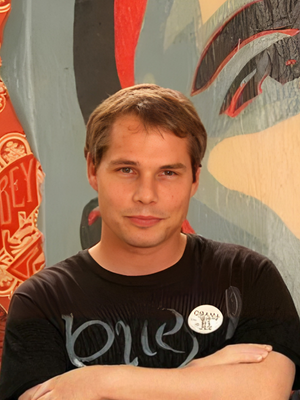
Shepard Fairey (b. 1970, Charleston, South Carolina) is an American street artist, graphic designer, and activist, and a graduate of the Rhode Island School of Design. His 1989 “André the Giant Has a Posse” sticker grew into the global OBEY GIANT campaign — an ongoing experiment in propaganda, obedience, and visual culture. He reached worldwide recognition with the 2008 “Hope” portrait of Barack Obama, now held by the Smithsonian National Portrait Gallery. Across screen prints, stencils, murals, and collage, Fairey channels propaganda aesthetics toward themes of peace, justice, environmentalism, and civil rights. His work is in the collections of the Museum of Modern Art, the Victoria & Albert Museum, and LACMA.