Gauntlet Gallery
What is Shepard Fairey’s piece called “Bring The Noise”?
Artist Statement
BRING THE NOISE Screen Print 18 x 24 inches Edition of 300
Summary
Bring The Noise is a 2002 screen print by Shepard Fairey, published by Obey Giant in a first edition of 300, measuring 18 x 24 inches. The title references the energy of music and counterculture, rendered in Fairey's high-contrast graphic style with bold flat fields and stylized composition. The source assigns it to his pop-culture and collaboration theme, placing it among the music-adjacent screen prints of his early-2000s output. With a defined run of 300 prints, it is a discrete edition from a productive period in Fairey's catalog. The record carries a limited description beyond its core production facts.
Why It Matters
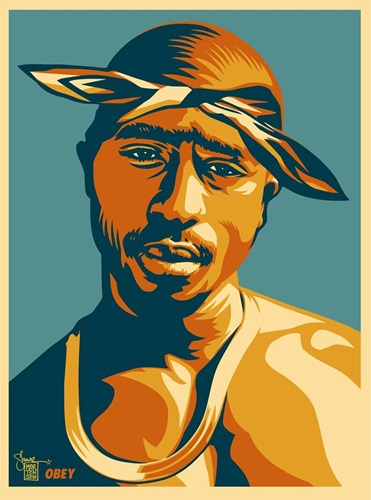
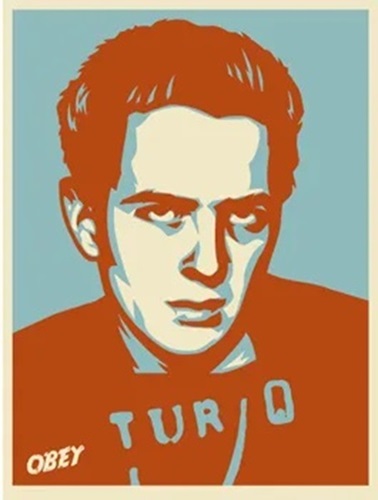
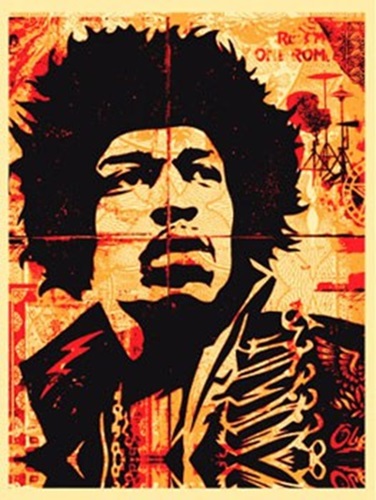
Bring The Noise belongs to Fairey's early-2000s screen-print output, the period when he was steadily building a catalog rooted in music, pop culture, and counterculture energy. The title evokes the urgency and volume of music culture, aligning the print with the broader set of music-driven works Fairey produced in 2002. These prints matter because they show how he channeled the DIY and appropriation ethos of punk and hip-hop into a consistent graphic language that would later carry his political messaging. With a modest first edition of 300, Bring The Noise is a defined artifact of this era rather than an overstated centerpiece. The source description is limited, so its specific imagery and references are best read cautiously, but its placement among Fairey's pop-culture collaborations situates it within the music-and-counterculture thread that runs through his Tupac, Hendrix, and Strummer works. For collectors mapping the cultural roots of Fairey's aesthetic, it is a supporting piece that reinforces how central music and counterculture were to his identity before his national breakout.
Collector Perspective
This print suits collectors drawn to Fairey's music and counterculture roots and those assembling early-2000s Obey Giant screen prints. At 18 x 24 inches it frames cleanly and groups well with other 2002 music-adjacent editions. The edition of 300 makes it a moderately limited piece, attractive to collectors who want a defined-edition screen print from this formative period. Because the source detail is limited, it appeals most to enthusiasts who value it as part of a thematic music-and-pop-culture set rather than as a standalone marquee work, where its energetic title and graphic treatment add variety to a counterculture-focused display.
Historical Context
Bring The Noise dates to 2002, within Fairey's posters-and-propaganda period and his prolific early-2000s screen-printing run. This phase preceded his 2008 Obama-era prominence and was marked by a steady stream of music and pop-culture editions through Obey Giant. The print's title and pop-culture framing connect it to the music and counterculture imagery that shaped Fairey's visual vocabulary during these years. Within his arc, it documents the continued centrality of music culture to his practice, reinforcing the foundation that his later, more overtly political work was built upon.
FAQ
What is Bring The Noise?
Bring The Noise is a 2002 screen print by Shepard Fairey, published by Obey Giant. Its title references music and counterculture energy, and it is rendered in his bold graphic style. The source provides limited description beyond its core production facts.
What are the dimensions and edition size?
The print measures 18 x 24 inches and was released as a first edition of 300 screen prints by Obey Giant, making it a moderately limited edition from Fairey's early-2000s output.
What theme does this print fall under?
The source assigns it to Fairey's pop-culture and collaboration theme, placing it among his music-adjacent screen prints from the early 2000s. Its title connects it to the music and counterculture energy central to his work of that period.
Where does it fit in Fairey's catalog?
It belongs to his posters-and-propaganda period before his 2008 breakthrough and sits within the music and pop-culture editions he produced in 2002, alongside works like Tupac and Hendrix that share its counterculture orientation.
Related Works
About the Artist

Shepard Fairey (b. 1970, Charleston, South Carolina) is an American street artist, graphic designer, and activist, and a graduate of the Rhode Island School of Design. His 1989 “André the Giant Has a Posse” sticker grew into the global OBEY GIANT campaign — an ongoing experiment in propaganda, obedience, and visual culture. He reached worldwide recognition with the 2008 “Hope” portrait of Barack Obama, now held by the Smithsonian National Portrait Gallery. Across screen prints, stencils, murals, and collage, Fairey channels propaganda aesthetics toward themes of peace, justice, environmentalism, and civil rights. His work is in the collections of the Museum of Modern Art, the Victoria & Albert Museum, and LACMA.