Gauntlet Gallery
What is Shepard Fairey’s piece called “Giant Heavy Metal”?
Artist Statement
Giant Heavy Metal Size: 9 x 24 Edition of 120
Summary
Giant Heavy Metal is a 1994 screen print published by Obey Giant in a first edition of 120, measuring 9 by 24 inches in a tall vertical format. Drawn from Shepard Fairey's earliest Andre the Giant period, it carries the OBEY iconography that grew out of his Providence-era sticker campaign. The narrow vertical proportions and music-culture title point to a graphic, poster-like composition rather than a fine-art portrait. With no listed price in the source and a small print run, it sits among Fairey's foundational mid-1990s editions that predate his later overtly political work and helped establish the Giant face as a recognizable street-art motif.
Why It Matters
Giant Heavy Metal belongs to the small, formative group of Shepard Fairey editions from 1994, among the earliest screen prints he released through Obey Giant. For collectors, the appeal is chronological: this is Fairey before the Obama Hope era, before the gallery shows, working in the raw vocabulary of the Andre the Giant sticker phenomenon that grew out of skate and punk culture. The OBEY iconography and pop-culture framing the source assigns to it reflect a moment when Fairey was testing how far a single appropriated face could travel as a visual signal. An edition of only 120 makes it one of the scarcer early objects, and early-1990s Fairey material rarely surfaces in quantity. The tall 9-by-24 format is unusual within his catalog and reads as a deliberate poster-style gesture rather than a conventional rectangle. Its significance is foundational rather than thematic: it documents the origins of a graphic language that Fairey later turned toward political and social messaging. Collectors of provenance and early street art value pieces like this as primary-source artifacts of the OBEY project's first years, not for an explicit message but for what they reveal about how the icon began.
Collector Perspective
This print speaks to early-OBEY completists and street-art collectors who prioritize chronology and origin over message. The small edition of 120 and the 1994 date make it a desirable early marker for anyone assembling a timeline of Fairey's career or the Andre the Giant phenomenon. The unusual tall vertical format gives it a distinctive presence on a wall, working well in a narrow space where a standard print would not fit. It pairs naturally with other mid-1990s Giant editions, anchoring a focused early-period grouping. Buyers drawn to this are typically less interested in the later political work and more in the raw, formative street-art roots, valuing the piece as a primary artifact of how the OBEY image first spread.
Historical Context
Giant Heavy Metal sits at the very start of Shepard Fairey's editioned output, dated 1994, only a few years after the 1989 Andre the Giant sticker that launched the project. It predates his San Diego move and the wider gallery recognition that followed. In Fairey's arc this is the experimental Providence-into-mid-90s window, when the Giant face was still primarily a street and subculture signal rather than the polished OBEY brand it later became. The source places it in collaborations and pop-culture territory alongside OBEY iconography, consistent with this era's blending of appropriated imagery and skate/music culture. Compared with his later propaganda-styled and political prints, this work is foundational: it shows the icon being deployed before Fairey developed the red-and-cream propaganda aesthetic and the activist messaging that defined his mature career.
FAQ
When was Giant Heavy Metal made and who published it?
Giant Heavy Metal is dated 1994 and was published by Obey Giant. It is one of Shepard Fairey's earliest editioned screen prints, placing it at the very start of his catalog and within the formative period of the Andre the Giant project that grew out of his Providence-era sticker campaign.
How large is the edition?
According to the source, this is a first edition of 120. That is a relatively small run for a Fairey print, which puts it among the scarcer early-period editions, though the source does not state that it is sold out or otherwise unavailable.
What are the dimensions and medium?
It is a screen print measuring 9 by 24 inches, an unusually tall vertical format within Fairey's catalog. The narrow proportions give it a poster-like presence that suits a slim wall space and distinguishes it from his more common rectangular prints.
Why is this print significant?
Its significance is foundational rather than thematic. As a 1994 release it documents the earliest years of the OBEY project, before the Obama-era and overtly political work, making it a primary-source artifact of how the Giant icon first spread through street and subculture channels.
Related Works
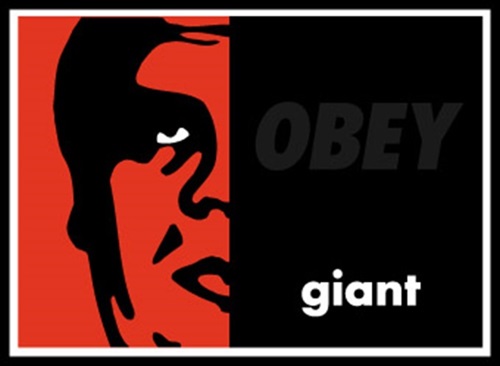
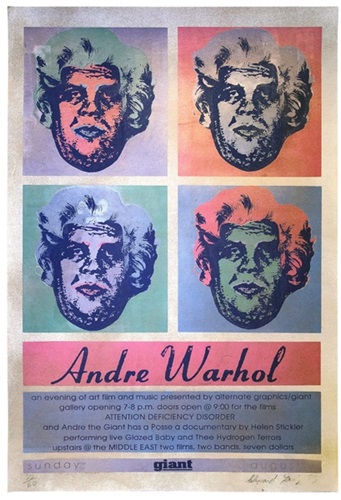
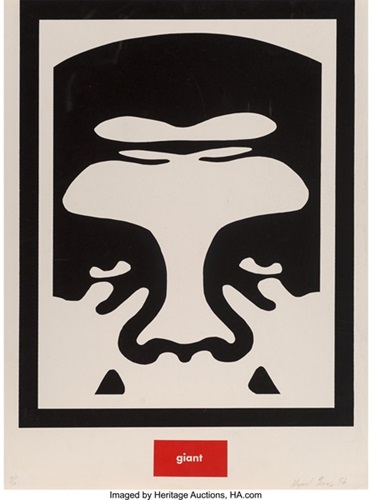
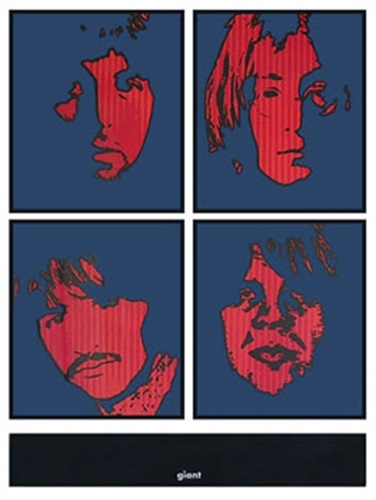

About the Artist

Shepard Fairey (b. 1970, Charleston, South Carolina) is an American street artist, graphic designer, and activist, and a graduate of the Rhode Island School of Design. His 1989 “André the Giant Has a Posse” sticker grew into the global OBEY GIANT campaign — an ongoing experiment in propaganda, obedience, and visual culture. He reached worldwide recognition with the 2008 “Hope” portrait of Barack Obama, now held by the Smithsonian National Portrait Gallery. Across screen prints, stencils, murals, and collage, Fairey channels propaganda aesthetics toward themes of peace, justice, environmentalism, and civil rights. His work is in the collections of the Museum of Modern Art, the Victoria & Albert Museum, and LACMA.