Gauntlet Gallery
What is Shepard Fairey’s piece called “Let Fury Have The Hour”?
Artist Statement
Shepard recently created some poster/print artwork for a soon to be released documentary on the Clash that coincided with the Let Fury Have a Heartbeat exhibition at Subliminal Projects, on now. The print will be released on Thursday, Jan 7th at Random. Its signed by both Shepard and author/director Antonino D’Ambrosio. Edition of 450, S/N, $50. Limit 1 Per Person/Household. Based on Antonino D’Ambrosio’s critically acclaimed book, the documentary Let Fury Have the Hour considers a range of increasingly pressing concerns, using the Clash’s legacy and, more importantly, the profound creative-activism of artists, musicians, and citizens throughout the world as a framework to address persistent issues—from poverty and racism to environmental devastation and war. The film offers insight from people who believe in the power of art and culture to tackle these issues, and who promote a worldview that is inclusive, expansive, and dynamic. Like the Clash and featured creative-activists, the film challenges its audience to make a difference, creates a new dialogue that moves beyond reactionary and simplistic politics, and inspires us to become part of a historical process of justice and change. http://www.letfuryhavethehour.com/ http://www.subliminalprojects.com/ Photo credit: Syd Shelton
Summary
Let Fury Have The Hour is a 2010 Shepard Fairey screen print, 18 x 24 inches, a first edition of 450 published by Obey Giant. Released January 7, 2010, it was created in connection with the documentary film Let Fury Have the Hour, based on Antonino D'Ambrosio's book, which uses the Clash's legacy and the creative activism of artists, musicians, and citizens as a framework for addressing issues from poverty and racism to environmental devastation and war. The print coincided with the related exhibition at Subliminal Projects and was signed by both Shepard and author/director Antonino D'Ambrosio. The image draws on punk and protest culture, presenting Fairey's graphic style in service of a film about art as activism.
Why It Matters
This print connects Fairey to the lineage of punk and protest culture that shaped his own worldview, anchored by the legacy of the Clash. As promotional and supportive artwork for Antonino D'Ambrosio's documentary, it embodies the film's central argument: that art and culture have the power to address persistent injustices, from poverty and racism to environmental devastation and war. For collectors, the dual signature of Fairey and D'Ambrosio gives the edition a collaborative, documentary character, tying it to a specific cultural project rather than a standalone image. The work also illustrates Fairey's habit of allying his visual brand with creative-activist endeavors and music-rooted movements he reveres. It sits comfortably alongside his many music- and counterculture-themed editions, while its themes of justice and change push it toward his more explicitly political output. The link to the concurrent Subliminal Projects exhibition adds context as an artifact of a particular moment in Fairey's gallery and activist programming, making it a layered object for collectors interested in the cross-pollination of music, film, and street-rooted protest art in his catalog.
Collector Perspective
This print draws collectors interested in punk heritage, the Clash, and the broader theme of art-as-activism. The tie to a documentary film and the dual signature by Fairey and director Antonino D'Ambrosio give it appeal to those who collect editions with a strong narrative or cultural-project backstory. At 18 x 24 inches it frames easily and works within groupings focused on music, counterculture, and protest. Its connection to the Subliminal Projects exhibition adds a layer of provenance interest. Collectors building around Fairey's music and political crossover works, or around socially engaged documentary tie-ins, will find it a coherent fit, and the first-edition status of 450 keeps it accessible.
Historical Context
Released in January 2010, Let Fury Have The Hour belongs to Fairey's prolific period of cause- and culture-tied editions following his 2008 prominence. It coincided with the Let Fury Have a Heartbeat exhibition at Subliminal Projects, the gallery Fairey co-founded, and supported a documentary built around the Clash's legacy and the creative activism of artists and citizens worldwide. The edition of 450, signed by both Fairey and director Antonino D'Ambrosio, reflects his recurring practice of partnering with filmmakers, musicians, and authors whose work aligns with his own activist convictions, situating the print within the music-and-protest strand that runs throughout his catalog.
FAQ
What is this print connected to?
It was created in connection with the documentary Let Fury Have the Hour, based on Antonino D'Ambrosio's critically acclaimed book. The film uses the Clash's legacy and the creative activism of artists, musicians, and citizens to address issues including poverty, racism, environmental devastation, and war. The print's release coincided with the Let Fury Have a Heartbeat exhibition at Subliminal Projects.
What is the edition size and who signed it?
It is a first edition of 450, an 18 x 24 inch screen print published by Obey Giant. Released on January 7, 2010 at an original price of $50, it is signed and numbered by both Shepard Fairey and the documentary's author and director, Antonino D'Ambrosio, with a stated limit of one per person or household.
What themes does the documentary address?
According to the source, the film considers increasingly pressing concerns from poverty and racism to environmental devastation and war, drawing on the Clash and featured creative-activists. It promotes an inclusive, expansive worldview and challenges its audience to make a difference and become part of a historical process of justice and change.
Is this a music-related Fairey print?
Yes, in part. While it directly supports a documentary film, that film centers on the Clash's legacy and the role of musicians in activism, placing this print within Fairey's broader engagement with punk and music counterculture as well as social-justice themes.
Related Works
About the Artist
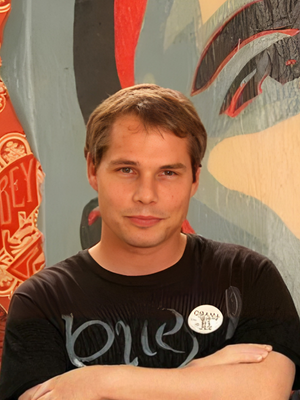
Shepard Fairey (b. 1970, Charleston, South Carolina) is an American street artist, graphic designer, and activist, and a graduate of the Rhode Island School of Design. His 1989 “André the Giant Has a Posse” sticker grew into the global OBEY GIANT campaign — an ongoing experiment in propaganda, obedience, and visual culture. He reached worldwide recognition with the 2008 “Hope” portrait of Barack Obama, now held by the Smithsonian National Portrait Gallery. Across screen prints, stencils, murals, and collage, Fairey channels propaganda aesthetics toward themes of peace, justice, environmentalism, and civil rights. His work is in the collections of the Museum of Modern Art, the Victoria & Albert Museum, and LACMA.