Gauntlet Gallery
What is Shepard Fairey’s piece called “American Civics - Voting Rights”?
Artist Statement
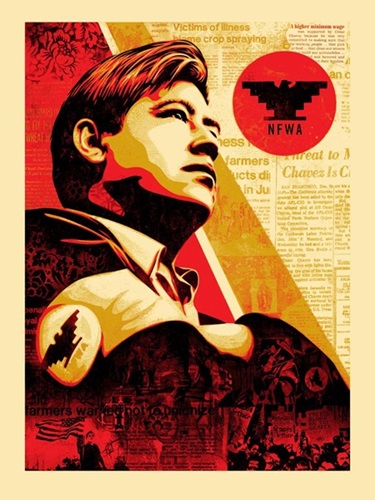
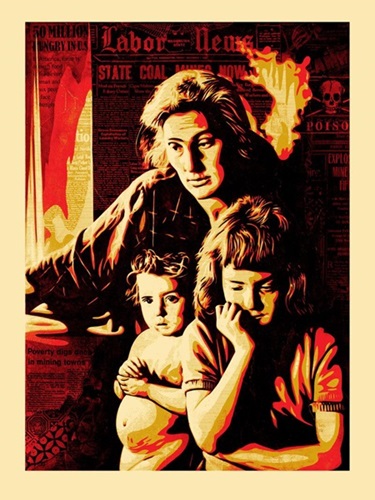
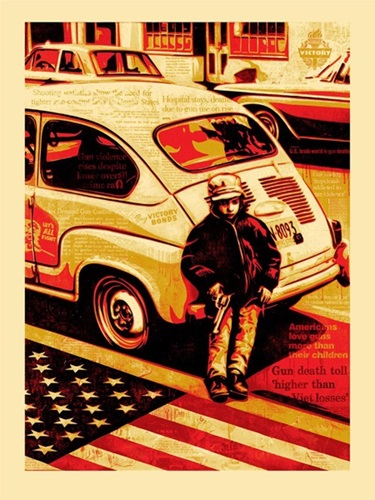
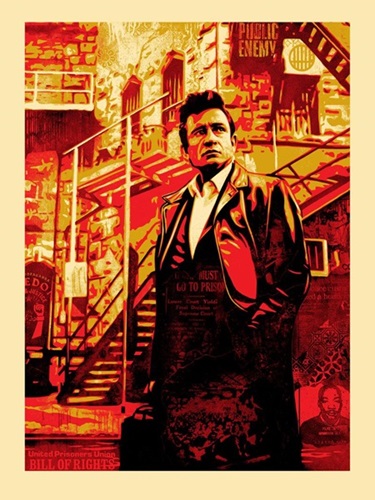
The first-ever collaboration between Shepard and the estate of legendary photographer Jim Marshall, American Civics, debuts this month! Shepard is interpreting Marshall's iconic photography from the 1960's, including images of Johnny Cash, Cesar Chavez, and Fannie Lee Chaney, with five new works, vividly depicting the humanity behind some of the country's enduring social issues: Voting Rights, Mass Incarceration, Worker's Rights, Gun Culture, and Two Americas. "That one is probably the most intense of the images, if you know the backstory. Fannie Lee Chaney, who was the mother of James Earl Chaney, who was killed along with two white friends while trying to register black people to vote. So you know about it — a lot of people know about it — but this is an intimate portrait of James Earl Chaney's mom the day she found out her son had been killed. There's a sadness and resolve in the image, but there's also a humanity."
Summary
Voting Rights is a 2016 screen print from the American Civics series, Shepard Fairey's first collaboration with the estate of photographer Jim Marshall. Fairey reinterprets Marshall's 1960s photography, here an intimate portrait of Fannie Lee Chaney, mother of slain voter-registration activist James Earl Chaney. The 40 x 30 inch print was published by San Francisco Art Exchange in a first edition of 100. The image carries a quiet sadness and resolve, foregrounding the human cost behind voting rights as one of five enduring social issues the series addresses through Fairey's signature graphic treatment.
Why It Matters
American Civics marked the first collaboration between Fairey and the estate of legendary photographer Jim Marshall, pairing Marshall's documentary eye with Fairey's propaganda-influenced graphic language. Voting Rights stands out within the series as the most personally intense image, according to Fairey, because it depicts Fannie Lee Chaney on the day she learned her son had been killed while registering Black voters in the 1960s. That grounding in a specific, documented act of civil-rights violence gives the print a weight beyond decorative street-art appeal. For collectors, it represents a deliberate turn toward portraiture that humanizes structural injustice rather than sloganeering. The limited first edition of 100, large 40 x 30 inch format, and SFAE publication distinguish it from Fairey's higher-run Obey Giant posters. As part of a tightly themed five-work set on voting rights, mass incarceration, workers' rights, gun culture, and two Americas, it anchors a body of work that fuses pop-culture reference with social-justice messaging, a defining tension across Fairey's mid-2010s output.
Collector Perspective
This print appeals to collectors who value Fairey's socially engaged work over his purely iconographic pieces, and to those drawn to the Marshall photography lineage. The civil-rights subject and intimate portrait of Fannie Lee Chaney give it gravitas suited to thoughtful display rather than pure decoration. At 40 x 30 inches it makes a substantial wall statement and reads as a fine-art screen print rather than a poster. Collectors assembling the full American Civics set will want all five works, making the series cohesive as a group. Its small first edition of 100 and SFAE publishing pedigree position it as a more collectible, lower-run release within Fairey's catalog, attractive to buyers prioritizing scarcity and message over accessibility.
Historical Context
Voting Rights belongs to Fairey's mid-2010s phase, when his practice increasingly engaged documented American social issues through collaboration. The American Civics series, debuting in May 2016, was his first project with the Jim Marshall estate, translating Marshall's 1960s photojournalism into screen prints addressing voting rights, mass incarceration, workers' rights, gun culture, and two Americas. The timing, in an election year, aligns with Fairey's long-running interest in democracy and civic participation that traces back through his Obama-era work. By interpreting Marshall's photograph of Fannie Lee Chaney, Fairey connected his graphic activism to the historical murder of James Earl Chaney during 1960s voter-registration efforts, situating the print within both the civil-rights canon and his own evolving turn toward portrait-based social commentary published through San Francisco Art Exchange.
FAQ
What is American Civics - Voting Rights?
It is a 2016 screen print by Shepard Fairey, part of the American Civics series, his first collaboration with the estate of photographer Jim Marshall. It reinterprets Marshall's intimate 1960s portrait of Fannie Lee Chaney to address voting rights as one of five enduring American social issues the series explores.
How large is the edition and the print?
It was published by San Francisco Art Exchange in a first edition of 100. The print measures 40 inches high by 30 inches wide and is a screen print, making it one of the larger-format, lower-run works in Fairey's catalog.
Who is depicted in the image?
The image is an intimate portrait of Fannie Lee Chaney, mother of James Earl Chaney, who was killed along with two friends while trying to register Black people to vote. Fairey described it as the most intense image in the series, carrying sadness, resolve, and humanity.
What is the American Civics series?
American Civics is a five-work set in which Fairey interprets Jim Marshall's iconic 1960s photography to address voting rights, mass incarceration, workers' rights, gun culture, and two Americas, depicting the humanity behind enduring social issues.
Related Works
About the Artist

Shepard Fairey (b. 1970, Charleston, South Carolina) is an American street artist, graphic designer, and activist, and a graduate of the Rhode Island School of Design. His 1989 “André the Giant Has a Posse” sticker grew into the global OBEY GIANT campaign — an ongoing experiment in propaganda, obedience, and visual culture. He reached worldwide recognition with the 2008 “Hope” portrait of Barack Obama, now held by the Smithsonian National Portrait Gallery. Across screen prints, stencils, murals, and collage, Fairey channels propaganda aesthetics toward themes of peace, justice, environmentalism, and civil rights. His work is in the collections of the Museum of Modern Art, the Victoria & Albert Museum, and LACMA.