Gauntlet Gallery
What is Shepard Fairey’s piece called “American Civics - Workers' Rights”?
Artist Statement
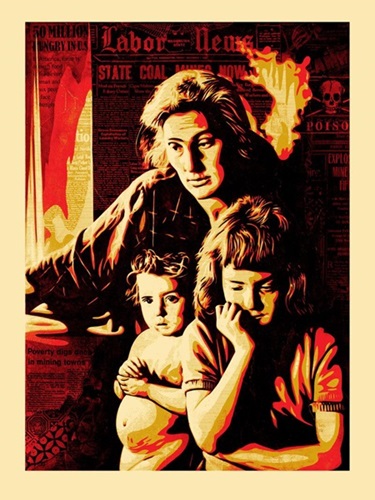
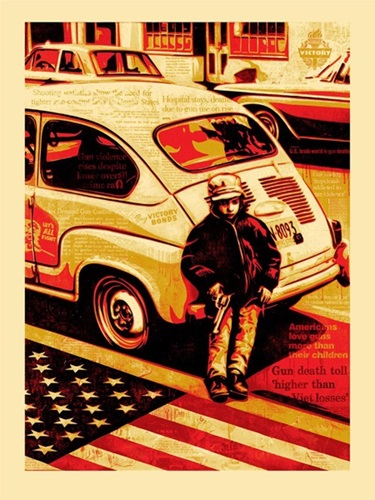
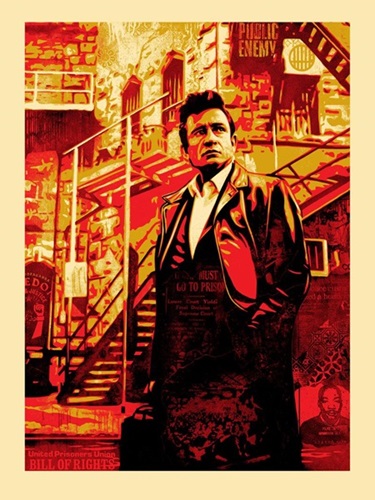
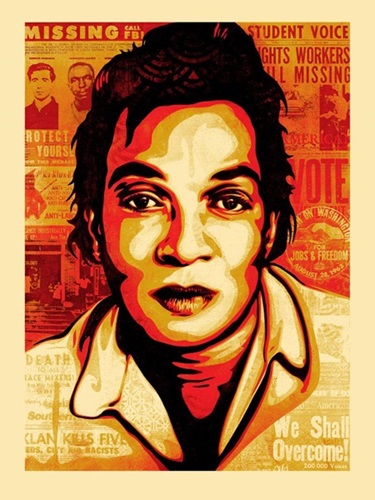
The first-ever collaboration between Shepard and the estate of legendary photographer Jim Marshall, American Civics, debuts this month! Shepard is interpreting Marshall's iconic photography from the 1960's, including images of Johnny Cash, Cesar Chavez, and Fannie Lee Chaney, with five new works, vividly depicting the humanity behind some of the country's enduring social issues: Voting Rights, Mass Incarceration, Worker's Rights, Gun Culture, and Two Americas. "I remove the guy next to Cesar Chavez. I made him sticking his head up a little higher, so he's a little bit more in the negative space. I collaged a lot of other images of Jim Marshall's other photos in the march, things that reinforced the narrative. That's all collaged by hand and all painted with stencils and spray paint and a brush."
Summary
Workers' Rights is a 2016 screen print from Shepard Fairey's American Civics series, his first collaboration with the estate of photographer Jim Marshall. The image centers on Cesar Chavez and the farmworkers' march, with Fairey hand-collaging additional Marshall photographs of the march and reworking the composition through stencils, spray paint, and brushwork. Published by San Francisco Art Exchange in a first edition of 100, the print measures 40 x 30 inches. As one of five works depicting enduring American social issues, it foregrounds labor organizing and worker dignity through Fairey's layered, mixed-technique graphic interpretation.
Why It Matters
Workers' Rights demonstrates the labor-intensive collage method underpinning the American Civics series, Fairey's first collaboration with the Jim Marshall estate. Fairey describes removing a figure beside Cesar Chavez, raising Chavez higher into negative space, and weaving in other Marshall march photographs, all hand-collaged and painted with stencils, spray paint, and brush. This insight into process distinguishes the print as more than a photo reproduction; it is a constructed narrative about the farmworker movement. For collectors, the Chavez subject anchors the work firmly in American labor history and the civil-rights struggle, giving it cultural weight beyond Fairey's iconographic output. Its first edition of 100, large 40 x 30 inch format, and San Francisco Art Exchange publication mark it as a lower-run fine-art screen print. Within a tightly themed five-work set, Workers' Rights represents Fairey's sustained commitment to depicting the humanity behind structural issues, fusing documentary source material with his propaganda-influenced visual language during a politically charged 2016.
Collector Perspective
Workers' Rights appeals to collectors drawn to labor history, the Cesar Chavez legacy, and Fairey's collage-driven technique. The documented hand-collage and stencil process gives the print added depth for buyers who value method and narrative construction. At 40 x 30 inches it makes a strong wall statement as a serious screen print. Collectors completing the American Civics set regard it as integral to the five-work group, and its small first edition of 100 with SFAE pedigree appeals to those prioritizing scarcity. It fits well in collections themed around labor rights, activism, or the broader civil-rights movement.
Historical Context
Workers' Rights belongs to Fairey's mid-2010s phase of engaging documented American social issues through collaboration. Debuting in May 2016, the American Civics series was his first project with the estate of photographer Jim Marshall, reinterpreting Marshall's 1960s photography to address voting rights, mass incarceration, workers' rights, gun culture, and two Americas. By centering Cesar Chavez and the farmworkers' march, this print connects Fairey's graphic activism to a landmark chapter of American labor and civil-rights organizing. The described hand-collage and stencil process reflects Fairey's studio practice carried from his street-art roots into fine-art-format work. Published by San Francisco Art Exchange in an election year, it extends his long-running interest in social justice and community organizing.
FAQ
Who is depicted in Workers' Rights?
The print centers on Cesar Chavez and the farmworkers' march, drawn from Jim Marshall's 1960s photography. Fairey describes raising Chavez higher into negative space and collaging in other Marshall march photos to reinforce the narrative of labor organizing.
How was the image made?
Fairey describes it as hand-collaged and painted with stencils, spray paint, and a brush. He removed a figure beside Chavez and wove in additional Marshall photographs, making the work a constructed composition rather than a single photo reproduction.
What is the edition size and dimensions?
It is a first edition of 100, published by San Francisco Art Exchange. The screen print measures 40 inches high by 30 inches wide, one of the larger-format, lower-run works in Fairey's catalog.
What is the American Civics series?
American Civics is Fairey's first collaboration with the Jim Marshall estate, a five-work set interpreting Marshall's 1960s photography to address voting rights, mass incarceration, workers' rights, gun culture, and two Americas.
Related Works
About the Artist
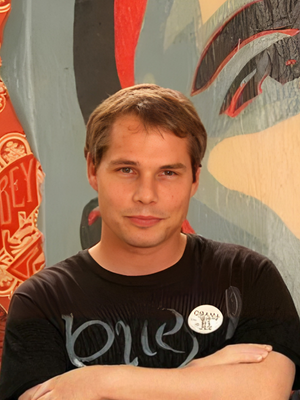
Shepard Fairey (b. 1970, Charleston, South Carolina) is an American street artist, graphic designer, and activist, and a graduate of the Rhode Island School of Design. His 1989 “André the Giant Has a Posse” sticker grew into the global OBEY GIANT campaign — an ongoing experiment in propaganda, obedience, and visual culture. He reached worldwide recognition with the 2008 “Hope” portrait of Barack Obama, now held by the Smithsonian National Portrait Gallery. Across screen prints, stencils, murals, and collage, Fairey channels propaganda aesthetics toward themes of peace, justice, environmentalism, and civil rights. His work is in the collections of the Museum of Modern Art, the Victoria & Albert Museum, and LACMA.