Gauntlet Gallery
What is Shepard Fairey’s piece called “Warning Sign”?
Artist Statement
Warning Sign is based on an actual sign fabricated, printed, and installed on the street. From the beginning my art has been placed on the street to disrupt the typically one-sided relationship citizens have have with government signage and commercial graphics in public spaces. I consider anything that provokes a discussion about what we do and don't agree with about existing conventions and systems as valuable for analysis and progress. The saying "don't ignore the warning signs" was the inspiration for the title of this print. There are lots of warning signs I'd like people to consider and the ominous sky in the image suggests stormy weather ahead. I'm very concerned about the literal storms from global warming and environmental destruction, but also about the metaphorical storms threatening democracy itself. We may not all have identical visions for the future, but whatever your hopes are, apathy will leave the power in the hands of people you may not want dictating things. –Shepard Warning Sign. 18 x 24 inches. Screen print on thick cream Speckletone paper. Signed by Shepard Fairey. Numbered edition of 550. $50
Summary
Warning Sign is a 2024 Shepard Fairey screen print based on an actual sign he fabricated, printed, and installed on the street. Measuring 18 x 24 inches on thick cream Speckletone paper, it is a signed, numbered first edition of 550 from Obey Giant, priced at $50. The image pairs warning-sign iconography with an ominous, storm-laden sky to evoke the phrase "don't ignore the warning signs." Fairey frames it as a double caution: the literal storms of global warming and environmental destruction, and the metaphorical storms threatening democracy, urging viewers against apathy that leaves power in the wrong hands.
Why It Matters
Warning Sign distills two of Fairey's central preoccupations, environmental collapse and democratic fragility, into a single piece of appropriated public signage. The work extends his foundational street practice: he notes that from the beginning his art was placed in public space to disrupt the one-sided relationship citizens have with government and commercial graphics. By fabricating and installing a real sign before issuing it as a print, the piece literalizes that disruption, turning the visual language of official authority against itself. The ominous sky operates as deliberate double meaning, gesturing simultaneously at climate catastrophe and the erosion of democratic institutions, while the artist statement's warning against apathy frames the work as a call to civic engagement. For collectors, this thematic convergence makes Warning Sign a useful crossover piece bridging Fairey's environmental and political bodies of work. As a signed, numbered edition of 550 priced accessibly at $50, it offers an entry point into his contemporary activist output that carries the conceptual weight of his street-origin practice, documenting how he continued to channel public-space tactics into studio editions in the mid-2020s.
Collector Perspective
Warning Sign suits collectors interested in Fairey's street-art origins and his political-environmental crossover work, since it derives from an actual sign he installed in public space. The bold sign format and stormy sky give it strong graphic legibility on a wall, and at 18 x 24 inches it frames easily for home or office display. As a signed, numbered edition of 550 at a $50 release price, it is among the more accessible entry points in his contemporary catalog, appealing to newer buyers and to collectors assembling a themed group around democracy or climate messaging. It complements both his environmental prints and his voting and political releases, making it a flexible anchor for a mixed-theme Fairey display.
Historical Context
Warning Sign, dated January 2024, sits at the intersection of Fairey's environmental and political work during a period when he increasingly linked climate anxiety to threats against democracy. The piece foregrounds his street-art methodology, referencing his long practice of inserting subversive imagery into public space to challenge official signage and commercial graphics. That lineage traces back to the disruptive ethos of his early career, here updated for contemporary concerns about global warming and democratic backsliding. Produced by Obey Giant as a signed, numbered screen print on cream Speckletone paper, it reflects his standardized studio output of the era while preserving the conceptual DNA of his public interventions, placing it within his Modern Activism Era.
FAQ
What is Warning Sign based on?
According to Fairey, the print is based on an actual sign he fabricated, printed, and installed on the street, extending his long practice of placing art in public space to disrupt government and commercial signage.
What does the image mean?
The phrase "don't ignore the warning signs" inspired the title. The ominous sky suggests both literal storms from global warming and metaphorical storms threatening democracy, with Fairey warning that apathy leaves power in the wrong hands.
What is the edition size and price?
Warning Sign is a signed, numbered edition of 550 published by Obey Giant, released at $50. It measures 18 x 24 inches and is a screen print on thick cream Speckletone paper.
Is it signed?
Yes. The source confirms each print is signed by Shepard Fairey and numbered within the edition of 550.
Related Works
About the Artist
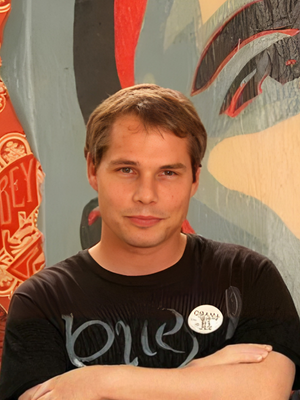
Shepard Fairey (b. 1970, Charleston, South Carolina) is an American street artist, graphic designer, and activist, and a graduate of the Rhode Island School of Design. His 1989 “André the Giant Has a Posse” sticker grew into the global OBEY GIANT campaign — an ongoing experiment in propaganda, obedience, and visual culture. He reached worldwide recognition with the 2008 “Hope” portrait of Barack Obama, now held by the Smithsonian National Portrait Gallery. Across screen prints, stencils, murals, and collage, Fairey channels propaganda aesthetics toward themes of peace, justice, environmentalism, and civil rights. His work is in the collections of the Museum of Modern Art, the Victoria & Albert Museum, and LACMA.